Sourced from:Manufacturer Authorized Distributor

Quick Summary
Denosurel 120mg Injection


Last updated on 30 Sep 2026 | 10:58 AM (IST)
₹14224
MRP: ₹43029
(You Save ₹28805)
1 VIAL(s)
Sourced from:Manufacturer Authorized Distributor
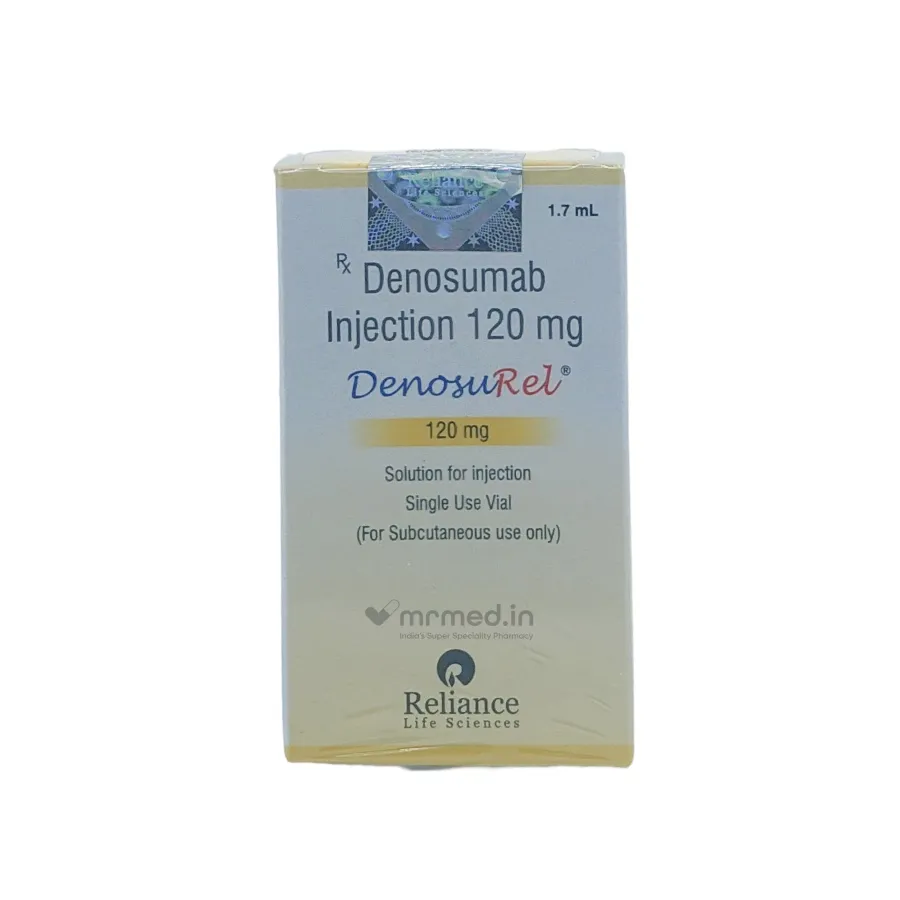

Denosurel 120mg Injection

Salt Composition
DENOSUMABMarketer
RELIANCE LIFE SCIENCES PVT LTD
Prepaid Only. Non-Returnable.

67% OFF
₹14224
MRP: ₹43,029.00
Inclusive of all taxes
67% Off


Salt Composition
DENOSUMABMarketer
RELIANCE LIFE SCIENCES PVT LTD
Prepaid Only. Non-Returnable.

Dispatch: Today
Care delivered without the wait. Your order is prioritized for rapid dispatch to ensure it reaches your doorstep on time.
Substitutes
Denotec 120mg Injection
HETERO HEALTHCA...
₹ 9191.00/injection
35% cheaper
Esentra 120mg Injection
INTAS PHARMACEU...
₹ 9943.00/injection
30% cheaper
Zyrifa 120 Injection
BAYER ZYDUS PHA...
₹ 9996.00/injection
29% cheaper
Denoci 120mg Injection
CIPLA LTD
₹ 15908.00/injection
12% costlier
Better Service Satisfied Customers
Introduction
Denosurel 120mg Injection contains Denosumab, a human monoclonal antibody that targets a protein called receptor activator of nuclear factor kappa-B ligand (RANKL). It is a 120 mg/1.7 ml injection used to reduce complications caused by cancer-related bone involvement.
By blocking RANKL, Denosurel reduces the formation and activity of osteoclasts, cells responsible for breaking down bone. This helps reduce excessive bone resorption and the risk of skeletal complications in certain cancers.
Uses of Denosurel 120mg Injection
Denosurel 120mg Injection may be used for:
Preventing skeletal-related events in people with multiple myeloma
Preventing skeletal-related events in people with bone metastases from solid tumours
Treating giant cell tumour of bone when it cannot be removed surgically or surgery is likely to cause severe complications
Treating hypercalcaemia of malignancy that has not responded adequately to bisphosphonate treatment, where this use is prescribed by the treating specialist
The specific indication, dose and duration of treatment depend on the patient's condition and response to therapy.
How Denosurel 120mg Injection Works
Denosurel contains Denosumab, which binds to RANKL and prevents it from activating its receptor, RANK. RANKL-RANK signalling is important for the formation, activity and survival of osteoclasts.
By blocking this pathway, Denosumab reduces osteoclast activity and slows the breakdown of bone. This helps reduce bone destruction and the risk of skeletal complications associated with certain cancers.
Interactions of Denosurel 120mg Injection with Other Medicines
Tell your doctor about all medicines, supplements and other treatments you are receiving before starting Denosurel.
Other Denosumab-containing medicines: Denosurel should not be used together with other medicines containing Denosumab.
Medicines affecting calcium levels: Tell your doctor if you take medicines that may alter calcium levels, as Denosumab can cause hypocalcaemia.
Calcium and vitamin D supplements: Your doctor may recommend calcium and vitamin D supplementation during treatment to help prevent low calcium levels.
Storage Conditions
Store Denosurel 120mg Injection in a refrigerator between 2°C and 8°C.
Do not freeze.
Keep the injection in its original package to protect it from light.
Do not shake the vial.
Keep it out of the reach of children.
The injection should be visually inspected before administration and should not be used if it is discoloured or contains excessive visible particles.
How to Use
Denosurel 120mg Injection is administered as a subcutaneous injection by a healthcare professional. It should not be given into a vein, muscle or skin layer other than the subcutaneous tissue.
For prevention of skeletal-related events in multiple myeloma or bone metastases from solid tumours, the usual dose is 120 mg once every 4 weeks.
For giant cell tumour of bone and hypercalcaemia of malignancy, the usual regimen is 120 mg every 4 weeks, with additional 120 mg doses on Days 8 and 15 during the first month. Your doctor will determine the appropriate regimen for your condition.
Calcium and vitamin D supplementation may be prescribed during treatment. Calcium levels should be monitored, particularly in people at increased risk of hypocalcaemia.
Safety Advice

Pregnancy
Denosumab may cause harm to an unborn baby. Tell your doctor if you are pregnant, planning to become pregnant or think you may be pregnant. Women who can become pregnant should use effective contraception during treatment and for the recommended period after the last dose, as advised by their doctor.

Breast Feeding
Tell your doctor if you are breastfeeding before receiving Denosurel. Your doctor will assess the need for treatment and advise whether breastfeeding should continue during therapy.

Lungs
Tell your doctor about any existing lung condition. Seek immediate medical attention if you develop difficulty breathing, swelling of the face or throat, or other symptoms of a severe allergic reaction after receiving Denosurel.

Liver
Tell your doctor if you have liver disease or other significant medical conditions. Denosumab does not require routine dose adjustment based on hepatic impairment, but your overall medical condition should be considered before treatment.

Alcohol
There is no established direct interaction between alcohol and Denosumab. However, your doctor may advise limiting alcohol depending on your cancer, bone health, other medicines and overall condition.

Driving
Denosumab may cause symptoms such as dizziness, fatigue or other reactions in some people. Avoid driving or operating machinery if you experience symptoms that affect your concentration or ability to do so safely.
Side Effects
Denosumab can cause side effects, although not everyone experiences them.
Common side effects
Fatigue
Musculoskeletal pain
Back pain
Headache
Nausea
Diarrhoea
Anaemia
Low phosphate levels
Injection-site reactions
Upper respiratory tract infections
Rash
The type and frequency of side effects can vary depending on the condition being treated.
Serious side effects
Seek immediate medical attention if you develop:
Severe hypocalcaemia, which may cause muscle spasms, cramps, tingling, seizures or abnormal heart rhythm
Severe allergic reaction, including swelling of the face, lips, tongue or throat and difficulty breathing
Osteonecrosis of the jaw, particularly if there is persistent jaw pain, swelling, loose teeth or poor healing after dental procedures
Atypical femoral fracture, which may cause new or unusual pain in the thigh, hip or groin
Symptoms of other serious complications following treatment
Severe hypocalcaemia is particularly important in people with severe kidney impairment or those receiving dialysis.
Expert Tips
Denosurel should be administered only by a healthcare professional.
Take calcium and vitamin D supplements exactly as prescribed by your doctor.
Your doctor may monitor your calcium levels during treatment, particularly if you have kidney disease.
Tell your doctor if you have severe kidney disease or are receiving dialysis because the risk of severe hypocalcaemia is higher in these patients.
Maintain good oral hygiene and attend regular dental check-ups.
Tell your dentist that you are receiving Denosumab before undergoing dental treatment.
Avoid invasive dental procedures where possible during treatment unless they are medically necessary.
Tell your doctor if you develop persistent jaw pain, loose teeth or poor healing in the mouth.
Report new or unusual pain in the thigh, hip or groin, as this may require assessment for an atypical femoral fracture.
Do not stop Denosumab treatment without speaking to your doctor. Stopping treatment can increase the risk of multiple vertebral fractures in some patients.
FAQs
Q1.
What is Denosurel 120mg Injection used for?
Denosurel 120mg Injection contains Denosumab and is used to prevent skeletal-related complications in people with multiple myeloma or bone metastases from solid tumours. It is also used for certain cases of giant cell tumour of bone and hypercalcaemia of malignancy.
Q2.
How is Denosurel 120mg Injection administered?
Denosurel 120mg Injection is administered as a subcutaneous injection by a healthcare professional. It is not intended for intravenous, intramuscular or intradermal administration.
Q3.
How often is Denosurel 120mg Injection given?
For multiple myeloma and bone metastases from solid tumours, Denosurel 120mg is generally given once every 4 weeks. Some conditions, such as giant cell tumour of bone and hypercalcaemia of malignancy, require additional doses during the first month. Your doctor will determine the appropriate dosing schedule for your condition.
Q4.
Can Denosurel 120mg Injection be given to patients with kidney problems?
Denosumab does not require dose adjustment based on renal function. However, people with severe kidney impairment or those receiving dialysis have a higher risk of severe hypocalcaemia. Calcium and vitamin D supplementation and calcium monitoring are particularly important in these patients.
Q5.
What should I tell my doctor before receiving Denosurel?
Tell your doctor if you have low calcium levels, kidney disease, a history of dental problems or jaw surgery, previous allergic reactions to Denosumab, or any condition that may affect your calcium levels. Also tell your doctor about all medicines and supplements you take.
Q6.
Can Denosurel 120mg Injection affect dental health?
Yes. Denosumab treatment has been associated with osteonecrosis of the jaw. Maintain good oral hygiene and inform your doctor and dentist that you are receiving Denosumab. Your doctor may recommend a dental examination before starting treatment, particularly if you have dental risk factors.
Q7.
What happens if Denosurel 120mg Injection is stopped?
Denosumab should not be stopped without medical advice. In some patients, discontinuation can increase the risk of multiple vertebral fractures. Your doctor will assess the risks and decide how treatment should be stopped or transitioned if necessary.
Fact Box
Molecule name | Denosumab |
Therapeutic class | Anti-resorptive agent |
Pharmacological class | RANK ligand (RANKL) inhibitor |
Indications | Multiple myeloma, bone metastases from solid tumours, giant cell tumour of bone and hypercalcaemia of malignancy |
References
Disclaimer
MrMed’s primary intention is to ensure that its consumers get information that is reviewed by experts, accurate and trustworthy. The information and contents of this website are for informational purposes only. They are not intended to be a substitute for professional medical advice, diagnosis, or treatment. Please seek the advice of your doctor and discuss all your queries related to any disease or medicine. Do not disregard professional medical advice or delay in seeking it because of something you have read on MrMed. Our mission is to support, not replace, the doctor-patient relationship.
Did you find this information helpful?
Author Details

Written By
Naina Boruah
MSc Biomedical Science

Reviewed By
Dr. Tejashwin Adiga
MBBS
Last updated : 30 Sep 2026 | 10:58 AM (IST)

Want to know more?
Read Our Editorial Policy