










Quick Summary
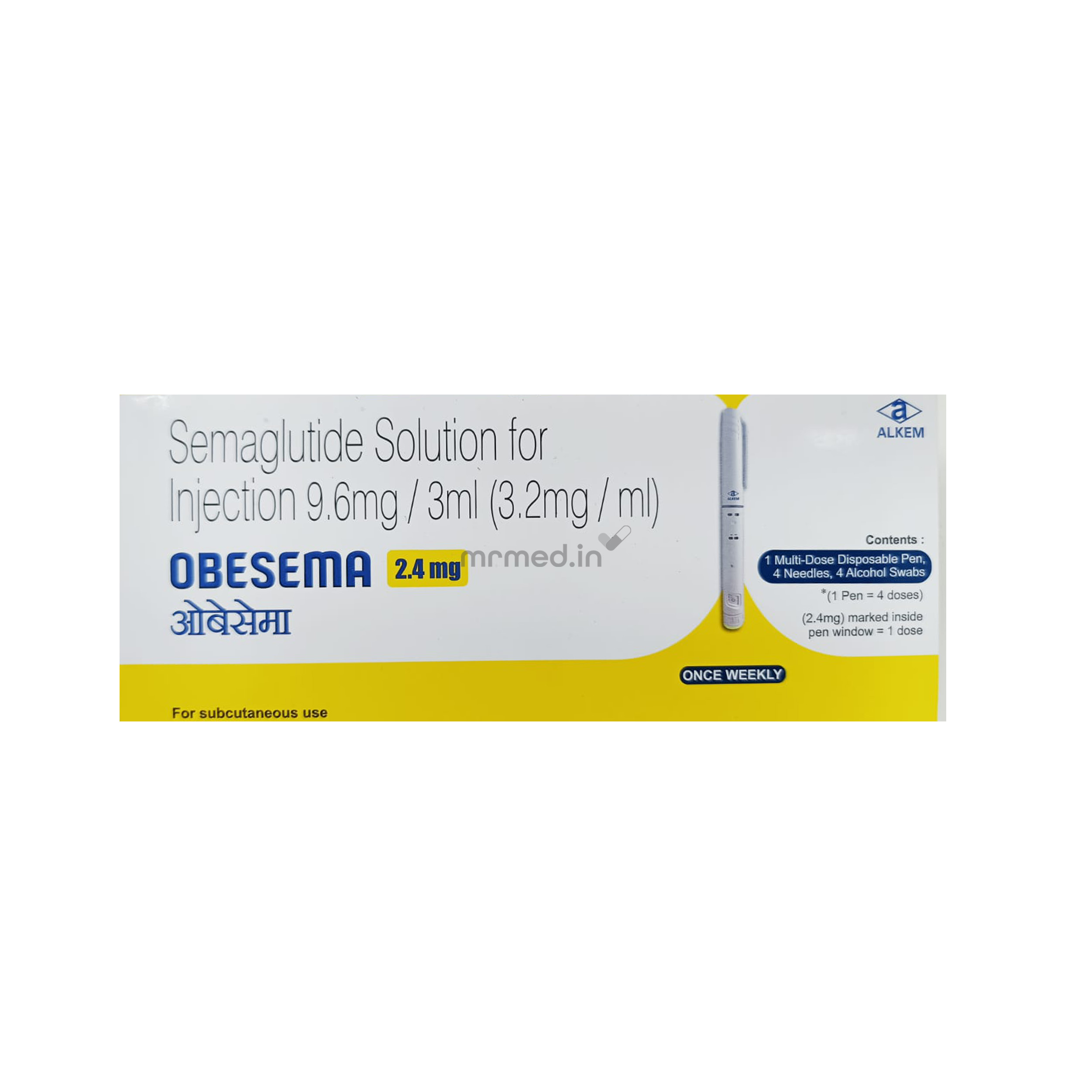
Obesema 2.4mg Injection


Last updated on 26 Sep 2026 | 08:41 AM (IST)
₹3182
MRP: ₹3500
(You Save ₹318)
1 PREFILLED PEN(s)

Obesema 2.4mg Injection

Salt Composition
SEMAGLUTIDEMarketer
ALKEM LABORATORIES LTD
Prepaid Only. Non-Returnable.

9% OFF
₹3182
MRP: ₹3,500.00
Inclusive of all taxes
9% Off


Salt Composition
SEMAGLUTIDEMarketer
ALKEM LABORATORIES LTD
Prepaid Only. Non-Returnable.

Dispatch: Today
Care delivered without the wait. Your order is prioritized for rapid dispatch to ensure it reaches your doorstep on time.
Substitutes
Hepaglide 2.4mg Injection
ALKEM LABORATOR...
₹ 777.75/injection
2% cheaper
Noveltreat 2.4mg Injection
SUN PHARMACEUTI...
₹ 822.25/injection
4% costlier
Sundae Pro 2.4mg Pen Injection
ERIS LIFESCIENC...
₹ 954.50/injection
20% costlier
Semawin 2.4mg Pen injection
INTAS PHARMACEU...
₹ 1000.00/injection
26% costlier
Introduction
Obesema 2.4mg Injection contains semaglutide, a glucagon-like peptide-1 (GLP-1) receptor agonist. It is used along with a reduced-calorie diet and increased physical activity for weight management in adults with obesity or adults who are overweight and have at least one weight-related health condition. Semaglutide helps regulate appetite and food intake by acting on GLP-1 receptors.
Obesema 2.4mg Injection is supplied as a pre-filled pen containing semaglutide 9.6 mg in 3 mL of solution. The medicine is administered under the skin once a week, with the dose and treatment schedule determined by your doctor.
Uses of Obesema 2.4 mg Injection
Obesema 2.4mg Injection is used along with a reduced-calorie diet and regular physical activity for:
Weight management in adults with obesity.
Weight management in adults who are overweight and have at least one weight-related health condition.
Semaglutide treatment should be used as part of an overall weight-management plan rather than as a replacement for healthy eating and physical activity.
How Obesema 2.4mg Injection works
Semaglutide is a GLP-1 receptor agonist. It acts in a similar way to the naturally occurring GLP-1 hormone and affects areas of the brain involved in appetite regulation. This can increase feelings of fullness and reduce hunger, food intake and cravings.
Semaglutide also slows the movement of food through the stomach and influences blood glucose regulation. Together, these effects can support reduced calorie intake and weight loss when used with diet and physical activity.
Interactions of Obesema 2.4mg Injection with other medicines
Tell your doctor about all the medicines you take before starting Obesema 2.4mg Injection.
Other semaglutide-containing medicines: Using more than one medicine containing semaglutide is not recommended.
Other GLP-1 receptor agonists: Combining Obesema with another GLP-1 receptor agonist is not recommended.
Insulin or sulfonylureas: If used with medicines that can lower blood glucose, the risk of hypoglycaemia may increase, particularly in people with diabetes.
Medicines taken by mouth: Semaglutide can slow stomach emptying and may affect the absorption of some medicines taken orally. Tell your doctor about medicines that require close monitoring.
Storage Conditions
Store Obesema 2.4mg Injection in a refrigerator at 2°C to 8°C.
Do not freeze the medicine.
Keep it away from direct heat and light.
Keep it out of the reach of children.
Do not use the medicine if it has been frozen or if the solution appears abnormal.
How to Use
Obesema 2.4mg Injection is given as a subcutaneous injection, usually into the abdomen, thigh or upper arm. It is administered once a week, preferably on the same day each week. It can be used at any time of day, with or without food.
The 2.4mg strength is a maintenance dose for semaglutide weight-management treatment. Treatment is generally started at a lower dose and increased gradually to reduce gastrointestinal side effects. Do not start treatment directly at 2.4mg or change your dose unless your doctor has instructed you to do so.
Safety Advice

Pregnancy
Obesema 2.4mg Injection should not be used during pregnancy. If you become pregnant while using it, contact your doctor. Women planning pregnancy should discuss when to stop treatment with their doctor.

Breast Feeding
Tell your doctor if you are breastfeeding before using Obesema 2.4mg Injection. Your doctor will decide whether treatment should be continued based on your individual circumstances.

Lungs
Tell your doctor if you have a planned surgery or procedure involving general anaesthesia or deep sedation. Semaglutide may increase the risk of stomach contents entering the lungs during such procedures because it can delay stomach emptying.
Liver
Tell your doctor if you have liver disease before starting treatment. Your doctor will assess whether Obesema is appropriate for you.

Alcohol
Avoid excessive alcohol consumption while using Obesema 2.4mg Injection. Alcohol may worsen gastrointestinal symptoms and can contribute to dehydration.

Driving
Obesema 2.4mg Injection does not usually affect the ability to drive. However, people using medicines for diabetes that can cause low blood glucose should be alert for symptoms such as dizziness, sweating or weakness before driving.
Side Effects
The most common side effects of semaglutide include:
Nausea
Vomiting
Diarrhoea
Constipation
Abdominal pain
Headache
These effects are particularly common when treatment is started or the dose is increased and may improve as the body adjusts to treatment.
Seek medical attention if you develop severe or persistent abdominal pain, symptoms of a serious allergic reaction, significant changes in vision or symptoms suggesting severe dehydration. Semaglutide has also been associated with important but less common risks such as pancreatitis, gallbladder problems and diabetic retinopathy complications.
Expert Tips
Use Obesema exactly as prescribed and do not increase the dose on your own.
Follow the prescribed dose-escalation schedule before reaching the 2.4mg maintenance dose.
Continue with the reduced-calorie diet and physical activity recommended by your healthcare professional.
Eat smaller meals if nausea or fullness becomes uncomfortable.
Drink enough fluids, particularly if vomiting or diarrhoea occurs.
Do not use Obesema together with another semaglutide-containing medicine or another GLP-1 receptor agonist unless specifically directed by your doctor.
Tell your healthcare team that you are using semaglutide before planned surgery or deep sedation.
FAQs
Q1.
What is Obesema 2.4mg Injection used for?
Obesema 2.4mg Injection is used along with a reduced-calorie diet and increased physical activity for weight management in adults with obesity or adults who are overweight with at least one weight-related health condition.
Q2.
How often should Obesema 2.4mg Injection be taken?
It is administered once a week. Try to use it on the same day each week, as advised by your doctor.
Q3.
Can I start treatment with Obesema 2.4mg Injection?
The 2.4mg strength is a maintenance dose rather than the usual starting dose. Semaglutide treatment is generally initiated at a lower dose and gradually increased under medical supervision.
Q4.
Where should Obesema 2.4mg Injection be injected?
It is injected under the skin of the abdomen, thigh or upper arm. Follow the instructions supplied with the pen and your healthcare professional's guidance.
Q5.
Can Obesema 2.4mg Injection be used with another semaglutide medicine?
No. Using Obesema together with another medicine containing semaglutide is not recommended. It should also not be combined with another GLP-1 receptor agonist unless specifically advised by your doctor.
Q6.
What should I do if I miss a dose of Obesema 2.4mg Injection?
If you miss a dose, follow the missed-dose instructions provided for your prescribed semaglutide regimen. Do not take two doses close together to make up for a missed dose. If you are unsure when to take your next dose, consult your doctor or pharmacist.
Q7.
Can Obesema 2.4mg Injection be used during pregnancy?
No. Obesema should not be used during pregnancy. Speak to your doctor if you are planning a pregnancy or become pregnant while using the medicine.
Fact Box
Molecule name: | Semaglutide |
Therapeutic class: | Anti-obesity medicine |
Pharmacological class: | GLP-1 receptor agonist |
Indications: | Weight management in adults with obesity or overweight with at least one weight-related health condition |
References
Disclaimer
MrMed’s primary intention is to ensure that its consumers get information that is reviewed by experts, accurate and trustworthy. The information and contents of this website are for informational purposes only. They are not intended to be a substitute for professional medical advice, diagnosis, or treatment. Please seek the advice of your doctor and discuss all your queries related to any disease or medicine. Do not disregard professional medical advice or delay in seeking it because of something you have read on MrMed. Our mission is to support, not replace, the doctor-patient relationship.
Did you find this information helpful?
Author Details

Written By
Naina Boruah
MSc Biomedical Science

Reviewed By
Dr. Tejashwin Adiga
MBBS
Last updated : 26 Sep 2026 | 08:41 AM (IST)

Want to know more?
Read Our Editorial Policy