

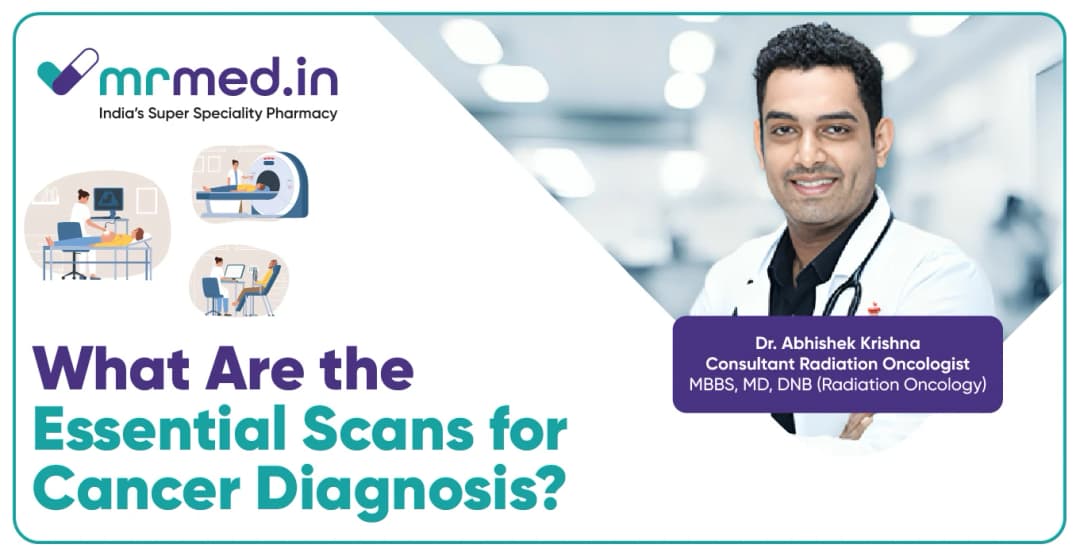
What Are the Essential Scans for Cancer Diagnosis?





Last updated on 02 Jan 2026
Accurate and timely diagnosis is the foundation of effective cancer treatment. Imaging scans play a crucial role in identifying tumours, determining their spread, and guiding treatment strategies. In this video, Dr. Abhishek Krishna, Consultant - Radiation Oncology, a leading cancer specialist, explains the most important scans used for cancer diagnosis and how they support better health outcomes.
Essential Cancer Diagnosis Scans
Several cancer diagnosis scans are commonly recommended by oncologists depending on symptoms and suspected cancer type. These include:
-
CT Scan for Cancer Diagnosis: Provides detailed cross-sectional images of the body, often used for lung, abdominal, and bone cancers.
-
MRI Scan for Cancer: Offers high-resolution imaging, ideal for brain, spinal cord, and soft tissue cancers.
-
PET Scan for Cancer: Highlights areas of abnormal cell activity, providing valuable information for staging and monitoring treatment response.
-
Ultrasound: Helps detect lumps or masses, particularly in the abdomen and pelvis.
These tools form part of the essential cancer screening tests recommended by global and local guidelines.
Types of Cancer Imaging and Their Use
Different types of cancer imaging are chosen based on the suspected cancer. For example, a PET-CT scan preparation is essential for evaluating multiple organs at once, while a head and neck cancer diagnosis may require a combination of MRI and endoscopy. In some cases, an endoscopy for cancer is conducted to visually examine the gastrointestinal tract and collect biopsy samples.
Importance of Early Detection
Understanding how to detect cancer early is critical. Imaging scans, when combined with regular check-ups, help identify cancer before it has a chance to progress. The importance of cancer screening lies in reducing late-stage diagnoses and improving survival chances. Global evidence and cancer screening guidelines in India highlight the need for timely scans in at-risk populations. Simply put, early detection saves lives, and scans are at the heart of this effort.
Preparing for Scans: What to Expect
Patients often feel anxious before undergoing a diagnostic scan. Preparation varies by test; for instance, fasting may be required before a PET-CT scan, while an MRI might need you to avoid wearing metal objects. Knowing what to expect reduces anxiety and ensures more accurate results during imaging.
Final thoughts
Cancer detection scans are not just diagnostic tools but also essential guides for treatment planning. Whether it’s a CT, MRI, or PET scan, each plays a unique role in uncovering the details of the disease. With advancements in technology, these scans are becoming more precise and patient-friendly. Guided by experts like Dr. Abhishek Krishna cancer specialist, patients can approach their diagnostic journey with greater confidence and clarity.
Disclaimer: The information in this guide is intended for general awareness and educational purposes only. It should not be considered a substitute for professional medical advice, diagnosis, or treatment. Always seek the guidance of your doctor or a qualified healthcare provider with any questions you may have about lung cancer, immunotherapy, or any other medical condition. Do not ignore professional advice or delay seeking care because of something you have read here. While insights are provided by Dr. Abhishek Krishna and based on trusted sources, individual cases may differ. MrMed does not promote or endorse any specific procedure, product, or treatment unless clearly mentioned.












Comments