

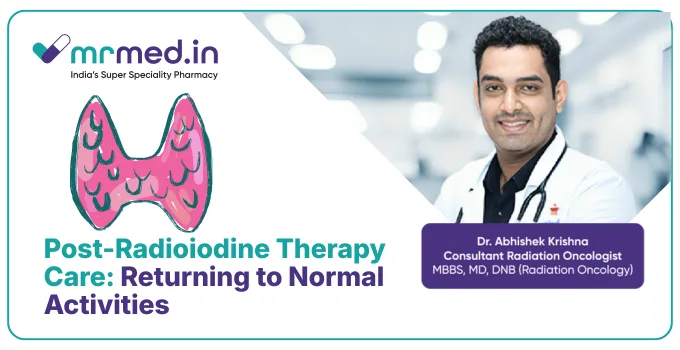
Post-Radioiodine Therapy Care: Returning to Normal Activities





Last updated on 06 Jan 2026
Key Takeaways
|
According to Dr Abhishek Krishna, Consultant Radiation Oncologist, KMC Hospital, Mangalore, after treatment completion, many patients experience a mix of feelings from relief to fear and confusion about what happens next. Patients frequently ask several questions about safety, daily life, food, and recovery after treatment.
Most patients go back to their usual lifestyle after a period of adjustment and by taking precautions. Understanding how the body responds to treatment will enable a faster, more comfortable recovery.
What to Expect After Treatment
After thyroid cancer treatment, radioactive iodine leaves the body mainly through urine, sweat, and saliva.
During recovery, some people may experience tiredness, dry mouth, neck discomfort, or changes in taste.
These side effects are common and usually improve gradually over time.
Recovery from radioactive iodine therapy involves both physical and emotional adjustment.
Knowing which changes are normal can help reduce anxiety during recovery.
Most people return to their usual daily activities as the body clears the radioactive iodine and heals.
Returning to Daily Activities
Many patients wonder how soon they can return to normal daily activities after radioiodine therapy.
Light activities such as walking, grocery shopping, household chores, and office work can usually be resumed within a few days.
Strenuous exercise or physically demanding tasks may need to be delayed until the body feels ready.
The timeline for returning to normal activities varies from person to person.
Factors such as treatment dose, side effects, and overall health influence recovery speed.
A doctor will advise when it is safe to resume regular activities.
Safety Precautions at Home
Patients need to follow the safety guidelines for radioactive iodine therapy, especially in the beginning. Patients receive guidelines from their physicians to limit exposure to others after receiving radioactive iodine therapy. Some of these guidelines include maintaining a two-meter safe distance from others, using Separate Utensils for food preparation and eating, flushing twice when using the toilet, and washing hands frequently.
A common question patients ask regarding Radioimmunoassay (RIA) is "How long does radioactive iodine remain in my system?" The majority of the radioactive material is eliminated within a rehabilitation period of several days, while only small quantities remain for several weeks until full elimination is achieved.
Information on how patients can protect those around them during the aftercare period provides reassurance to patients and caregivers.
Food and Hydration After Therapy
Many people who have had radio-iodine therapy wonder which foods they should and shouldn't eat after receiving treatment. To help eliminate radioactive Iodine from the body, physicians usually recommend that patients drink plenty of water and eat a variety of foods (fruits, vegetables, grains) to ensure they receive the proper nutrients while recovering from the treatment. Once the low-iodine diet is completed before treatment, the physician will help patients know when they can resume their regular diets.
Monitoring Recovery and Follow-Up
Post-Radioiodine Therapy: Once isolation is finished, recovery will be ongoing as you will continue having regular follow-up appointments with your doctor as part of the follow-up care for post-radioiodine therapy.
Many patients are concerned about what follow-up tests will be required following their treatment.
Typically, follow-up tests include blood tests, thyroid hormone level tests, and either a fluoroscopic or gamma scan. However, depending on the particular patient, some further testing may be necessary.
Through performing follow-up tests, your doctor can determine the effectiveness of your treatment and develop a plan for your ongoing care if necessary.
Knowing how long the side effects of your treatment may last helps patients prepare mentally and physically.
Most side effects experienced by patients resolve within a few weeks; however, certain side effects, such as dry mouth and extreme fatigue, may take longer to resolve, while most patients will experience improvements in these symptoms over time.
Final Thoughts
People will gradually recover from radioiodine treatment through the combination of proper precautions, healthy lifestyle preparation, and follow-up care from qualified health care providers. Most people will continue to live normal daily lives after completing this type of treatment. However, if your health care provider provides you with information, maintains a good relationship, and guides you through the process, you can anticipate a smoother transition back into daily life.
FAQs
1. When can radioiodine therapy be resumed after treatment?
Most patients can return to light (non-strenuous) activity within several days following radioiodine therapy. Strenuous activities such as lifting heavy objects or participating in vigorous workouts must be delayed until you receive your physician's advice confirming that the activity is safe.
2. How to protect myself from exposure to radiation following treatment with radioactive iodine?
To avoid potential exposure to radiation from your body for a few days after treatment, stay a distance away from others. Use separate utensils, practice good personal hygiene (i.e., wash hands frequently), and adhere to your doctor's specific restrictions regarding isolation from others.
3. What types of food should I avoid or consume after radioiodine treatment?
Make sure to drink plenty of fluids, eat a balanced diet, and ask your doctor when to discontinue any diet restrictions based on your temporary condition.
4. When will I no longer experience side effects of radioiodine treatment?
The majority of side effects will subside within a couple of weeks after treatment; however, some symptoms (e.g., dry mouth) may take longer to resolve but will generally diminish over time.
5. What types of follow-up tests will I receive after radioiodine therapy?
You should expect several types of tests following your treatment. You will probably undergo a blood test to determine your thyroid hormone levels, or an imaging study (such as CT or MRI), which will help your healthcare provider to monitor the effectiveness of your treatment and progress towards recovery.
Read Also
Early Signs And Symptoms Of Thyroid Cancer
Disclaimer: The information provided in this article is for general awareness and educational purposes only. It should not be taken as a substitute for professional medical advice, diagnosis, or treatment. Always consult your doctor or a qualified healthcare provider with any questions regarding liver cancer, its stage, or treatment options. Do not ignore professional advice or delay seeking care because of information presented here. While insights are shared by Dr. Abhishek Krishna, Consultant Radiation Oncologist, and are based on reliable medical sources, individual patient needs and outcomes may vary. MrMed does not endorse or promote any specific hospital, product, or treatment unless clearly stated.













Comments