

Oral Cancer in India: How Gutkha, Tobacco, and Alcohol Raise Your Risk





Last updated on 02 Jan 2026
Oral cancer has become one of the most pressing public health challenges in India. It is not just a disease of the mouth; it’s a reflection of lifestyle choices, lack of awareness, and delayed medical attention. Behind every case are risk factors we can control, such as the use of gutkha, tobacco, and alcohol. Understanding how these substances harm the mouth and learning how to prevent them can save countless lives.
What is Oral Cancer?
In India, oral cancer accounts for around one-third of all cancer cases globally, and nearly 30% of all cancers in India.
Oral cancer, also known as mouth cancer, refers to abnormal cell growth in any part of the mouth, including the lips, tongue, cheeks, gums, and throat. It often starts as a small sore or white patch that refuses to heal and can spread quickly if not detected early.
Doctors note that oral cancer in India is one of the most common cancers among men and ranks among the top three for women. Most cases are preventable, yet the country reports tens of thousands of new diagnoses every year.
Why India Faces a Unique Challenge
Latest data: In males, “mouth cancer” (lip/oral cavity) had 113,249 estimated cases in India (CIR ~15.6 per 100,000).
The burden of oral cancer in India is higher than in most countries because of the widespread use of smokeless tobacco, gutkha, khaini, betel quid, and alcohol. According to the Indian Council of Medical Research (ICMR), over 60% of oral cancer cases in India are directly linked to chewing or smoking tobacco.
The easy availability of these products and their social acceptance, especially in rural areas, make prevention difficult. Low awareness and stigma also lead to late diagnosis, where survival chances are reduced.
Unlike some Western countries, where most oral cancer patients are elderly, India sees a large number of young adults developing early lesions due to tobacco use starting at a younger age.
How Gutkha, Tobacco, and Alcohol Raise Risk
According to ICMR & Oral Cancer Task Force :This consensus document sets India-specific clinical care standards for oral cavity cancers, highlighting the high prevalence in India, the role of smokeless tobacco, and need for early multidisciplinary intervention.
The connection between gutkha and oral cancer is strongly proven through multiple studies and medical evidence.
Gutkha contains a harmful mix of areca nut, tobacco, and lime, which irritates and damages the soft lining (mucosa) of the mouth.
Continuous chewing and holding gutkha inside the cheek leads to chemical burns, causing pre-cancerous lesions over time.
Nicotine and areca nut release carcinogenic compounds that damage DNA in mouth cells, paving the way for cancerous growths.
Excessive alcohol consumption further worsens the risk by damaging the mouth tissues and increasing the absorption of carcinogens from tobacco.
The connection between alcohol and oral cancer is strong when both are used together; the risk multiplies several times.
Doctors warn that the effects of chewing gutkha on oral health are not limited to cancer; they also include gum disease, bad breath, tooth loss, and jaw stiffness.
Early Symptoms and Warning Signs to Watch
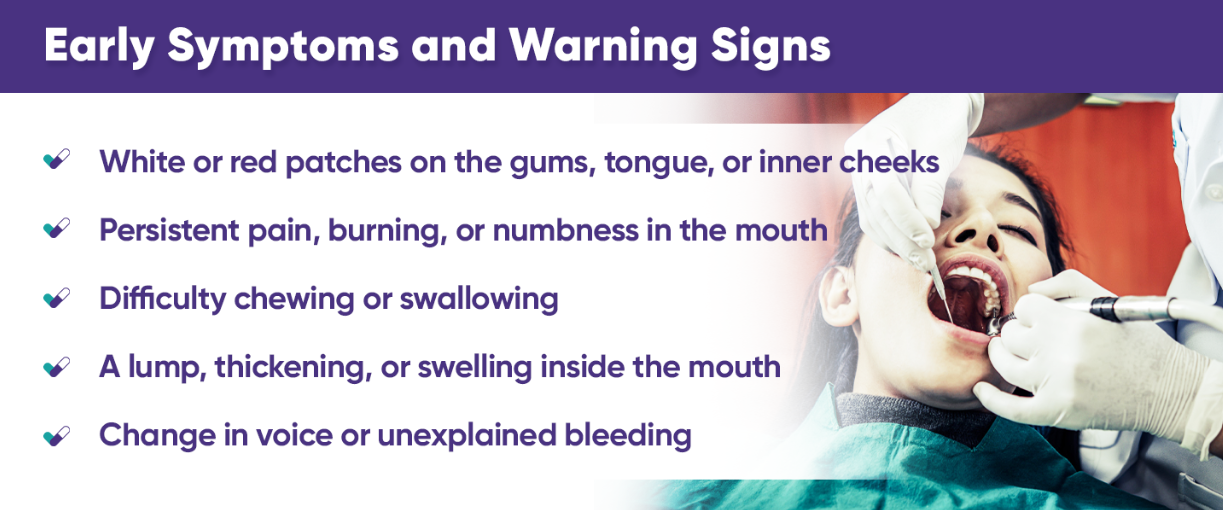
Recognising oral cancer symptoms and warning signs early can make treatment far more effective. People should pay attention to:
A sore or ulcer in the mouth that doesn’t heal within two weeks
White or red patches on the gums, tongue, or inner cheeks
Persistent pain, burning, or numbness in the mouth
Difficulty chewing or swallowing
A lump, thickening, or swelling inside the mouth
Change in voice or unexplained bleeding
Dentists emphasise that early signs of oral cancer from tobacco use often go unnoticed because users mistake them for minor irritation or mouth ulcers. Regular dental check-ups can help catch these warning signs before the condition advances.
Other Important Risk Factors in India
Apart from gutkha, tobacco, and alcohol, other oral cancer risk factors in India include:
Poor oral hygiene and chronic infections
Diets low in fruits and vegetables
Exposure to harmful chemicals or radiation in the workplace
A weakened immune system
Social habits like betel quid chewing and unregulated tobacco products also make the situation worse. Many Indians use smokeless tobacco because they believe it’s safer than smoking, but the chewing tobacco is equally severe.
Prevention Strategies and Lifestyle Changes
Dr Minish Jain, Director of Medical Oncology, Ruby Hall Clinic, Pune, emphasises, “Oral cancer is rapidly emerging among younger adults in India, and what was once seen as a disease of older patients is now affecting people in their 30s and 40s, highlighting the urgent need for early screening and public education.”
The good news is that most oral cancers can be prevented with simple lifestyle changes. Here are key oral cancer prevention tips for tobacco users and others at risk:
Quit smoking or chewing gutkha and khaini completely.
Avoid excessive alcohol consumption.
Eat a diet rich in fresh fruits and vegetables, which contain antioxidants that repair damaged cells.
Maintain good oral hygiene and visit a dentist regularly.
Get screened for early lesions, especially if you have a history of tobacco or alcohol use.
Participate in oral cancer awareness programs to learn how to identify and prevent symptoms.
Experts stress that quitting tobacco, even after years of use, significantly lowers the risk of developing oral health risks such as cancer and gum disease.
Why Oral Cancer Rates Are Rising in India
Despite awareness efforts, why oral cancer rates are rising in India remains a concern. The reasons include:
Aggressive marketing of smokeless tobacco and gutkha to younger populations
Lack of enforcement of bans on flavoured and packaged products
Limited access to early screening in rural areas
Growing alcohol consumption among youth
Low health literacy in several regions
Public health authorities emphasise that curbing tobacco use in India requires both government regulation and strong community education. Bans on gutkha sales in several states have reduced availability but not usage, as illegal distribution continues.
Nationwide campaigns for oral cancer awareness are necessary to reach schools, colleges, and workplaces to change behaviours early.
The Importance of Awareness and Regular Screening
Awareness and early detection can save lives. Many hospitals now conduct oral cancer awareness camps that include free check-ups and educational materials.
Dentists recommend that anyone who chews or smokes tobacco should get screened at least once a year, even if they have no symptoms. Early detection allows doctors to treat smaller, more manageable lesions through surgery, radiation, or targeted therapies, greatly improving survival rates.
Public participation through health campaigns and social media has also helped amplify messages about cancer prevention and the dangers of chewing tobacco.
FAQs
1. What causes oral cancer in India?
Most oral cancers in India are caused by tobacco chewing, smoking, and alcohol consumption. Gutkha, khaini, and betel quid are major contributors.
2. What are the early symptoms of mouth cancer?
Look for mouth sores that don’t heal, white or red patches, persistent pain, or swelling inside the mouth.
3. Can quitting tobacco reduce my cancer risk?
Yes. Quitting tobacco significantly reduces your risk of oral and other cancers within a few years of stopping.
4. How can I prevent oral cancer?
Avoid tobacco and alcohol, eat healthy foods, maintain good oral hygiene, and get regular dental check-ups.
5. Why are oral cancer cases increasing in India?
Easy access to gutkha and smokeless tobacco, rising alcohol consumption, and low awareness about the disease are key reasons.
Final Thoughts
Oral cancer is a preventable disease, yet it continues to claim thousands of lives in India every year. By avoiding tobacco, gutkha, and alcohol, and by prioritising early screening, we can change the narrative. The real power lies in awareness, education, and the collective willingness to break harmful habits. A healthy mouth is not just a sign of good oral hygiene; it’s a sign of a healthier, longer life.
Read also
References
Disclaimer: The content in this blog is for general informational purposes only and is not a substitute for professional medical advice, diagnosis, or treatment. Always consult your doctor or a registered dietitian before making any changes to your diet, especially if you have a medical condition or are taking prescribed medication. While the information is based on trusted sources, individual needs and results may vary. MrMed does not promote or endorse any specific food or treatment mentioned unless explicitly stated.
















Comments