


Why Blood Tests Often Look Abnormal in Winter Months





Last updated on 29 Jan 2026
Quick Summary
Seasonal changes can strongly influence blood test results. During winter, many values, such as cholesterol, blood sugar, vitamin levels, inflammation markers, and hydration levels, may temporarily shift. This usually happens because people get less sunlight, move less, drink less water, change eating habits, and experience more seasonal illnesses, all of which affect how the body functions.
Key Takeaways:
|
Every year during the winter months, many doctors observe that patients have abnormal lab results even though they're otherwise healthy. Understanding seasonal changes in the body helps avoid unnecessary anxiety when making informed decisions about patients’ health care.
Why Do Blood Test Values Change When Temperatures Drop?
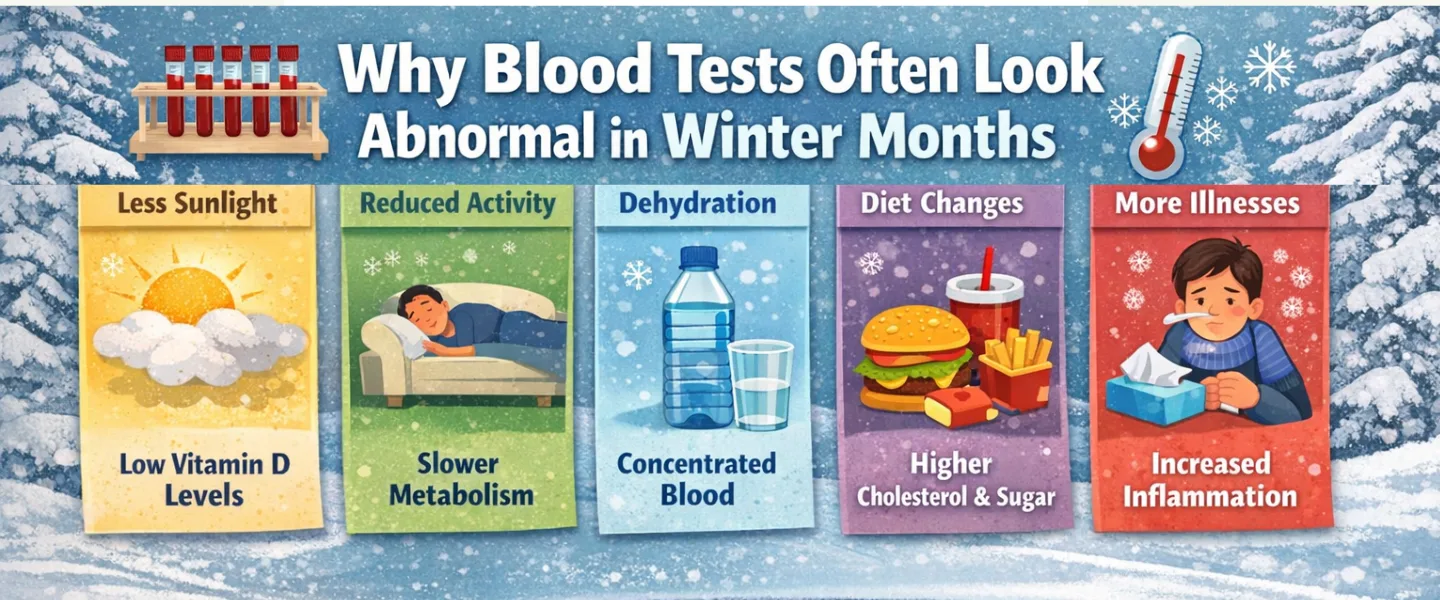
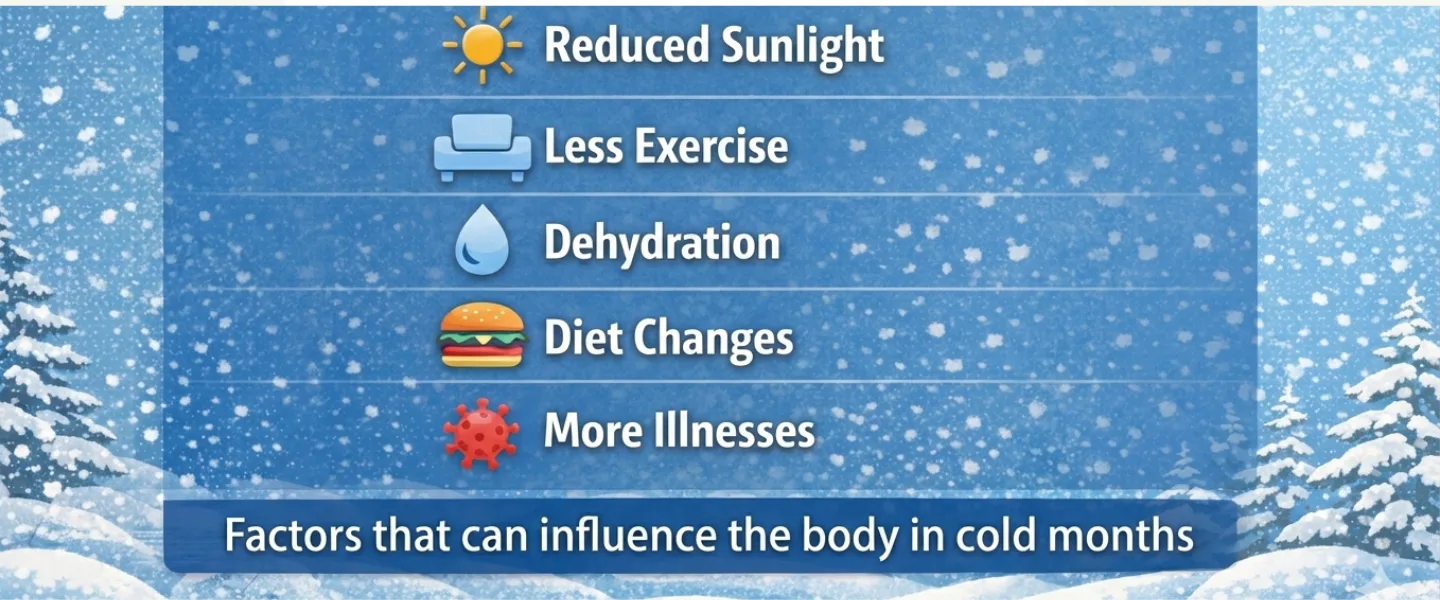
There are many subtle but real ways that the winter season affects how your body works. You tend to drink less water, exercise less, eat heavier food and spend more time inside. All of these behaviours will alter blood flow (circulation), energy burning (metabolism), how your immune system responds, and how your body maintains fluid balance.
The need your body has to keep warm will also increase the way that hormones behave as well as the way the body uses energy, which, in combination with seasonal infections, will alter the chemistry of your blood.
So that's one reason why many people will have abnormal lab results even though they're otherwise well.
How Does Dehydration in Winter Affect Blood Test Numbers?
According to the Indian Journal of Medical Research in 2018, vitamin D deficiency affects up to 84.9–100% of school-aged children and 70–81% of lactating mothers in India, indicating widespread seasonal and lifestyle-related low levels of this nutrient during colder months.
Q: Why does the body continue to lose fluid when the air is cold?
A: Cold weather decreases thirst levels, but your body continues to lose fluids through breathing, sweating, and dry air during the winter.
Dehydration does the following:
Makes blood more concentrated.
Raises waste products.
Shifts electrolytes.
Blood tests showing elevated creatinine, sodium, and urea levels can often indicate dehydration.
Kidney function test winter readings can also be adversely affected by kidney hydration, leading the kidneys to appear under stress when they are actually just dehydrated.
Why Does Vitamin D Drop So Sharply in Winter?
Dr Ravinder Goswami, Professor of Endocrinology at AIIMS Delhi, notes that low vitamin D levels are a major issue in India due to limited sun exposure and skin pigmentation, and that simple measures such as increased outdoor time can improve levels.
Vitamin D is produced by your skin when you are exposed to sunlight. The production of vitamin D declines drastically during the winter because the number of daylight hours gets shorter, and you have limited time for sun exposure or are covered up.
As a result, vitamin D deficiency is common during the winter months, which can negatively affect your immune system, bone health, and mental health.
Low vitamin D levels can also cause fatigue and muscle aches and increase your risk of infection, which could lead to higher levels of inflammatory markers in your body.
Do Cholesterol and Lipid Levels Rise in Cold Weather?
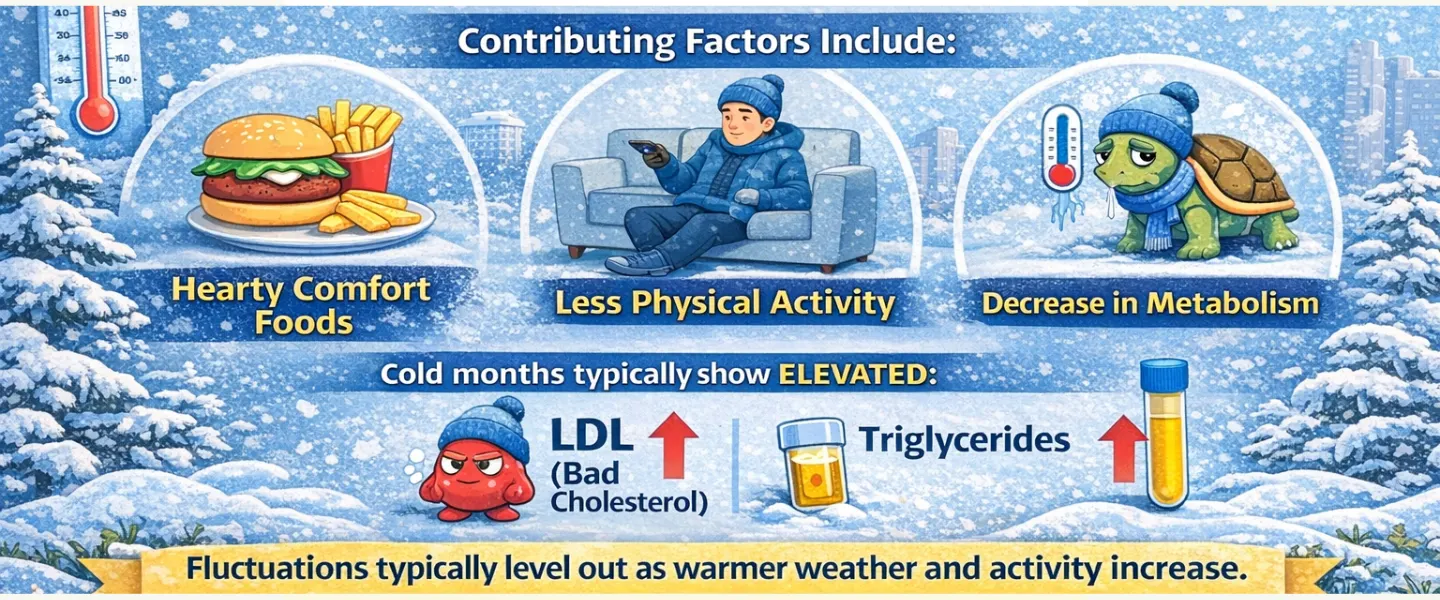
Numerous studies have confirmed that cholesterol levels are typically higher in the cold months than in the warmer months. Some contributing factors include:
Hearty comfort foods.
Less physical activity.
Decrease in metabolism.
Even if your diet has not changed significantly from one season to the next, your lipid profile in winter
typically shows elevated LDL (bad cholesterol) and triglycerides.
These natural fluctuations typically level out as you increase your physical activity as the weather warms up.
Why Does Blood Sugar Behave Differently in Winter?
ICMR-NIN dietary guidelines in 2024 recommend a balanced intake from multiple food groups including micronutrient-rich foods to help maintain healthy nutrient levels that often dip in winter.
Insulin sensitivity and eating habits may be impacted by the cold months.
Some of the more common influences in winter are:
Increased carbohydrate intake.
Less physical activity.
Higher levels of stress hormones.
This can result in changes in blood glucose levels during the winter, and in some cases, a significant difference in HbA1c between summer and winter can be detected with routine testing.
Many doctors will re-evaluate their patient's levels in spring before determining whether any long-term treatment adjustments are warranted.
Can Thyroid Levels Fluctuate With Seasonal Changes?
Body temperature and metabolism are regulated by the thyroid. The thyroid's function can increase slightly during the winter months, when it has to work harder.
This will cause mild fluctuations in winter thyroid levels, particularly in those already diagnosed with a thyroid condition.
Temporary changes will tend to return to normal as the seasons change.
Why Do Haemoglobin and Anaemia Patterns Shift in Winter?
Fresh fruits, greens, and iron-rich foods may not always be available during the winter months.
Because of limited sunlight and reduced nutrient absorption, winter diets contribute to lower haemoglobin levels and greater cases of seasonal anaemia, and fatigue, breathlessness, and weakness often increase during this time.
What Happens to White Blood Cells and Immunity in Winter?
Viruses cause more infections in cold climates. The body responds with additional white blood cells from the immune system, as reflected in higher white blood cell counts in lab results during the winter.
Changes in the immune system during winter include increased inflammatory responses, as evidenced by elevated lab markers.
Why Do Inflammation Markers Rise in Cold Months?
Inflammatory markers, such as CRP levels, are commonly elevated during the winter months due to seasonal infections, stress, and low vitamin levels.
These markers of inflammation are often correlated with current colds, flus, and/or mild infections before a physician diagnoses chronic inflammation.
How Do Electrolytes Shift During Winter?
Hyponatremic dehydration can occur because there is less fluid intake (drinking water), and indoor heating can make us more dehydrated.
Hyponatremic dehydration is usually mild; however, when dehydrated, electrolyte imbalance can occur, depending on the electrolyte involved (sodium, potassium, or chloride), which can cause headaches, dizziness, and weakness.
Why Do Fasting Blood Tests Look Worse in Winter?
When it is cold outside, your body’s metabolism slows down a little. When combined with large meals and reduced activity, your fasting blood tests performed during the winter can often show elevated levels of sugar, cholesterol, and triglycerides compared to what they would be if performed during the summer.
What Role Do Seasonal Metabolic Changes Play?
The impact of cold exposure on fat storage, hormone levels, and energy use is significant and varies throughout the winter season, leading to changes in virtually all blood parameters, albeit indirectly.
During cold temperatures, the body attempts to conserve internal heat and energy, which may result in changes in the use of laboratory values.
Frequently Asked Questions
1. Should I worry about abnormal blood tests in winter?
Not always. As many seasonal changes are temporary, your physician may want to check your blood work again as a follow-up.
2. Can drinking more water improve winter blood reports?
Yes, drinking enough fluids usually results in normal kidney lab values and electrolytes.
3. Is winter vitamin D deficiency common?
This is common, especially among those who do not receive sufficient sunlightthroughout the year.
4. Do winter infections affect lab results?
Cold exposure can increase white blood cell counts and inflammatory markers, even with only mild symptoms.
5. Should treatment change based on winter readings alone?
Doctors typically perform follow-up testing before making major, long-term medical decisions about your health.
Final Thoughts
Winter has a subtle effect on your body systems and the associated bloodwork results; many of the otherwise abnormal conditions that occur seasonally are simply your body's, and often temporary, response to dehydration, lack of sunlight, changes in diet, and changes in immune activity.
By learning these trends, you will be able to remain calm and educated about your health instead of becoming upset by temporary deviations in your bloodwork results.
Read Also
References
Disclaimer
This article is for educational purposes only and does not replace medical advice. Blood test interpretations vary depending on individual health conditions. Always consult a qualified healthcare professional for proper diagnosis and treatment decisions.












Comments