

Is Air Pollution Silently Destroying Your Lungs and Increasing Cancer Risk?





Last updated on 16 Jan 2026
Key Takeaways
|
Most people think air pollution becomes a health problem only when the sky turns grey or their eyes start burning. But the truth is more uncomfortable. Air pollution does not need to feel extreme to cause harm. In fact, the most dangerous damage happens quietly, day after day, with no obvious warning signs.
For many Indians, polluted air has become part of daily life. What we are only now beginning to understand is how deeply this constant exposure affects our lungs and why doctors are increasingly linking air pollution to lung cancer, even in people who have never smoked.
Let us break this down clearly.
Why Air Pollution In India Is No Longer Just An Environmental Issue
Air pollution in India is often discussed as a civic or ecological problem, but it is first and foremost a health issue. Traffic emissions, construction dust, factory smoke, burning of waste, and crop residue burning all release harmful pollutants into the air.
What makes the Indian situation especially concerning is long-term exposure. Many cities experience unhealthy air quality for most of the year. Even when pollution levels are not at their worst, breathing moderately polluted air every single day slowly strains the lungs.
Unlike food or water, air cannot be avoided. Every breath delivers these pollutants directly into the body.
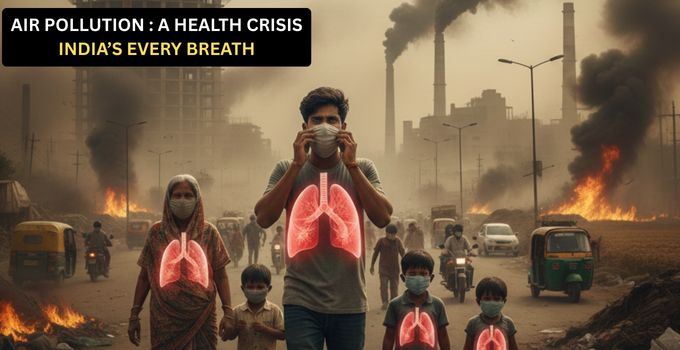
As per the World Health Organisation (WHO), ambient (outdoor) air pollution is classified as carcinogenic to humans, with long-term exposure to fine particulate matter (PM 2.5) directly increasing the risk of lung cancer, including in non-smokers.
What Polluted Air Actually Does Inside Your Lungs
Polluted air is a mixture of gases and microscopic particles. Among the most harmful are fine particles known as PM 2.5.
These particles are so small that they bypass the nose and throat and travel deep into the lungs. Some even enter the bloodstream.
PM 2.5 health effects explained simply
When PM 2.5 particles settle inside the lungs:
They irritate the lung tissue continuously
They trigger long-term inflammation
They reduce the lungs’ ability to exchange oxygen
They weaken the lungs’ natural defence mechanisms
Over time, this constant irritation damages lung cells, making the lungs more vulnerable to serious disease.
According to IQAir’s World Air Quality Report, India’s average annual PM2.5 exposure remains several times higher than the WHO-recommended safe limit, placing a large proportion of the population at risk of long-term lung damage.
Early Air Pollution Symptoms Most People Overlook
Many air pollution symptoms develop slowly and feel ordinary, which is why they are often ignored.
Common early signs include:
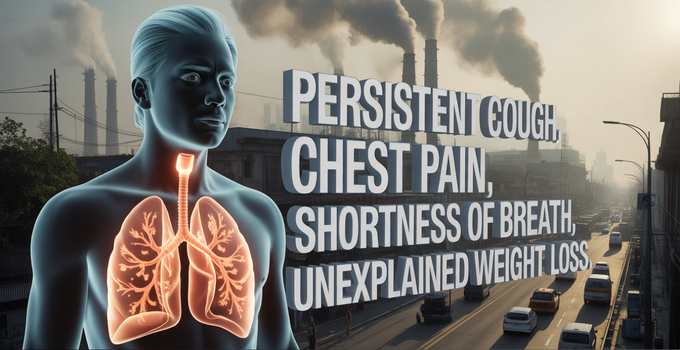
A persistent dry cough or throat irritation
Shortness of breath during routine activities
Chest tightness without infection
Frequent headaches or unusual fatigue
Repeated respiratory infections
Because these symptoms do not appear suddenly, people rarely connect them to polluted air. But when such symptoms persist for months or years, they signal ongoing lung stress.
How Air Pollution Increases The Risk Of Lung Cancer
The air pollution and lung cancer link is no longer a theory. It is backed by years of scientific research. Polluted air contains cancer-causing substances released from fuel combustion, vehicle exhaust, and industrial processes.
Here is how the damage happens:
Toxic particles injure lung cells repeatedly
The body attempts to repair this damage again and again
Over time, repair errors can occur
These errors can cause abnormal cell growth, which is how cancer begins. This is why global health organisations now classify Air Pollution and Lung Cancer as directly connected.
Why Does Outdoor Air Pollution And Cancer Risk Affect Everyone
Many people believe that staying indoors offers complete protection. Unfortunately, Outdoor Air Pollution and Cancer risk do not stop at your front door.
Polluted air enters homes through:
Open windows and doors
Ventilation systems and exhaust fans
Gaps in walls and ceilings
Individuals who reside in proximity to heavily travelled roadways, busy industrial areas, and construction sites experience exposure to potential cancer-causing agents on a constant basis. Long-term exposure to cancer-causing agents in these sorts of environments poses a considerably higher risk for developing cancer when combined with other factors, such as passive smoke exposure from a loved one who uses tobacco products.
As such, both cancer and air pollution have become significant issues that affect entire families, rather than just outdoor workers.
According to the Global Burden of Disease (GBD) India study, ambient and household air pollution together accounted for approximately 1.67 million deaths in India, with lung cancer and chronic respiratory diseases as major pollution-related outcomes.
Lung Cancer Symptoms That Deserve Attention
Most of the time, respiratory issues associated with lung cancer are mistaken for other respiratory diseases. This is part of the reason that lung cancers are diagnosed late.
You should look out for:
A cough that has gotten worse over the weeks
Blood in the mouth when you cough up mucus
Chest pain that won't go away
Shortness of breath at rest or with minimal activity
Weight loss or extreme feelings of tiredness
You can change how your doctor evaluates lung cancer when you see them with any of these early symptoms.
How Air Pollution Fits Into The Causes Of Lung Cancer Today
Although smoking continues to pose a highly significant risk factor, it is now only one of many.
Additional modern sources of lung cancer include:
1. Prolonged exposure to contaminated air
2. Second-hand smoke
3. Exposure at work to chemical and/or dust pollutants
4. Genetic susceptibility
In India, for instance, for numerous non-smokers, air pollution represents the sole substantial risk factor for lung cancer that is not readily avoidable.
Practical Ways To Reduce Daily Lung Exposure
While we cannot control city air quality overnight, we can reduce the amount of polluted air entering our lungs.
1. Improving indoor air
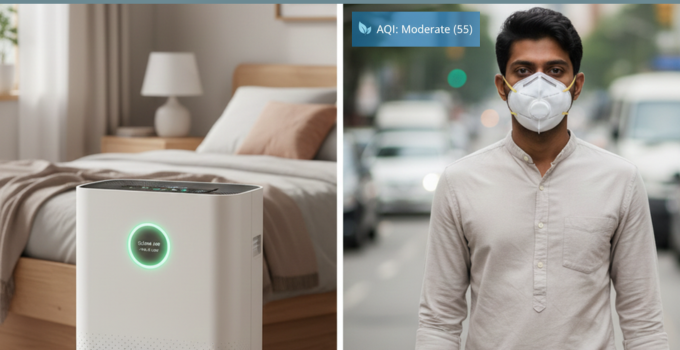
Using the best air purifier for the home helps lower indoor PM2.5 levels, especially in bedrooms, where we spend many hours breathing the same air.
2. Protecting yourself outdoors
Wearing an N95 mask for pollution on high-pollution days significantly reduces inhalation of harmful particles, especially for commuters and outdoor workers.
3. Simple daily habits
Avoid outdoor exercise during peak pollution hours
Keep windows closed on severe pollution days
Follow daily air quality index updates
Small steps, practised consistently, reduce long-term damage.
Can Pollution-Related Lung Damage Be Reversed?
A short-term irritant is often self-limiting as the patient's exposure to the irritant decreases. Unfortunately, long-term exposure may lead to an irreversible injury. Therefore, physicians must focus on prevention and early intervention rather than waiting until the patient experiences significant ill effects of the exposures to treat them.
Protecting your lungs today allows for continued function in the future.
As per a PubMed-indexed epidemiological review 2020, chronic exposure to PM 2.5 leads to repeated lung inflammation and cellular injury, increasing the likelihood of abnormal repair mechanisms that contribute to lung cancer development.
FAQs
1. How does air pollution damage your lungs silently?
Air pollution damages the lungs gradually by causing constant irritation and inflammation. Tiny particles enter deep into the lungs, weaken lung tissue over time, and reduce oxygen absorption without causing immediate pain or obvious symptoms.
2. How can air pollution cause cancer?
Air pollution contains cancer-causing chemicals that repeatedly damage lung cells. Over time, errors during cell repair can lead to uncontrolled cell growth, increasing the risk of lung cancer, even in non-smokers.
3. How to protect lungs from pollution?
You can protect your lungs by limiting outdoor exposure on high-pollution days, using an Air Pollution mask, keeping indoor air clean with air purifiers, and regularly following air quality alerts.
4. Can air pollution cause lung cancer in non-smokers?
Yes. Long-term exposure to polluted air can increase the risk of lung cancer in non-smokers due to continuous inhalation of harmful particles and toxic gases.
5. What are the early signs of lung damage from air pollution?
Early signs include persistent cough, breathlessness, chest tightness, frequent infections, fatigue, and reduced exercise tolerance, especially in polluted environments.
6. Is indoor air pollution also harmful?
Yes. Polluted outdoor air enters homes through windows and ventilation, and indoor sources like cooking smoke further increase lung irritation and long-term health risks.
Final Thoughts
Air pollution does not make people sick overnight. It harms slowly, quietly, and consistently. The rise in Lung cancer cases (non-smokers) serves as both a warning that contaminated air is not only an offender, but also hazardous to health.
By knowing their risk factors, being alert to the early warning signs and taking proactive measures to protect themselves, individuals will greatly reduce their chances of developing lung cancer (or any other lung disease) in the future.
Although it may be difficult to find a place with fresh air, knowledge will always lead to better decision-making.
The lungs will continue to work 24/7 for your entire lifetime, so by protecting them today, you are investing in your future health.
Read Also
References
1. Wang M, et al.Particulate matter air pollution as a cause of lung cancer: epidemiological and experimental evidence, Br J Cancer. 2025 Apr 4;132(11):986–996. doi: 10.1038/s41416-025-02999-2
2. Yu-Fei Xing, et al. The impact of PM2.5 on the human respiratory system J Thorac Dis. 2016 Jan;8(1):E69–E74. Doi: 10.3978/j.issn.2072-1439.2016.01.19
3. Ozlem Kar Kurt et al.Pulmonary Health Effects of Air Pollution, Curr Opin Pulm Med. Author manuscript; available in PMC: 2017 Mar 1. Published in final edited form as: Curr Opin Pulm Med. 2016 Mar;22(2):138–143. doi: 10.1097/MCP.0000000000000248
Disclaimer: The content in this blog is for general informational purposes only and is not a substitute for professional medical advice, diagnosis, or treatment. Always consult your doctor or a registered dietitian before making any changes to your diet, especially if you have a medical condition or are taking prescribed medication. While the information is based on trusted sources, individual needs and results may vary. MrMed does not promote or endorse any specific food or treatment mentioned unless explicitly stated.












Comments