

.png&w=1080&q=75&dpl=dpl_4whoxTpEisfWjq2UkEhDXS7s1JB3)
16 Fixed-Dose Combination Drugs Banned by the Government: Check the Complete List





Last updated on 05 Aug 2026
The Indian government, through the Ministry of Health and Family Welfare and the Central Drugs Standard Control Organisation (CDSCO), has banned 16 fixed-dose combination (FDC) medicines that were deemed unsafe for public use. This landmark decision protects millions of Indian patients from potentially harmful drug combinations that lacked adequate scientific evidence of safety and efficacy.
If you or a family member is currently taking any of these banned medicines, this comprehensive guide explains what FDC drugs are, why they were banned, the complete list of banned medicines, and the critical steps you must take immediately.
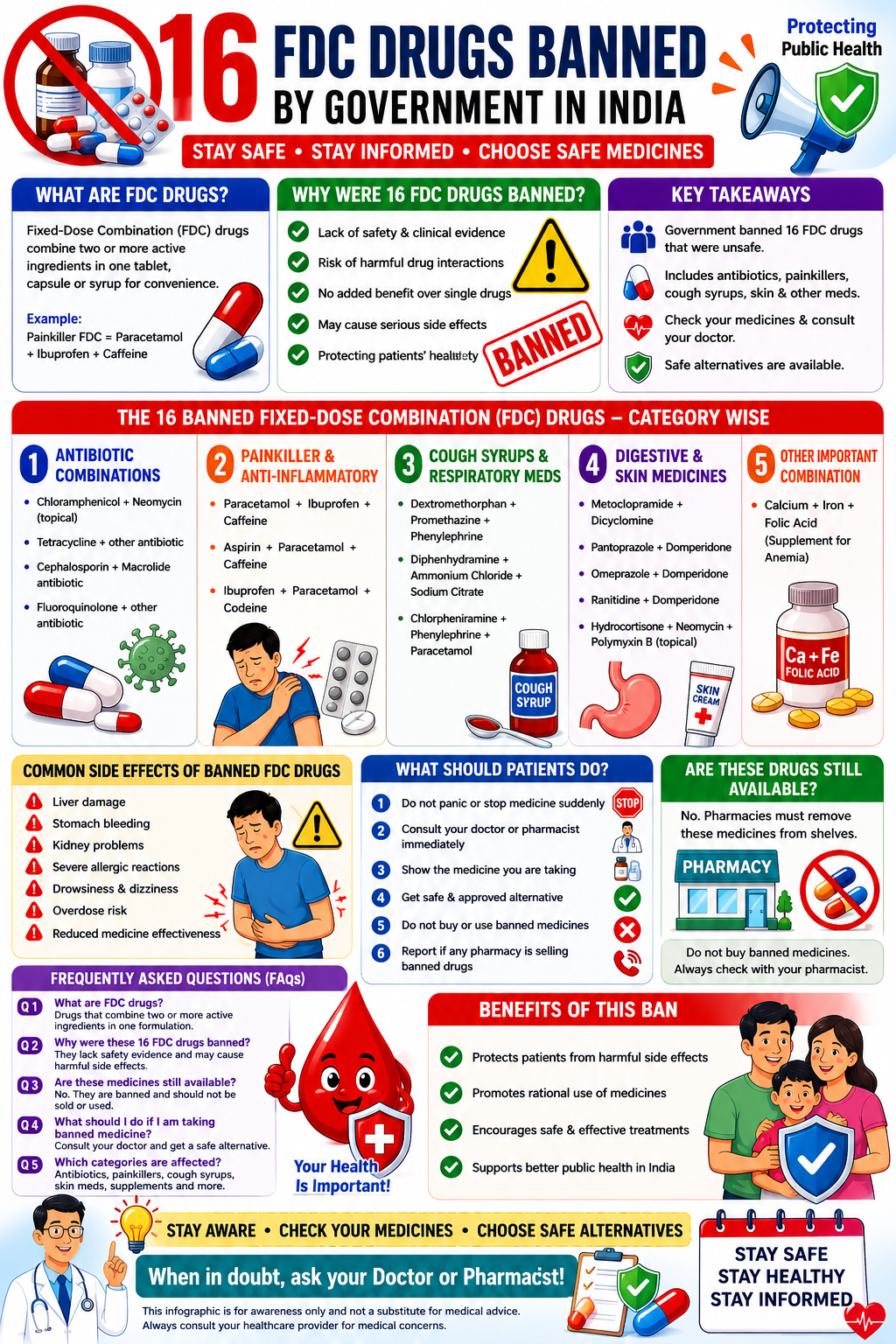
Key Takeaways
|
What Are Fixed-Dose Combination (FDC) Drugs?
Fixed-dose combination drugs, abbreviated as FDC, are pharmaceutical formulations that combine two or more active pharmaceutical ingredients in a single tablet, capsule, syrup, or injection.
The concept behind FDC medicines is convenience: instead of taking multiple separate pills, patients take a single combination pill containing all necessary medications. For example, a painkiller FDC might combine paracetamol, ibuprofen, and caffeine in a single tablet.
Common Categories of FDC Drugs:
Antibiotic combinations: combining different antibiotic classes to treat resistant infections.
Painkillers: combining analgesics with anti-inflammatory agents for enhanced pain relief.
Cough syrups: combining multiple cough suppressants and expectorants.
Skin medicines: combining antimicrobial agents with steroids.
Digestive medicines: combining enzymes with antacids for gastric relief.
The rationale for combining drugs is that they may work synergistically, meaning together they are more effective than alone.
They also improve patient compliance by reducing the number of pills to take. However, the problem with FDC drugs is that each combination must be individually tested for safety and efficacy.
Why Are Some Fixed-Dose Combination Medicines Considered Unsafe?
According to the Ministry of Health and Family Welfare (MOHFW), FDC medicines are considered unsafe for several critical reasons.
Many FDC drugs lack adequate clinical trial data demonstrating their safety and efficacy when used in specific combinations. Manufacturer testing often involves each ingredient individually but never tests the combination together in human subjects.
Drug interactions between combined ingredients can occur, where one drug alters the absorption, metabolism, or elimination of another. Interactions can lead to either reduced effectiveness or toxic accumulation of drugs in the body.
Patients may inadvertently consume excessive amounts of certain ingredients if they take multiple FDC products that contain overlapping active ingredients. Quality of evidence supporting FDC medicines is often insufficient, with many approved decades ago when regulatory standards were less stringent.
Why Did the Government Ban 16 FDC Medicines?
The Central Drugs Standard Control Organisation (CDSCO), which is India's apex drug regulatory body, conducted a comprehensive review of FDC medicines in the Indian market. After thorough analysis of safety data, clinical evidence, and international regulatory decisions, the CDSCO determined that 16 specific FDC combinations posed unacceptable risks to public health and lacked adequate evidence of safety and efficacy.
Factors Behind the Ban:
Lack of adequate clinical trial data for the specific combination.
Reported adverse events and safety concerns from published literature and drug surveillance systems.
Lack of therapeutic advantage over single-ingredient formulations available in the market.
Irrational drug combinations where the ingredients do not provide additional benefit.
Data show that these combinations increase the risk of adverse drug interactions and toxicity.
The 16 Banned Fixed-Dose Combination Drugs: Complete List
Category 1: Antibiotic Combinations Banned
Chloramphenicol plus neomycin in topical preparations is banned due to inadequate evidence of safety when combined.
Tetracycline plus any other antibiotic in FDC form lacks adequate testing.
The cephalosporin-plus-any-macrolide antibiotic combination has not been adequately tested.
Fluoroquinolone plus any other antibiotic in FDC form. Fluoroquinolones are potent, but combinations lack evidence supporting their use.
Category 2: Painkiller and Anti-Inflammatory Combinations Banned
Paracetamol plus ibuprofen plus caffeine, a popular over-the-counter painkiller combination, is banned because paracetamol and ibuprofen together increase hepatotoxicity and gastrointestinal toxicity without additional pain relief benefit.
Aspirin plus paracetamol plus caffeine, widely used for headaches and muscle pain, increases the risk of gastrointestinal bleeding.
Ibuprofen plus paracetamol plus codeine combines two NSAIDs with an opioid, significantly increasing gastrointestinal bleeding and organ toxicity risk.
Category 3: Cough Syrups and Respiratory Medicines Banned
Dextromethorphan plus promethazine plus phenylephrine a cough syrup combination previously used widely.
Diphenhydramine plus ammonium chloride plus sodium citrate in cough syrups, multiple active ingredients targeting the same symptom without added benefit.
Chlorpheniramine plus phenylephrine plus paracetamol common cold medicine combination with significant drowsiness and anticholinergic side effects.
Category 4: Digestive and Skin Medicine Combinations Banned
Metoclopramide plus dicyclomine: a digestive medicine combination lacking adequate evidence.
Pantoprazole plus domperidone affects many patients with gastric reflux.
Omeprazole plus domperidone is a proton pump inhibitor with a dopamine antagonist lacking synergistic benefit.
Ranitidine plus domperidone: H2-blocker with dopamine antagonist, increasing adverse effects.
Hydrocortisone plus neomycin plus polymyxin B in topical skin preparations used for skin infections and inflammation.
Category 5: Other Important Banned Combinations
Calcium plus iron plus folic acid, a popular supplement combination for anaemia, is banned because calcium inhibits iron absorption, making the combination irrational and ineffective
Impact on Patients: Which Popular Medicines Are Affected?
The ban affects millions of Indian patients currently taking these medicines. Many over-the-counter painkillers sold at pharmacies without a prescription contain the paracetamol plus ibuprofen plus caffeine combination, used commonly for headaches, muscle pain, and fever.
Affected Popular Medicines by Category:
Over-the-counter painkillers: paracetamol-ibuprofen combinations are widely purchased for headaches, muscle pain, and fever.
Common cough syrups: dextromethorphan-promethazine combinations are widely purchased during flu season for cold and cough relief.
Digestive medicines: omeprazole or pantoprazole combinations with domperidone, affecting patients with chronic gastroesophageal reflux disease who rely on these medicines daily.
Skin creams and ointments: hydrocortisone plus antibiotic combinations used for fungal and bacterial skin infections.
Anaemia supplements: calcium plus iron plus folic acid combinations, particularly affecting pregnant women and patients with iron-deficiency anaemia.
Immediate Action: What Should Patients Do If Taking a Banned FDC Medicine?
According to Dr Suresh Sharma, Head of Department of Pharmacology and Clinical Pharmacist, All India Institute of Medical Sciences (AIIMS) Delhi, the government's decision to ban 16 fixed-dose combination medicines is not just a regulatory action but a necessary correction in India's pharmaceutical landscape.
Do Not Panic but Act Quickly:
If you or a family member is currently taking any of the 16 banned FDC medicines, do not panic or suddenly stop taking the medicine, as this could be dangerous. Instead, consult your physician or pharmacist immediately regarding your specific medicine.
Do not attempt to diagnose or switch medicines on your own, as this requires medical expertise.
Step-by-Step Action Plan:
Schedule an appointment with your doctor or visit your nearest pharmacy to discuss the banned medicine you are taking.
Bring the medicine bottle so your healthcare provider can see the exact formulation and dosage.
Do not assess the need to switch medicines on your own; your doctor will determine whether you need to switch immediately or can continue for a short time.
Your doctor will assess whether you need to switch to an approved alternative immediately or can continue briefly until a replacement is arranged.
Many banned medicines have safe, approved alternatives available in the Indian market.
Get a prescription for an approved alternative that provides the same therapeutic benefit without safety concerns.
For example, if taking paracetamol plus ibuprofen, your doctor may prescribe either paracetamol or ibuprofen alone.
For digestive issues, your doctor may prescribe a proton pump inhibitor alone, without the dopamine antagonist.
Do not buy the banned medicines. Pharmacies are legally required to stop selling these 16 FDC medicines.
If a pharmacist offers you a banned FDC drug, report it to your local drug inspector or the CDSCO.
Selling banned medicines is illegal and violates pharmaceutical regulations.
Are the 16 Banned Drug Combinations Still Available in Pharmacies?
Legally, the 16 banned FDC medicines should not be available in pharmacies as of the ban's enforcement date.
All distributors and pharmacies are required to remove these medicines from shelves and destroy the remaining stock or return it to the manufacturers.
Challenges in Implementation:
Old stock may remain in some pharmacies, particularly in smaller towns and rural areas, where regulatory oversight is less stringent.
Online pharmacies may still list these medicines, though they should not be able to deliver them.
Some unscrupulous pharmacists may sell remaining stock illegally at discounted prices to unsuspecting customers.
Enforcement varies across different states and regions of India.
Remote areas may have delayed awareness of the ban.
How to Verify Medicine Safety:
Always check the exact ingredients listed on the medicine label.
Ask your pharmacist whether the specific medicine you are purchasing is on the banned list.
Verify the medicine registration number with the CDSCO website, or ask the pharmacist to check.
Cross-reference the medicine name and ingredients with the official banned list before purchasing.
FAQs
Q1. What are fixed-dose combination (FDC) drugs?
Fixed-dose combination drugs are pharmaceutical formulations that combine two or more active pharmaceutical ingredients in a single tablet, capsule, or syrup. The purpose is to provide convenience: patients take one combination pill instead of multiple separate medications.
Q2. Why are some fixed-dose combination medicines considered unsafe?
FDC medicines are considered unsafe when they lack adequate clinical trial data for the specific combination, contain ingredients that interact negatively with each other, pose overdose risk from overlapping active ingredients, have insufficient quality of evidence supporting their use, or provide no therapeutic advantage over taking the drugs separately.
Q3. Why did the government ban 16 FDC medicines?
The government banned these 16 FDC medicines after determining they lacked adequate evidence of safety and efficacy, posed unacceptable health risks to patients, were flagged by international regulatory agencies, and provided no advantage over approved single-ingredient formulations.
Q4. Are the 16 banned drug combinations still available in pharmacies?
Legally, no. Pharmacies are required to remove these medicines from shelves and stop selling them. However, some old stock may remain in smaller pharmacies or be sold illegally. Always verify with your pharmacist and check the medicine's registration status before purchasing.
Q5. What should patients do if they are taking a banned FDC medicine?
Consult your physician or pharmacist immediately without panicking. Do not stop taking the medicine abruptly or switch without medical advice. Your doctor will prescribe a safe, approved alternative. If you suspect a pharmacy is selling banned medicines, report it to the local drug inspector or CDSCO.
Q6. Which cough syrups and antibiotics are included in the banned drugs list?
Banned cough syrups include dextromethorphan plus promethazine plus phenylephrine, diphenhydramine plus ammonium chloride plus sodium citrate, and chlorpheniramine plus phenylephrine plus paracetamol.
Q7. What are the side effects of the banned FDC drugs?
Side effects vary by combination but include gastrointestinal toxicity and bleeding, hepatotoxicity, drowsiness and anticholinergic effects, malabsorption of essential nutrients, and unpredictable drug interactions that can vary between individuals.
Q8. Which popular medicines are affected by the latest drug ban?
Affected medicines include popular over-the-counter painkillers, common cough syrups, digestive medicines for acidity, topical skin creams containing antibiotics, and anaemia supplements that combine calcium, iron, and folic acid.
Final Thoughts
The government's decision to ban 16 fixed-dose combination medicines represents a significant step towards protecting public health and ensuring that only evidence-based, safe medications are available in the Indian market. While the ban may cause temporary inconvenience for patients who need to switch medicines, it prevents potentially serious adverse effects and aligns India's pharmaceutical standards with global regulatory norms.
If you are currently taking any of the 16 banned FDC medicines, take action immediately by consulting your healthcare provider to obtain a safe, approved alternative. Do not continue taking banned medicines or purchase them illegally from unscrupulous pharmacists. Your health and safety are paramount, and approved alternatives are available for every therapeutic indication previously covered by these banned combinations.
Read Also
Semaglutide in India: CDSCO Cracks Down on Illegal GLP-1 Sales
Fake Medicines in India: How MrMed Ensures 100% Genuine Medicines
References
All India Institute of Medical Sciences. Rational drug use and FDC medicine prescribing guidelines [Internet]. New Delhi: AIIMS; 2024 [cited 2026 May 27].https://www.aiims.edu/index.php/en
National Pharmaceutical Pricing Authority. FDC drug pricing and regulatory oversight in India [Internet]. New Delhi: NPPA; 2024 [cited 2026 May 27].https://nppa.gov.in/en
Disclaimer: This article is for general informational purposes only and is not a substitute for professional medical advice. If you are taking any of the 16 banned FDC medicines, consult your physician or healthcare provider immediately for guidance on switching to approved alternatives. Do not stop taking medicines abruptly or self-medicate without medical consultation. Always follow your doctor's recommendations regarding medication changes.












Comments