


Melatonin and Sleep: Know the Relationship Between Them





Last updated on 17 Jul 2026
Many individuals keep melatonin tablets on hand, much like they might reach for paracetamol for a headache, because of its known effectiveness and the sense that it poses no risks. Millions of bottles are sold worldwide every year. In India, it is regarded as both a dietary supplement and a medicine, and patients can obtain it from pharmacies without a prescription.
However, how many people actually know what melatonin is and what it does? This blog discusses the link between melatonin and sleep, a connection supported by current scientific research.
Key Takeaways
|
What Is Melatonin? The Natural Sleep Hormone Explained
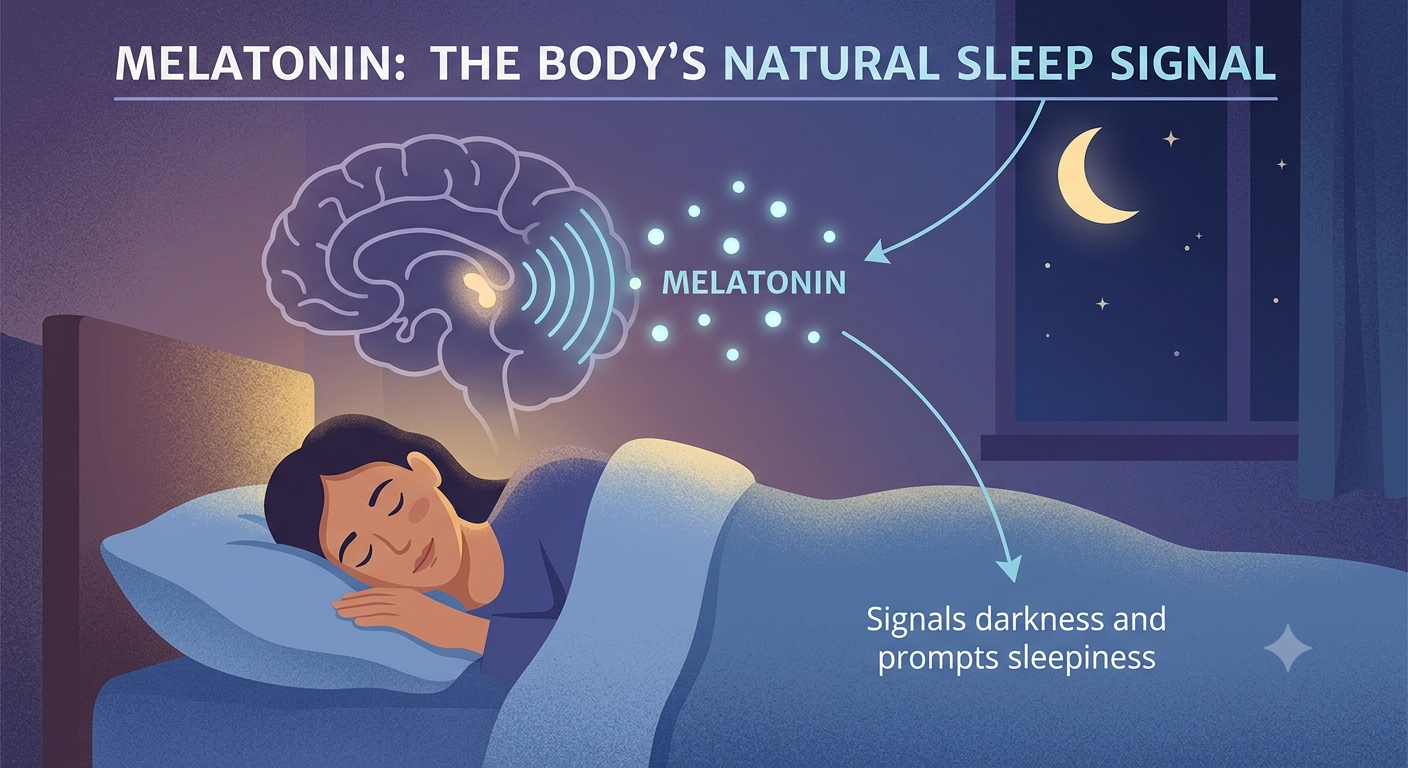
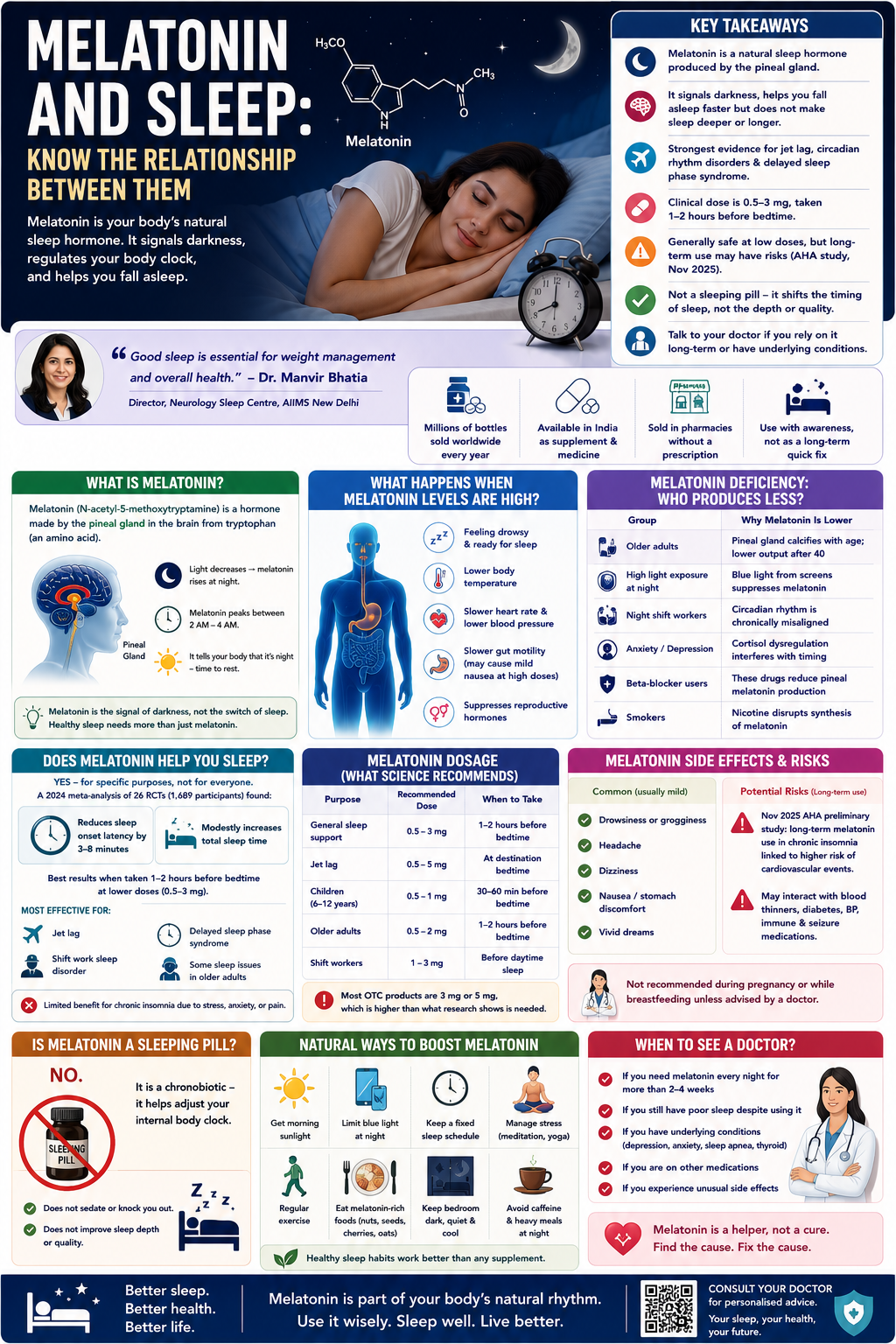
Melatonin (N-acetyl-5-methoxytryptamine) is a hormone produced primarily by the pineal gland, a pea-sized structure deep in the brain. It is synthesised from the amino acid tryptophan, converted into serotonin.
How does melatonin work? Melatonin production is influenced by light. As night sets in, the eye transmits signals to the brain (specifically the hypothalamus), which then causes the pineal gland to secrete melatonin. The level of melatonin in the bloodstream rises sharply between 9 and 10 p.m., peaks between 2 and 4 a.m., and then falls again shortly before the break of dawn, thereby contributing to the circadian cycle of sleep.
What is the relationship between melatonin and sleep? Melatonin is more of a signal of darkness than a switch for sleep. It signals every cell in the body that it is already night, so rest should begin. Melatonin reduces body temperature, slows hair growth, and switches many biological systems into a resting state. However, for healthy sleep to occur, melatonin alone is not enough, since sleep depends more on adenosine and other hormones that support it.
Which hormone is best for sleep? Although melatonin is the key hormone in sleep processes, it collaborates with adenosine, cortisol, and serotonin.
What Happens When Melatonin Levels Are High?
Dr Manvir Bhatia, Director of the Neurology Sleep Centre in New Delhi, India's first sleep disorder clinic founder at AIIMS, and the author of The Sleep Solution the first non-fiction book on sleep in India one of the rare clinicians invited by WHO to participate in developing sleep health guidelines, makes the point that underpins this entire blog: "Good sleep is essential for weight management and overall health." Melatonin is one tool in that pursuit, not the destination itself.
During peak nighttime secretion, high melatonin is associated with:
Feeling drowsy and ready for sleep
Lower core body temperature
Slower heart rate and reduced blood pressure
Decreased gut motility and digestive activity
Suppression of reproductive hormones (which is why long winter nights affect fertility in some animals and why some researchers study melatonin's effects on human reproductive timing)
The gut connection is worth addressing directly. Does melatonin slow gut motility? Yes, to a degree. The gut contains melatonin receptors, and elevated melatonin levels, whether natural or supplemented, can reduce peristalsis. This is one reason why taking high-dose melatonin at the wrong time can cause mild nausea or stomach discomfort.
Melatonin Deficiency: Who Produces Less of It?
Melatonin deficiency is not a formal clinical diagnosis in the way that vitamin D deficiency is, but certain groups consistently produce lower levels:
Group | Why Melatonin Production Is Lower |
Older adults | Pineal gland calcifies with age; melatonin output declines significantly after 40 |
People with high light exposure at night | Blue light from screens suppresses pineal secretion |
Night shift workers | Circadian rhythm is chronically misaligned |
People with anxiety or depression | Cortisol dysregulation interferes with melatonin timing |
People taking beta-blockers | These suppress pineal noradrenergic input, reducing melatonin output |
Smokers | Nicotine disrupts melatonin synthesis |
For older adults especially, reduced melatonin production contributes to earlier waking, lighter sleep, and the gradual shift in sleep architecture that characterises ageing.
Does Melatonin Help You Sleep? What the Science Says
The honest clinical answer is: yes, for specific purposes, not universally.
A 2024 systematic review and dose-response meta-analysis published in the Journal of Pineal Research, covering 26 randomised controlled trials with 1,689 participants, found that melatonin reduces sleep onset latency by approximately 3 to 8 minutes and modestly increases total sleep time, with effects being dose-dependent but plateauing at higher doses. The strongest effects were seen when melatonin was taken 1 to 2 hours before the desired sleep time, at lower rather than higher doses.
Melatonin is most effective for:
Jet lag: strongest evidence; shifting the body clock after crossing time zones
Delayed sleep phase syndrome: when your natural sleep timing is shifted later than desired
Shift work disorder: supporting sleep during daytime hours
Older adults with insomnia: where declining natural production is a likely factor
Children with neurodevelopmental conditions (ADHD, autism) are used in clinical settings with physician supervision
Melatonin is less effective for:
Chronic insomnia in adults without a circadian component
Insomnia driven by anxiety, pain, or poor sleep habits
Staying asleep (sleep maintenance insomnia)
Melatonin Dosage: Less Is More
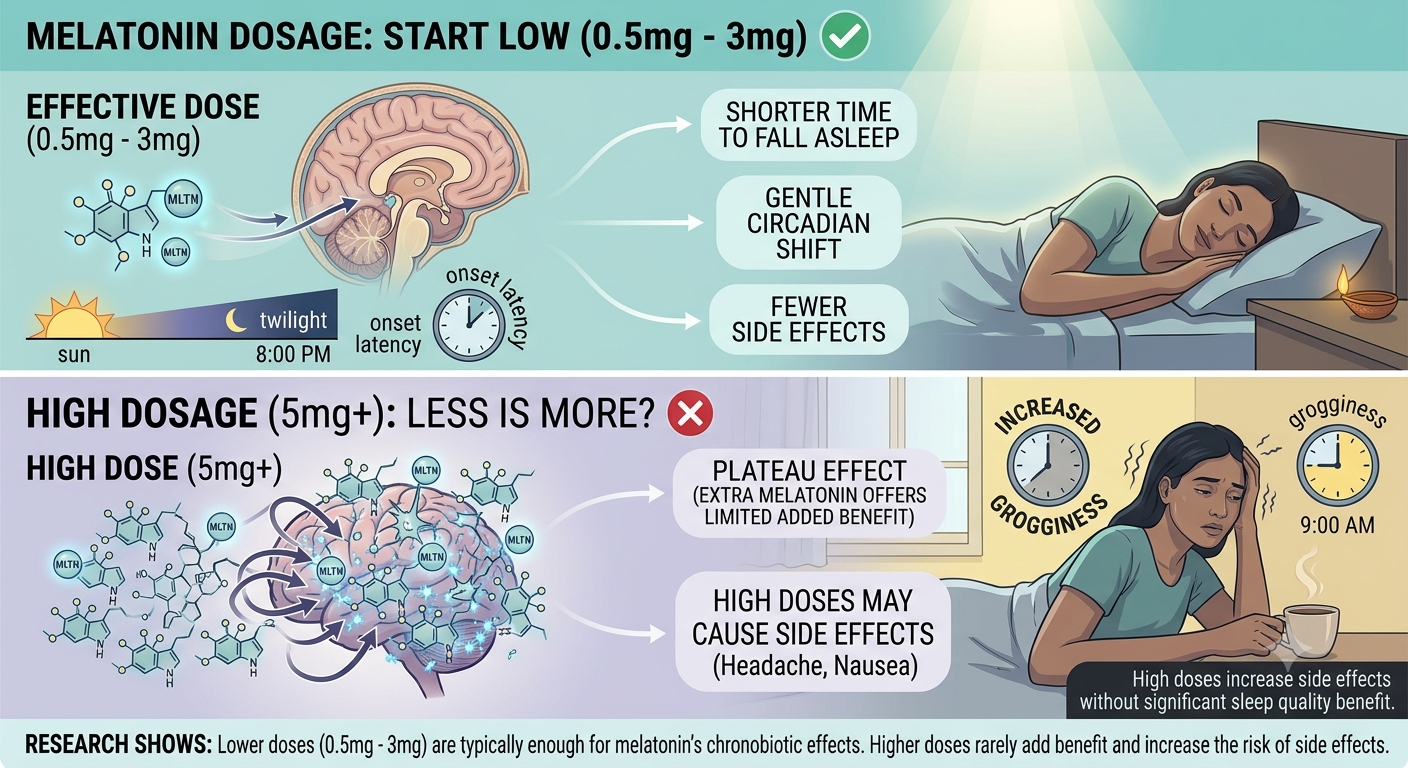
Melatonin dosage is one of the most misunderstood aspects of the supplement. Commercially available products, including many melatonin 3mg and 5mg tablets, significantly exceed the doses shown to be effective in research.
What the evidence actually supports:
0.5 to 1mg taken 1 to 2 hours before target sleep time is effective for circadian shifting
Melatonin 3mg or above is appropriate for some older adults with documented production decline
5mg or above rarely adds measurable benefit over 3mg and increases the risk of next-day grogginess
Is melatonin a sleeping pill? No, and understanding this distinction matters. Sleeping pills (sedative-hypnotics like benzodiazepines or z-drugs) work by suppressing the central nervous system to induce unconsciousness. Melatonin works by nudging your circadian clock it is a chronobiotic, not a sedative. Taking melatonin tablets 30 minutes before bed will not force sleep the way a sleeping pill does. It shifts the timing of readiness to sleep.
Melatonin Side Effects: The Full Picture
At doses of 2 to 10mg daily for up to 3.5 years have not been reported in published studies, but mild side effects are common, especially at higher doses:
Side Effect | When It Occurs | What to Do |
Next-day drowsiness | Most common with slow-release formulas or high doses | Switch to a fast-release, lower-dose product |
Headache | Occasional | Reduce dose |
Dizziness | Low frequency | Take a seat; reduce the dose |
Nausea or stomach discomfort | Especially with high doses | Take with food; reduce dose |
Vivid dreams | Particularly at higher doses | Reduce dose |
Rebound insomnia | After stopping prolonged use | Taper gradually |
Melatonin side effects for specific groups:
Pregnant women: Melatonin crosses the placenta. While it may protect fetal neurological development at physiological levels, melatonin supplement use in pregnancy should be discussed with an obstetrician.
Children: Generally considered safe for short-term use under medical supervision. Long-term use in children needs monitoring.
People on blood thinners, immunosuppressants, or diabetes medications: Potential interactions; always consult a doctor.
A New Safety Signal to Be Aware Of
In preliminary research conducted in November 2025, researchers found a connection between chronic insomnia patients’ prolonged use of melatonin supplements and an increased risk of heart failure diagnosis, hospitalisation, and mortality.
Although the authors pointed out that the study is observational and does not imply any cause-and-effect relationships, it is an initial alert about cardiovascular safety issues related to prolonged supplement use and should be taken into consideration, especially by elderly people with certain heart diseases.
What Happens If You Take Melatonin and Don't Go to Sleep?
If you take melatonin pills to induce sleep but end up remaining awake due to the use of your phone, television, or doing work, two consequences occur.
The first is that your melatonin intake governs your internal clock to the time of ingestion, creating a new sleep pattern. The second is the effect of drowsiness building up due to resistance to sleep, resulting in feeling dazed, confused, and lost.
Therefore, one should take melatonin tablets at night and in dark, quiet surroundings.
How to Increase Sleeping Hormones Naturally
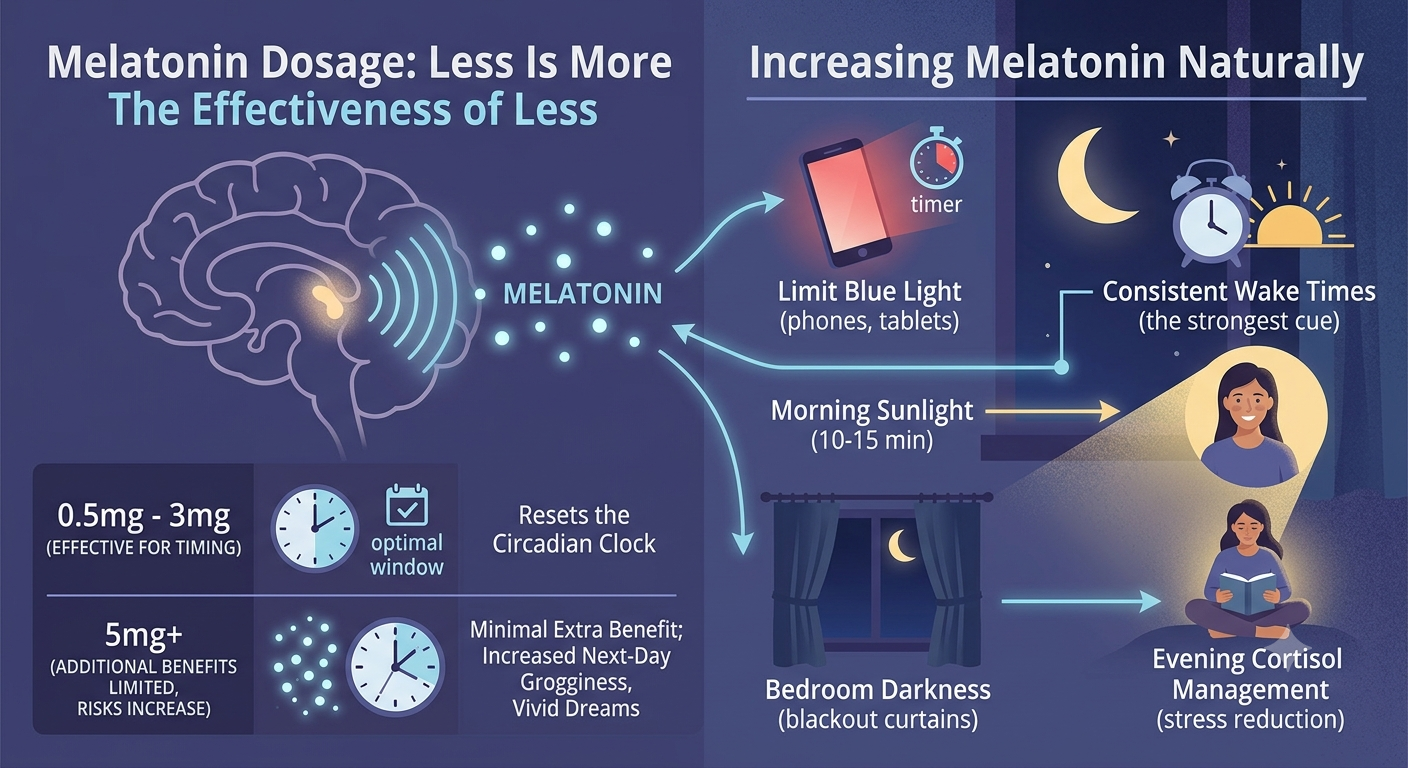
Reduce blue light exposure after 8 pm: screens, LED overhead lights, and phones all suppress melatonin
Keep your bedroom consistently dark: blackout curtains have measurable effects on melatonin output
Maintain a consistent wake time: the single strongest zeitgeber (time cue) for anchoring circadian rhythm
Get morning sunlight: 10 to 15 minutes of natural light shortly after waking significantly boosts melatonin production later that night
Manage evening cortisol: stress, late eating, and intense exercise before bed suppress melatonin
What Is the 3 3 3 Rule for Sleep?
It is a simple sleep hygiene framework designed to wind the nervous system down before bed:
Stop eating 3 hours before bed: digestion raises core body temperature and signals wakefulness
Stop working or exercising 3 hours before bed: cognitive and physical activity raise cortisol
Stop screen use 30 minutes before bed: blue light acutely suppresses melatonin production
Some versions extend this to a broader "no caffeine after 3 pm" rule as a fourth element. It is not a clinical protocol, but it captures most of the environmental changes that allow natural melatonin to do its job.
FAQs
Q1. What is the relationship between melatonin and sleep?
Melatonin is the body's darkness signal; it tells the brain and body that night has arrived and prepares them for sleep. It reduces sleep onset time but does not directly control sleep depth or duration.
Q2. Is melatonin a sleeping pill?
No. It is a chronobiotic it shifts sleep timing, not sleep depth. It works best when taken in alignment with your intended sleep schedule, not as an on-demand sedative.
Q3. What melatonin dosage is right?
Start with 0.5 to 1mg. For most purposes, 1- 3 mg is sufficient. Higher doses rarely add benefit and increase the risk of side effects.
Q4. What happens if you take melatonin and don't go to sleep?
Grogginess, impaired concentration, and possible disruption of your circadian timing. Take it only when you intend to sleep, in a dark environment.
Q5. Is melatonin safe for long-term use?
Short- to medium-term use (up to 3.5 years) has shown no significant adverse events in studies. A 2025 AHA preliminary study raised cardiovascular concerns with long-term use in chronic insomnia patients, particularly older adults.
Final Thoughts
Melatonin has strong effects on flying to different time zones, irregular circadian rhythms, working night shifts, and sleep loss that comes with ageing. However, it does not help with chronic insomnia and should not substitute for finding the best ways to treat the stress, exposure to light, and erratic lifestyle that usually cause sleep problems.
In fact, melatonin and supplements are advertised as the ultimate solution to sleeping problems. In reality, scientific data show that using only low doses of melatonin at the right time will help improve your sleep schedule. If you do not deal with issues that cause insomnia, melatonin will not solve the problem.
To start with, look into the ways to increase natural sleeping hormones. Use melatonin as a temporary remedy if needed. In case of ongoing sleep troubles, consult a doctor to identify the cause rather than asking for higher doses.
Read Also
References
Cruz-Sanabria F, Bazzani A, Farini M, Zappaterra M, Faraguna U. Optimising the time and dose of melatonin as a sleep-promoting drug: a systematic review of randomised controlled trials and dose-response meta-analysis. J Pineal Res [Internet]. 2024 Jun [cited 2026 Jul 09];76(4):e12985. Available from: https://onlinelibrary.wiley.com/doi/10.1111/jpi.12985
American Heart Association Newsroom [Internet]. Dallas: AHA; 2025 Nov 03 [cited 2026 Jul 09]. Long-term use of melatonin supplements to support sleep may have negative health effects. Available from: https://newsroom.heart.org/news/long-term-use-of-melatonin-supplements-to-support-sleep-may-have-negative-health-effects
Healthline [Internet]. 2024 Nov 18 [cited 2026 Jul 09]. Melatonin for sleep: uses, dosage, side effects and more. Available from: https://www.healthline.com/nutrition/melatonin-and-sleep
Disclaimer: This article is for general informational and awareness purposes only. Melatonin supplements should not replace professional medical advice. If you have persistent sleep difficulties, please consult a qualified physician or sleep specialist. Melatonin may interact with certain medications; always disclose supplement use to your doctor.












Comments