


Why Digestion Feels Slower in Winter





Last updated on 21 Jan 2026
Key Takeaways
|
Ever noticed how winter turns even a simple lunch into a “full day project” for your stomach? You eat, and instead of feeling satisfied, you feel heavy, tight, and bloated. Some people even feel sleepy right after meals. If you are dealing with slow digestion in winter, you are not alone. Across India, colder months bring common winter digestion problems like winter bloating, gas, and constipation in winter.
The truth is, winter changes your habits quietly. You drink less water, move less, eat richer comfort foods, and snack more often. All of this affects the digestive system in winter.
Let us understand why it happens and how you can fix it with easy, practical steps.
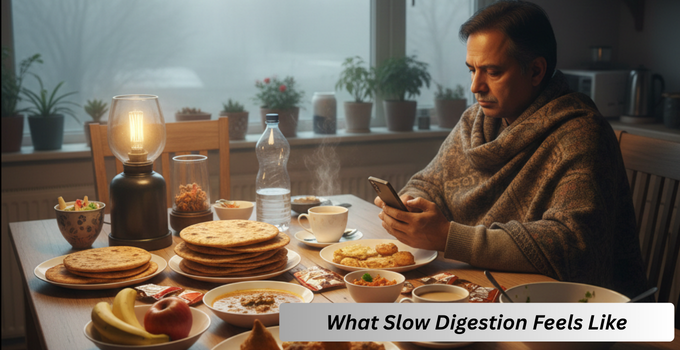
What Slow Digestion Feels Like
Signs of slow digestion may manifest as minor discomfort. Examples include:
Having an overly prolonged feeling of fullness
An increase in belching or the presence of gas
Following food consumption, gas/bloat lasts in the colder months
Finding it difficult to pass stool (constipation in the winter months)
Experiencing minor to moderate acidity/heaviness
Having lower-than-normal appetites on some days and higher-than-normal cravings for certain foods on other days.
“If digestion had a speed setting, winter would definitely switch it to slow mode.”
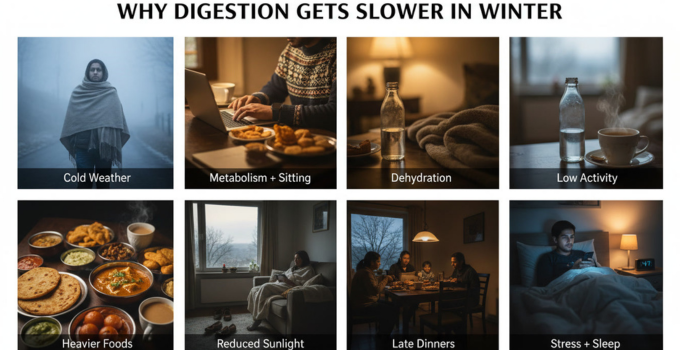
Why Digestion Gets Slower In Winter
1. Cold Weather Slows Digestion
Your body attempts to maintain its warmth during cold temperatures by directing blood away from the extremities toward vital organs and areas that control temperature. This may result in slower digestion; therefore, many people believe that in cold weather, their digestion will take longer than usual, as food may sit in the stomach longer than usual.
2. Metabolism In Winter And Sluggish Gut
People generally believe that a person's metabolism slows down in cold weather; this is incorrect. In fact, the opposite is true: your metabolism may actually increase in winter since you are burning energy to regulate body temperature. However, because people tend to reduce their daily activity and increase their meal sizes, digestion often appears to be slower.
3. Dehydration In Winter
You may not feel thirsty, but it is still necessary to drink water throughout winter. A lack of hydration during the winter months can lead to hard, dry stools and contribute to bloating and constipation. Hydration is the most unidentified factor in constipation.
As per NIH Cold exposure can increase urine output (called cold-induced diuresis). So you may lose fluids even in winter, but still feel less thirsty, increasing the risk.
4. Reduced Physical Activity
Most people will walk less in winter and spend more time sitting down. A decrease in physical activity will slow intestinal motility, as the intestines respond positively to body movement. When there is no body motion, the intestines will slow down as well.
5. Heavier Winter Foods
Winter cravings push us towards parathas, fried snacks, sweets, and rich gravies. These heavier winter foods contain more fat and refined carbs, which take longer to digest. This causes heaviness, acidity, and gas.
6. Low Fiber Diet In Winter
Salad intake reduces, fruit intake reduces, and fiber intake drops. A low-fiber diet in winter means stools become harder and bowel movements become irregular. fiber is needed to keep digestion smooth.
7. Winter Appetite Changes
Winter appetite changes are real. People snack more, drink more chai, eat late-night meals, and take bigger portions. Irregular meal timing and overeating overload digestion.
8. Winter Gut Microbiome In Winter
Your gut contains good bacteria that support digestion. In winter, dietary shifts and reduced fiber intake can affect the gut microbiome. This impacts winter gut health, and bloating becomes more frequent.
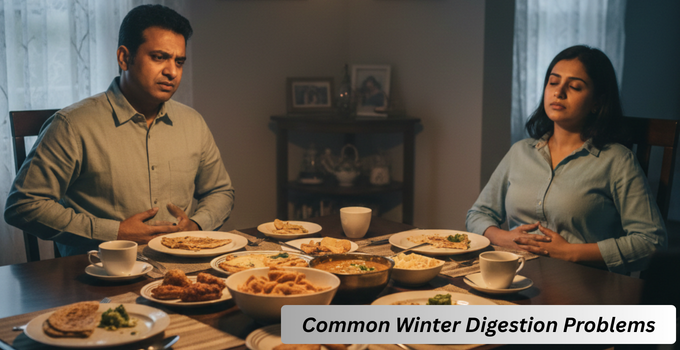
Common Winter Digestion Problems
Here are the most common issues seen during winter:
Bloating and gas after meals
Acidity after oily food
Feeling heavy and sleepy after eating
Irregular bowel movements
Most of these happen due to lifestyle changes, not serious illness.
“Comfort foods feel good in the moment, but digestion pays the bill later.”
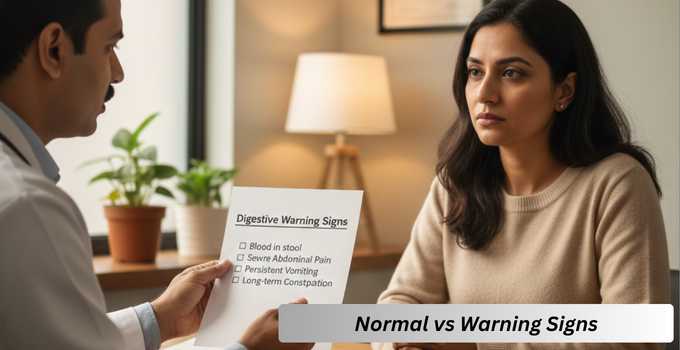
Normal Vs Warning Signs
1. Normal Changes
Mild bloating after heavy meals
Constipation for 1 to 2 days
Slight heaviness after fried snacks
2. Warning Signs
Consult a doctor if you notice:
Blood in stool
Severe stomach pain
Vomiting
Unexplained weight loss
Constipation lasting more than 7 days
Winter Habits That Slow Digestion (And Fixes)
Winter Habit | What It Causes | Easy Fix |
Drinking less water | Dehydration in winter, constipation | Warm water sips all day |
Eating less fiber | Low fiber diet in winter | Fruits + cooked veggies daily |
Too much fried food | Winter bloating | Limit fried food weekly |
Sitting too long | Sluggish gut | Walk 10 minutes after meals |
Late-night eating | Acidity, gas | Dinner 2 to 3 hours before sleep |
Warm Foods And Ingredients That Help
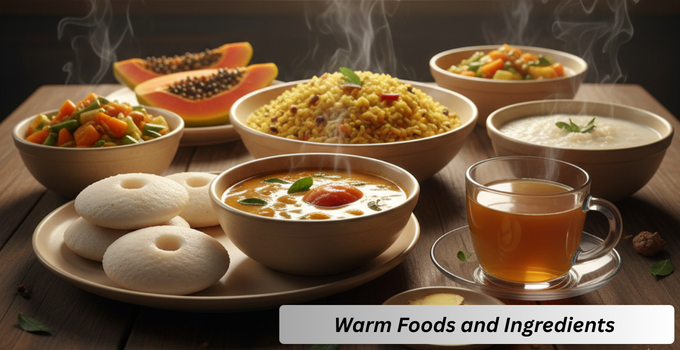
Your stomach loves warmth in winter. Add more warm foods for digestion like:
Khichdi, dal-rice, rasam
Vegetable soups
Idli, upma, pongal
Light porridge
Also include gut-friendly winter foods such as papaya, banana, oats, steamed vegetables, and fermented foods (curd or buttermilk if tolerated). These improve bowel movement and support winter gut health.
Ginger For DigestionGinger for digestion is simple and effective. Ginger tea, ginger in dal, or ginger in warm water can reduce gas and heaviness. |
Lifestyle Fixes That Actually Work
1. Hydration Without Struggle
To fight dehydration in winter:
Keep warm water near you
Drink small sips frequently
Include soups and herbal drinks
2. Exercise For Digestion In Winter
The best exercise for digestion in winter is not complicated:
Walk 10 to 15 minutes after meals
Do light stretching
Try yoga like Vajrasana after meals
3. Smart Eating Habits
Eat smaller dinners
Avoid lying down after meals
Chew slowly
Reduce excess chai and biscuits
As per Scientific Report A 10-minute walk right after a meal is considered practical and effective in research settings for improving post-meal metabolic response, and it’s also one of the easiest habits to maintain daily
Immunity And Digestion Connection
Your gut strongly affects immunity. Poor digestion and constipation can make you feel tired, uncomfortable, and low in energy. Healthy food, daily movement, and good hydration support immunity and digestion together. When winter gut health improves, overall wellness improves too.
Frequently Asked Questions
1. Why Does Digestion Feel Slower In Winter?
Winter reduces movement, increases heavy food intake, and lowers water intake. This leads to slow digestion in winter and bloating.
2. Does Cold Weather Slow Digestion?
Yes. Cold weather slows digestion by reducing gut activity and making digestion feel slower.
3. Why Is Constipation Common In Winter?
Less water, less fiber, and reduced physical activity cause constipation in winter.
4. What Helps Winter Bloating Quickly?
Warm water, smaller meals, less fried food, and walking after meals reduce winter bloating.
5. Does Ginger Really Help Digestion?
Yes. Ginger for digestion reduces gas, heaviness, and nausea when used regularly.
6. What Are The Best Warm Foods For Digestion?
Khichdi, soups, rasam, idli, and porridge are great warm foods for digestion.
7. Which Foods Improve Winter Gut Health?
Papaya, oats, steamed vegetables, and fermented foods are gut-friendly winter foods that support winter gut health.
8. What Is The Best Exercise For Digestion In Winter?
A short walk after meals is the easiest exercise for digestion in winter.
Final Thoughts
During the colder months, slow digestion is quite common and often results from drinking less water, moving less, and consuming more heavy foods. The good news is that fixing this issue does not have to be complicated; instead, there are very simple habits that will help strengthen the digestive system during the winter months, help improve bowel movements, decrease the risk of developing bloating, and support your immunity!
To help alleviate these problems, focus on eating a variety of nutritious warm & high-fiber meals; hydrate; consume ginger; and get some physical activity by walking every day (even for only 10 minutes). These small, consistent lifestyle changes can really make your entire winter feel much lighter and healthier.
“Treat your gut gently in winter, and it will treat you better all season.”
Read Also
References
Lennquist S. Cold-induced diuresis. A study with special reference to electrolyte excretion, osmolal balance and hormonal changes. Scand J Urol Nephrol Suppl. 1972;9:1-142.
Arnaud MJ. Mild dehydration: a risk factor of constipation? Eur J Clin Nutr. 2003;57 Suppl 2:S88-95.
WebMD Editorial Contributors. Water, constipation, dehydration, and other fluids. WebMD. 2024 Mar 16. Available from: https://www.webmd.com/digestive-disorders/water-a-fluid-way-to-manage-constipation
de Oliveira EP, Burini RC. The impact of physical exercise on the gastrointestinal tract. Curr Opin Clin Nutr Metab Care. 2009;12(5):533-8.
Disclaimer: The content in this blog is for general informational purposes only and is not a substitute for professional medical advice, diagnosis, or treatment. Always consult your doctor or a registered dietitian before making any changes to your diet, especially if you have a medical condition or are taking prescribed medication. While the information is based on trusted sources, individual needs and results may vary. MrMed does not promote or endorse any specific food or treatment mentioned unless explicitly stated.












Comments