

World ORS Day: A Simple Solution That Has Saved Millions of Lives





Last updated on 07 Aug 2026
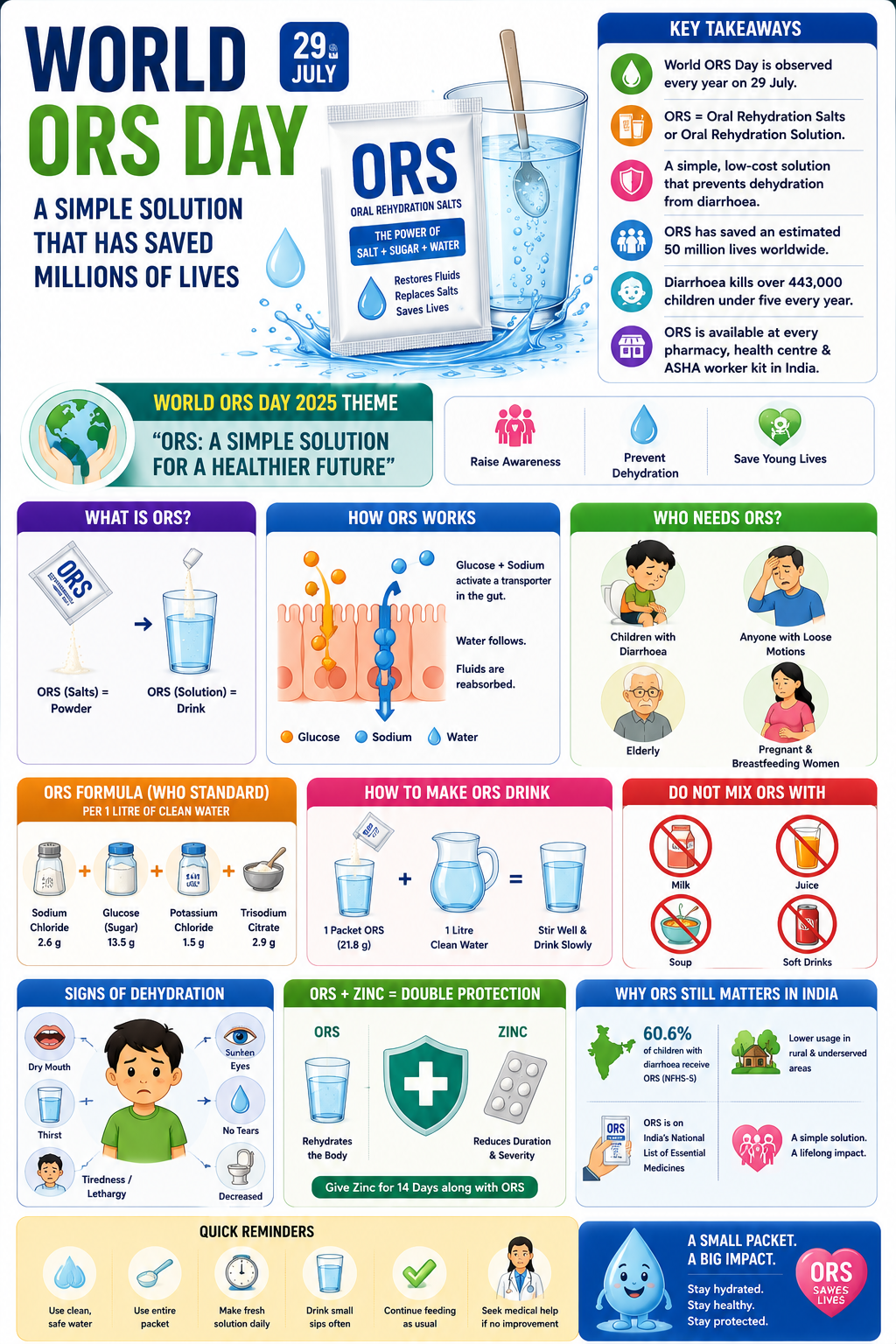
Every year on 29 July, the world marks World ORS Day, a day dedicated to one of the most deceptively simple medical breakthroughs in history. Not a drug. Not a vaccine. Not a surgical procedure. Just sugar, salt, and water combined in a precise ratio that tells the gut how to absorb fluids again even when diarrhoea is stripping the body of them faster than most people can drink.
The ORS drink has saved an estimated 50 million lives since it was developed in the 1960s and 1970s. It is considered by many scientists to be one of the most important medical advances of the 20th century, ranking alongside vaccines and antibiotics in its impact on child survival globally.
Key Takeaways
|
What Is ORS? Understanding the ORS Full Form and Its Science
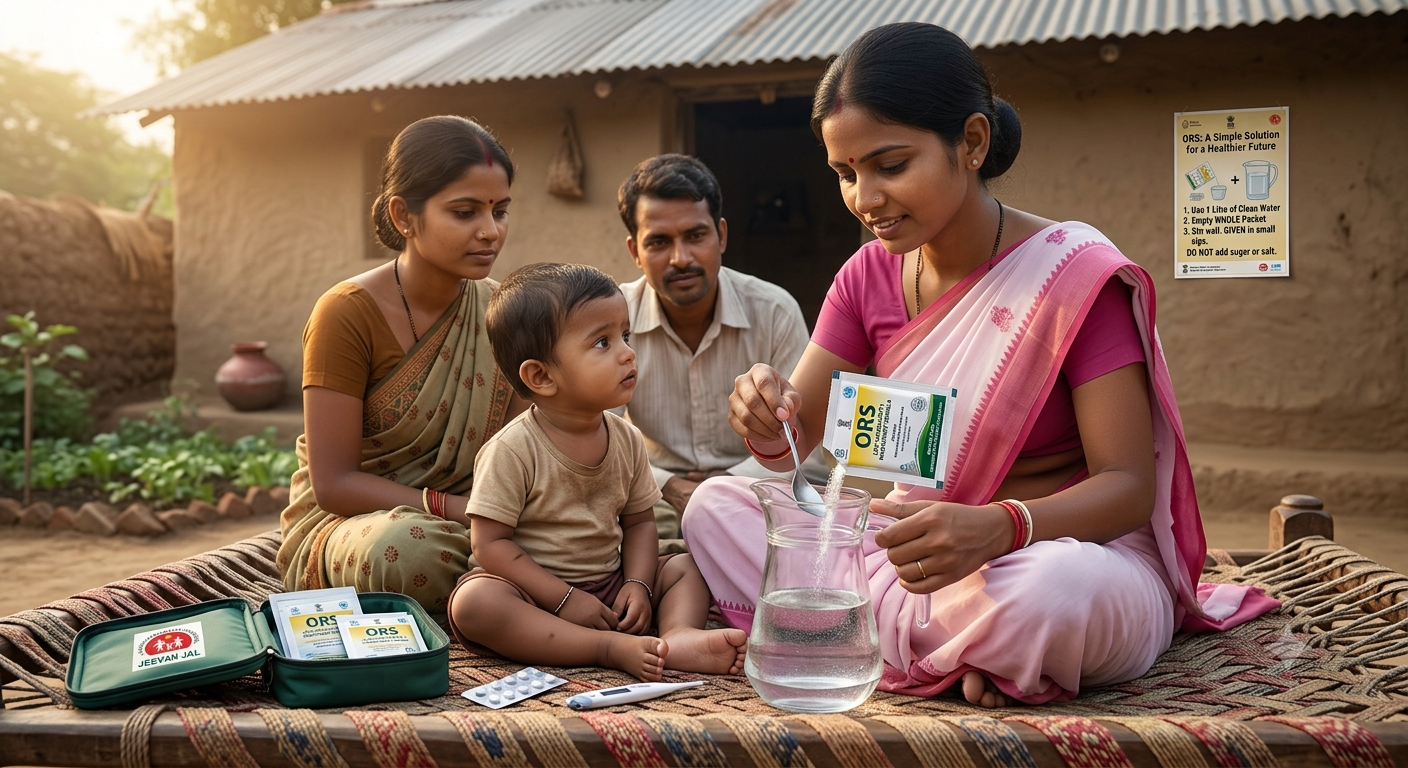
ORS full form stands for Oral Rehydration Salts or Oral Rehydration Solution. The two terms are often used interchangeably. ORS (salts) refers to the dry powder packet itself, while ORS (solution) refers to the drink you make when you dissolve it in water.
How does it work? When diarrhoea strikes, the gut loses its ability to absorb water efficiently because of the inflammation and altered intestinal motility caused by infection. The key discovery behind ORS made by Dr Dilip Mahalanabis and his colleagues during the 1971 Bangladesh war is that glucose (sugar) and sodium (salt) together activate a specific sodium-glucose cotransporter in the gut wall. This transporter pulls both molecules across the intestinal lining, and water follows them passively. The diarrhoea continues, but the body starts reabsorbing fluid faster than it loses.
It is a biochemistry lesson that costs less than ₹5 per packet to apply.
The WHO/UNICEF standard ORS formula contains four key ingredients per litre of clean water:
Sodium chloride (common salt) - 2.6g
Anhydrous glucose (sugar) - 13.5g
Potassium chloride - 1.5g
Trisodium citrate - 2.9g
This produces a solution that is slightly hypotonic, lower in solute concentration than blood, which the 2002 revised formula established as more effective at reducing stool output than the earlier isotonic version.
World ORS Day 2025: Theme and Its Significance
World ORS Day 2025 falls on 29 July 2025, and the ORS Day theme 2025 is "ORS: A Simple Solution for a Healthier Future."
This theme carries a pointed message. Diarrhoeal disease still kills over 4,43,000 children under five every year globally, and the overwhelming majority of those deaths are preventable with a combination of ORS and zinc supplementation. Most of these children die not because ORS is unavailable, but because families do not know how to recognise dehydration, do not know where to get ORS, or do not use it correctly.The ORS Day 2025 theme challenges healthcare systems, community health workers, pharmacists, and parents to close that gap. Awareness is the intervention.
A Brief History of ORS: How a Simple Solution Changed Medicine
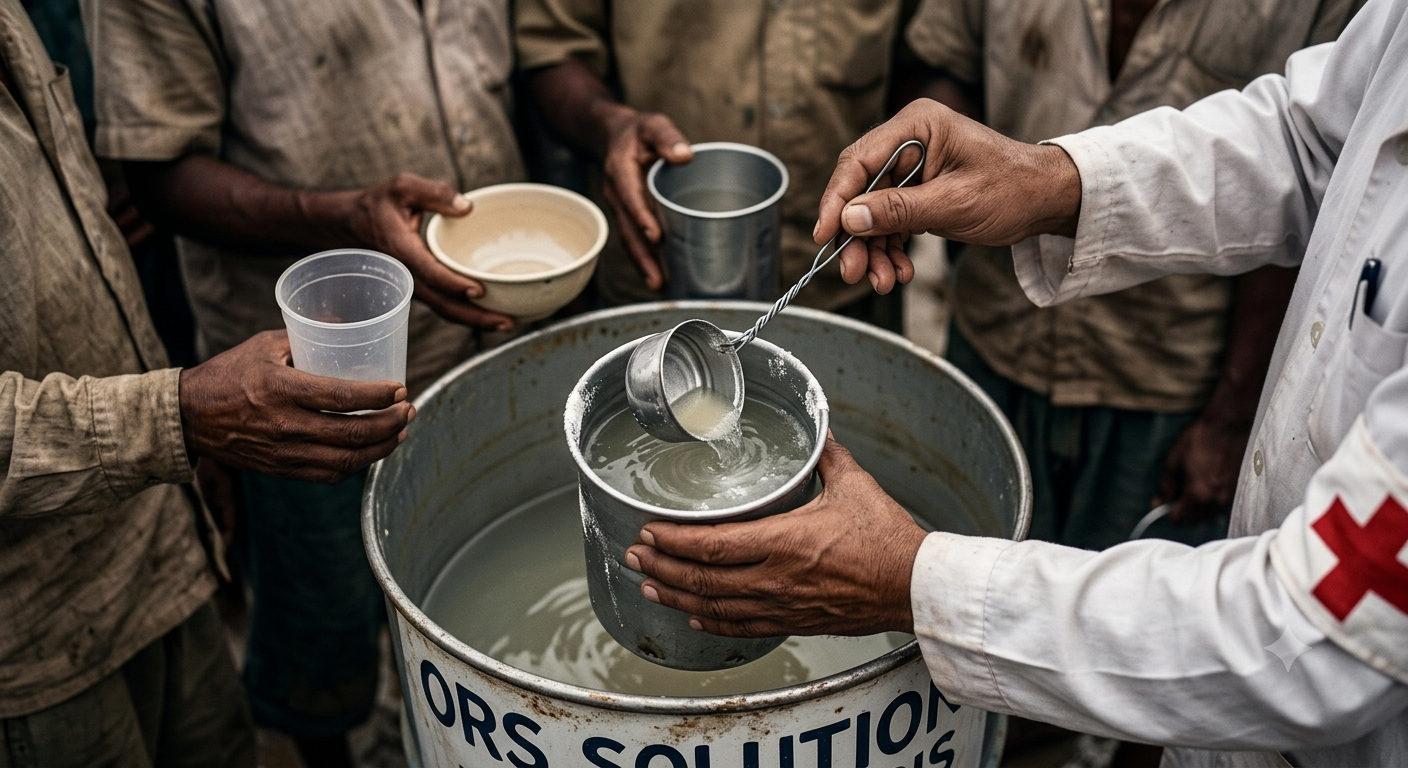
The story of ORS is one of the more remarkable origin stories in modern medicine. During the 1971 Bangladesh Liberation War, millions of refugees flooded camps on the India-Bangladesh border. A cholera outbreak threatened to overwhelm every intravenous fluid supply available. Dr Dilip Mahalanabis, working at a camp in West Bengal with no IV fluids left, made a decision that was scientifically sound but professionally risky: he administered the oral glucose-electrolyte solution that had been studied in laboratories but never tested at this scale.
The mortality rate in his camp dropped dramatically from the expected 20 to 30 per cent with untreated severe dehydration, to approximately 3 per cent. The proof of concept had been established under the most extreme possible conditions.
The Lancet later described ORS as "potentially the most important medical advance of the 20th century." World ORS Day exists partly to make sure that assessment never becomes historical trivia because the need for ORS is not historical. It is today, in every clinic and every kitchen in every country where diarrhoea still takes children before they reach their fifth birthday.
Why ORS Still Matters in India in 2025
India has made significant progress on child mortality, but diarrhoea remains a leading cause of death in children under five across the country. According to data from the National Family Health Survey (NFHS-5, 2019–21), only 60.6 per cent of children with diarrhoea in India received ORS, meaning nearly two in five children with diarrhoea did not receive the one intervention most likely to keep them alive if dehydration worsened.
The proportion is even lower in rural areas and among children in households without access to formal healthcare. Despite ORS powder being listed on the NLEM, available for free at government health centres, and distributed through ASHA workers, the awareness and usage gap remains large.
India's National ORS-Zinc programme, which promotes ORS together with zinc supplementation (which reduces the duration and severity of diarrhoeal illness), is the current national standard of care. The WHO-UNICEF joint recommendation since 2004 is that ORS and zinc should always be used together in the management of diarrhoea in children.
The ORS Drink: How to Make It and Use It Correctly
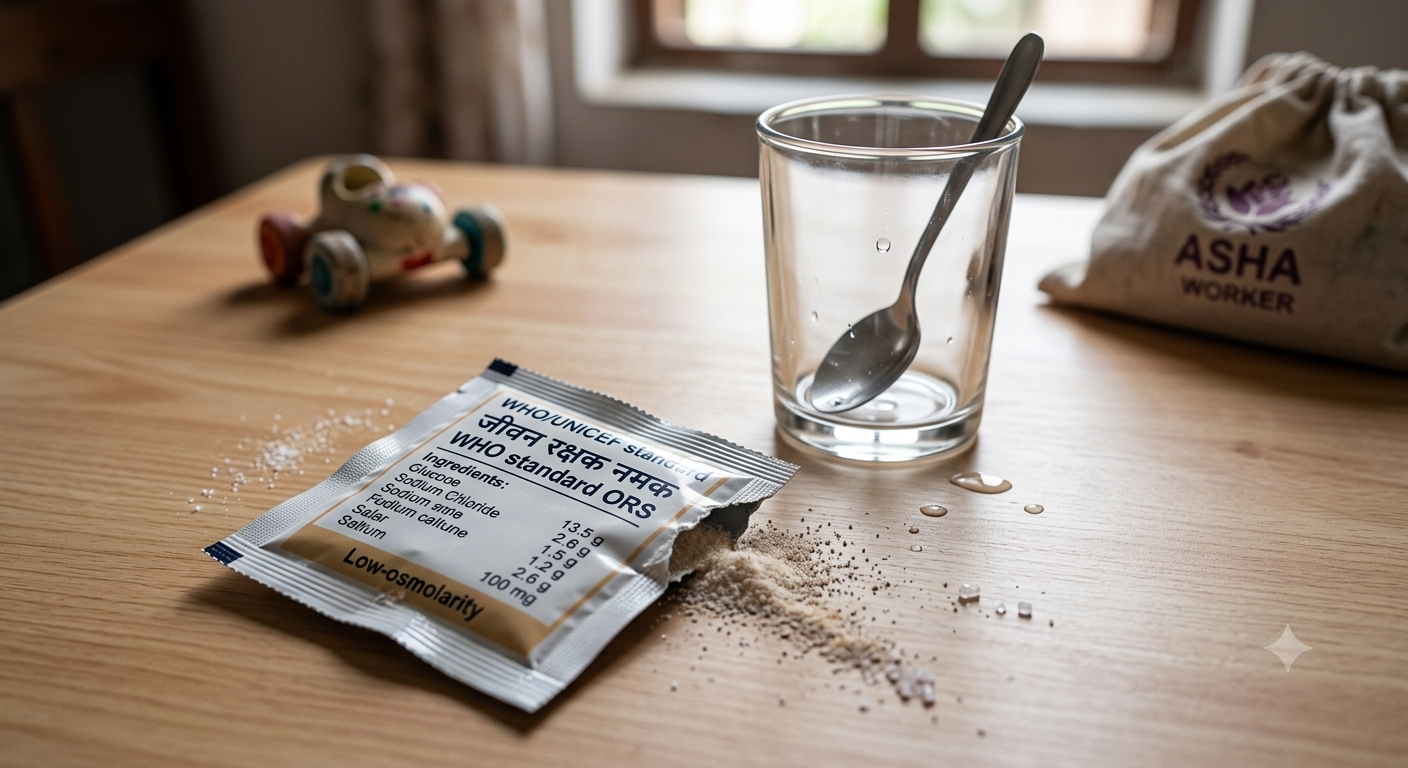
How to make an ORS drink correctly is one of the most important things a parent or caregiver can know:
Step | What to Do |
Step 1 | Wash hands thoroughly with soap and water before preparing |
Step 2 | Take exactly 1 litre (200ml if a small sachet is provided for 200ml) of clean, boiled and cooled water |
Step 3 | Empty the entire contents of the ORS powder sachet into the water |
Step 4 | Stir until fully dissolved |
Step 5 | Administer do not add anything else to the solution |
Critical do's and don'ts for ORS:
✅ Use only clean, boiled and cooled water
✅ Give small, frequent sips, not large gulps, especially for children
✅ Use a spoon or cup for children, not a bottle
✅ Discard unused solution after 24 hours (after 1 hour in hot climates)
❌ Do not mix with milk, juice, soup, or any other liquid
❌ Do not add extra sugar or salt; the ratio is precise for a reason
❌ Do not stop giving ORS if the child vomits; wait 10 minutes and try again in smaller sips
How much ORS to give:
Children under 2 years: 50-100ml after each loose stool
Children 2-10 years: 100-200ml after each loose stool
Adults: 200-400ml after each loose stool, continuing until diarrhoea stops
For infants under six months, continue breastfeeding alongside ORS. For older children and adults, light foods can be offered alongside the drink.
ORS Powder in India: What to Look For
ORS powder is available across India in two main forms: the WHO/UNICEF-standard formulation (low-osmolarity, hypotonic) and older, non-standard formulations that some generic brands still sell. Always look for:
WHO/UNICEF standard formula: look for "low-osmolarity ORS" on the packet or the standard ingredient list (glucose 13.5g, sodium chloride 2.6g, potassium chloride 1.5g, trisodium citrate 2.9g per litre)
FSSAI or drug licence number on the packet
Expiry date clearly printed
Electral, Enerzal (electrolyte variant), and the government-supplied Jeevan Jal ORS are the most widely used brands in India. Government-supplied ORS is available for free at all sub-district health centres, PHCs, and ASHA workers.
FAQs
Q1. What is the ORS full form?
ORS stands for Oral Rehydration Salts (the powder) or Oral Rehydration Solution (the prepared drink). Both refer to the same life-saving glucose-electrolyte mixture.
Q2. What is the ORS Day 2025 theme?
The World ORS Day 2025 theme is "ORS: A Simple Solution for a Healthier Future."
Q3. When is World ORS Day?
Every year on 29 July.
Q4. Can I make ORS at home without a packet?
A home version: 1 litre of water, 6 level teaspoons of sugar, and half a teaspoon of salt is a reasonable substitute if no packet is available. However, the commercial ORS powder packet is more accurate and contains potassium and citrate, which the home version does not.
Q5. Is an ORS drink safe for adults?
Yes. ORS is safe for all age groups: infants, children, pregnant women, elderly adults, and people with diabetes (though those on fluid-restricted diets should consult a doctor). It treats dehydration from any cause, not just childhood diarrhoea.
Final Thoughts
The ORS drink is arguably the most underappreciated tool in global public health. It costs less than a cup of tea. It can be prepared in any kitchen. It does not require a prescription, a doctor, or a hospital. And it has saved millions of lives, mostly children under five, precisely because a parent can give it at home before the situation becomes an emergency.
World ORS Day on 29 July is a reminder that the most powerful interventions in medicine are not always the most expensive or the most complex. Sometimes they are just glucose, salt, potassium, and water mixed in exactly the right proportions.
Keep an ORS powder packet at home. Know how to make it. Know when to use it. And this ORS Day, share that knowledge with someone who does not.
Read Also
References
PACE Hospital [Internet]. Hyderabad: PACE Hospital; 2025 [cited 2026 Jul 09]. World ORS Day 2025: theme, importance and history. Available from: https://www.pacehospital.com/world-ors-day-importance-theme-and-history
NIVA BUPA [Internet]. Gurugram: Niva Bupa Health Insurance; 2025 [cited 2026 Jul 09]. Everything you need to know about World ORS Day 2025. Available from: https://www.nivabupa.com/disease-articles/world-ors-day.html
UNICEF. Diarrhoea: key facts [Internet]. New York: UNICEF; 2024 [cited 2026 Jul 09]. Available from: https://data.unicef.org/topic/child-health/diarrhoeal-disease/
Disclaimer: This article is for general informational and awareness purposes only. ORS is a first-line supportive treatment for dehydration due to diarrhoea. If symptoms are severe, bloody, or accompanied by high fever, seek immediate medical attention. For infants under six months, always consult a paediatrician before administering ORS.












Comments