

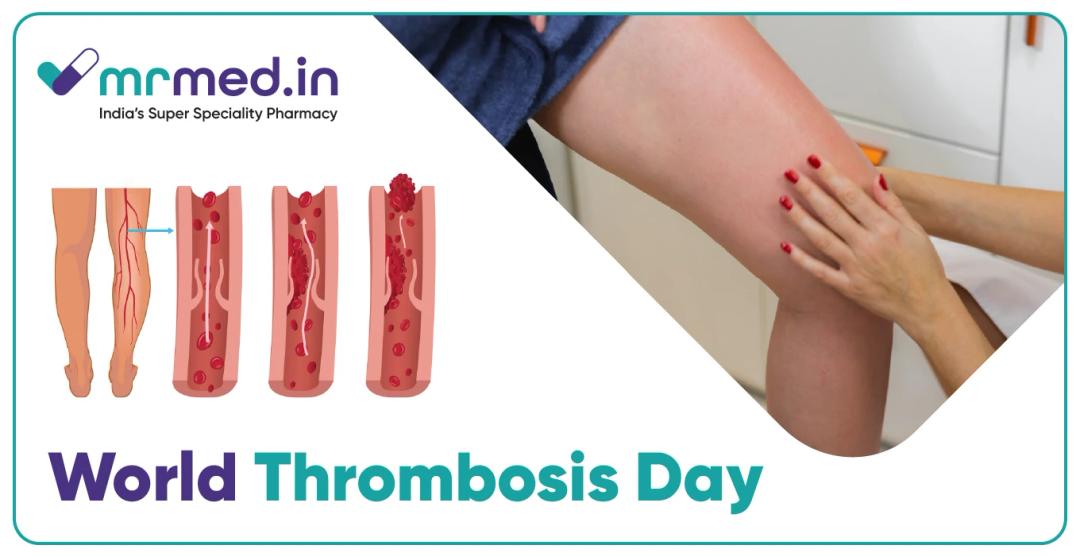
World Thrombosis Day 2025




Last updated on 02 Jan 2026
Know the Risk, Stop the Clot
Every year, World Thrombosis Day reminds us of a silent but deadly medical condition thrombosis, commonly known as blood clot formation. Despite affecting millions globally, it often goes unnoticed until serious complications arise. In India, where lifestyle diseases are rapidly increasing, raising awareness about thrombosis has never been more critical.
Let’s dive deep into what World Thrombosis Day 2025 stands for, the importance of early prevention, and how you can protect yourself and your loved ones.
What is World Thrombosis Day?
World Thrombosis Day (WTD) is observed on October 13 every year to raise global awareness about thrombosis. In this condition, blood clots block veins or arteries, leading to serious health issues like deep vein thrombosis (DVT), pulmonary embolism (PE), heart attacks, or strokes.
It was established by the International Society on Thrombosis and Haemostasis (ISTH) in 2014. The date honours Dr Rudolf Virchow, the pioneer of modern thrombosis research. The global campaign aims to encourage early detection, proper treatment, and preventive care.
World Thrombosis Day Theme
The World Thrombosis Day 2025 theme focuses on “Know Thrombosis: Recognise the Risk, Know the Signs, Act Fast.”
This year’s campaign highlights the urgency of early recognition. Studies show that most thrombosis-related deaths are preventable if symptoms are detected early and treated promptly.
The World Thrombosis Day logo, featuring interconnected red and blue veins, symbolises the vital connection between awareness and prevention. The World Thrombosis Day 2025 poster and social media campaign encourage healthcare professionals and the public to spread the message through community health programs, hospitals, and educational initiatives.
The PubMed ENDORSE India study, involving 10 major hospitals and over 2,000 patients, found that 53.6% of hospitalized patients were at risk of VTE, but only around 18% received appropriate preventive care.
Understanding Thrombosis: The Silent Threat
Thrombosis occurs when blood clots form within a blood vessel, restricting blood flow. Depending on where the clot forms, it can be categorised as:
| Type | Description | Potential Complication |
| Deep Vein Thrombosis (DVT) | Clots form in deep veins, usually in the legs. | Pulmonary embolism if the clot travels to the lungs. |
| Pulmonary Embolism (PE) | A clot blocks a blood vessel in the lungs. | Breathing difficulties can be fatal. |
| Arterial Thrombosis | Clots form in arteries. | Stroke, heart attack, or organ damage. |
Thrombosis is often called the “silent killer” because its symptoms can be subtle and easily mistaken for minor discomfort.
Dr. Rahul Bhargava, Principal Director & Chief BMT, Fortis Memorial Research Institute, Gurugram, says Thrombosis is a serious condition where a blood clot may lead to heart attack, stroke or even death.”
Causes and Risk Factors of Thrombosis
Thrombosis is influenced by multiple factors, both lifestyle-related and medical.
| Risk Factor | Explanation |
| Sedentary lifestyle | Prolonged sitting or inactivity reduces blood flow in veins. |
| Smoking | Damages blood vessel walls, making clot formation more likely. |
| Obesity | Excess weight increases vein pressure and risk of DVT. |
| Pregnancy | Hormonal changes and increased vein pressure can lead to clot formation. |
| Surgery or injury | Tissue damage and immobility post-surgery trigger clotting. |
| Genetic factors | Inherited blood clotting disorders. |
| Medical conditions | Diabetes, hypertension, heart disease, or cancer increase the risk. |
| Medications | Hormonal therapies or oral contraceptives may elevate clot risk. |
Symptoms You Shouldn’t Ignore
Recognising early warning signs of thrombosis can save lives. Symptoms may vary depending on the type, but common signs include:
For Deep Vein Thrombosis (DVT):
-
Swelling in one leg
-
Pain or tenderness (especially in the calf)
-
Warmth and redness over the affected area
For Pulmonary Embolism (PE):
-
Sudden shortness of breath
-
Chest pain (sharp or stabbing)
-
Coughing up blood
-
Rapid heart rate
If any of these symptoms occur, seek immediate medical help. Early diagnosis through ultrasound or blood tests can prevent severe complications.
As per Indian Journal of Surgery, A 6-year retrospective analysis at a major Indian tertiary center revealed a VTE incidence rate of 19.49 per 10,000 hospital admissions.
How is Thrombosis Diagnosed?
Doctors use several diagnostic methods to identify thrombosis:
-
D-dimer blood test – Measures clotting activity.
-
Doppler ultrasound – Detects clots in veins (especially legs).
-
CT or MRI scan – Used for pulmonary embolism or arterial clots.
-
Venography – A special X-ray with contrast dye for detailed imaging.
Treatment and Management of Thrombosis
Once diagnosed, thrombosis treatment aims to stop existing clots from growing and prevent new ones from forming. The treatment plan depends on the location, severity, and underlying cause of the clot.
1. Anticoagulants (Blood Thinners)
-
Help prevent new clots and stop existing ones from getting larger.
-
Commonly prescribed for both DVT and PE cases.
-
Examples: Heparin, Warfarin, Rivaroxaban, Apixaban.
2. Thrombolytics (Clot Busters)
-
Used to dissolve large or life-threatening clots quickly.
-
Typically administered in hospitals under close monitoring.
-
Examples: Alteplase, Streptokinase, Urokinase.
3. Compression Stockings
-
Improve blood flow in the legs and reduce swelling or pain.
-
Recommended for patients recovering from DVT to prevent recurrence.
-
Examples: Medical-grade compression stockings (graduated).
4. Surgery or Catheter-Based Therapy
-
Considered for severe or emergency cases where medication isn’t enough.
-
Procedures include thrombectomy (clot removal) or catheter-directed therapy to restore normal blood flow.
-
Usually performed in specialised vascular centers.
Prevention Tips for Thrombosis
Prevention is the best protection against thrombosis. Here are simple steps recommended by experts:
-
Stay physically active, and avoid long periods of sitting.
-
Maintain a healthy weight.
-
Drink plenty of water to keep blood thin.
-
Avoid smoking and excessive alcohol.
-
Follow your doctor’s advice if on birth control or hormonal treatment.
-
If you travel for long hours, stretch your legs regularly.
Thrombosis in India: Current Scenario
In India, the awareness about thrombosis remains limited despite the rising cardiovascular and lifestyle diseases. Many cases go undiagnosed due to a lack of awareness and access to preventive care.
The Indian Council of Medical Research (ICMR) and the Indian Society of Haematology and Blood Transfusion (ISHBT) are now focusing on improving early detection and standardised treatment protocols across hospitals.
Government initiatives:
-
National Non-Communicable Disease (NCD) Program — now integrates awareness for blood clot-related complications.
-
ICMR-VTE Registry Project (2022) — tracks real-time data on thrombosis cases to improve care quality and resource allocation.
-
Public awareness drives during World Thrombosis Day week in collaboration with AIIMS and state health departments.
According to an ICMR-supported study (2023), nearly 1 in 4 hospitalised patients in India are at risk of developing a venous thromboembolism (VTE).
World Thrombosis Day Resources & How to Participate
You can join the global campaign through:
-
Official website: worldthrombosisday.org
-
Social media: Use hashtags like #WorldThrombosisDay2025 and #KnowThrombosis
-
Local events: Participate in hospital awareness walks, blood donation drives, or webinars.
-
Educational materials: Download the World Thrombosis Day poster, share infographics, and encourage people to get checked.
How You Can Make a Difference
Small actions can make a big impact:
-
Share information about thrombosis risks with family and friends.
-
Encourage people with long-term illnesses to get regular check-ups.
-
Promote fitness and movement in your community.
-
Support awareness campaigns organised by local hospitals and NGOs.
FAQS
1. What is the purpose of World Thrombosis Day?
World Thrombosis Day aims to raise awareness about blood clots (thrombosis), promote early detection, and encourage preventive healthcare practices globally.
2. When is World Thrombosis Day 2025 observed?
World Thrombosis Day 2025 will be observed on October 13, honouring Dr Rudolf Virchow’s contributions to thrombosis research.
3. What is the World Thrombosis Day 2025 theme?
The theme for World Thrombosis Day 2025 is “Know Thrombosis: Recognize the Risk, Know the Signs, Act Fast.” It focuses on early recognition and prevention.
4. Why is thrombosis awareness important in India?
Thrombosis awareness in India is crucial because nearly 1 in 4 hospitalized patients are at risk, according to ICMR-supported studies.
5. What are the common symptoms of thrombosis?
Symptoms include leg swelling, redness, pain, and sudden shortness of breath — key signs of Deep Vein Thrombosis or Pulmonary Embolism.
6. How can thrombosis be prevented?
Thrombosis can be prevented through regular exercise, hydration, healthy weight management, and avoiding smoking or prolonged sitting.
7. What treatments are available for thrombosis?
Doctors may prescribe anticoagulants, thrombolytics, compression therapy, or surgery depending on the clot’s type and severity.
8. Where can I find World Thrombosis Day 2025 resources?
Visit worldthrombosisday.org for posters, educational toolkits, and campaign materials to spread awareness.
Wrapping Up
World Thrombosis Day 2025 is a reminder that awareness saves lives. Understanding risk factors, identifying symptoms, and taking preventive measures can drastically reduce the chances of life-threatening blood clots.
Together, let’s build a healthier, more aware India, where knowledge and early action prevent tragedy before it strikes.
Read Also
References
-
Wendelboe, A. M., St Germain, L., Krolak, B., Reiser, T., Raskob, G., & ISTH Steering Committee on World Thrombosis Day (2017). Impact of World Thrombosis Day campaign. Research and practice in thrombosis and haemostasis, 1(1), 138–141. https://doi.org/10.1002/rth2.12021
-
https://www.knowledge-action-portal.com/en/content/world-thrombosis-day-0
Disclaimer: The content in this blog is for general informational purposes only and is not a substitute for professional medical advice, diagnosis, or treatment. Always consult your doctor or a registered dietitian before making any changes to your diet, especially if you have a medical condition or are taking prescribed medication. While the information is based on trusted sources, individual needs and results may vary. MrMed does not promote or endorse any specific food or treatment mentioned unless explicitly stated.











Comments