

Shortness Of Breath During Simple Activities Explained





Last updated on 10 Apr 2026
Experiencing dyspnea while performing basic tasks can indicate an underlying issue with your lungs, heart, or fitness levels. Dyspnea can be caused by a variety of things, from minor problems such as anxiety and deconditioning to major diseases. It is very important to identify dyspnea symptoms early and determine the underlying cause to manage them and prevent complications effectively.
Key takeaways
|
Climbing a few stairs should not feel like running a marathon. But for many people, even simple activities like walking across a room or talking for a few minutes can leave them gasping for air.
This is often described as a breathing problem while walking, or even as shortness of breath when walking short distances, and should not be ignored. This is where things start to feel confusing and worrying.
Shortness of breath during exercise everyday tasks is more common than people realise, yet it is often ignored or misunderstood. Some assume it is just due to ageing, weight gain, or lack of fitness. Others may silently worry that it is something serious, but do not know when to seek help.
The truth is, breathlessness can have many causes, ranging from mild and manageable to conditions that need timely medical attention. Understanding why it happens is the first step towards taking control of your health and preventing complications.
What Does “Shortness of Breath” Mean?
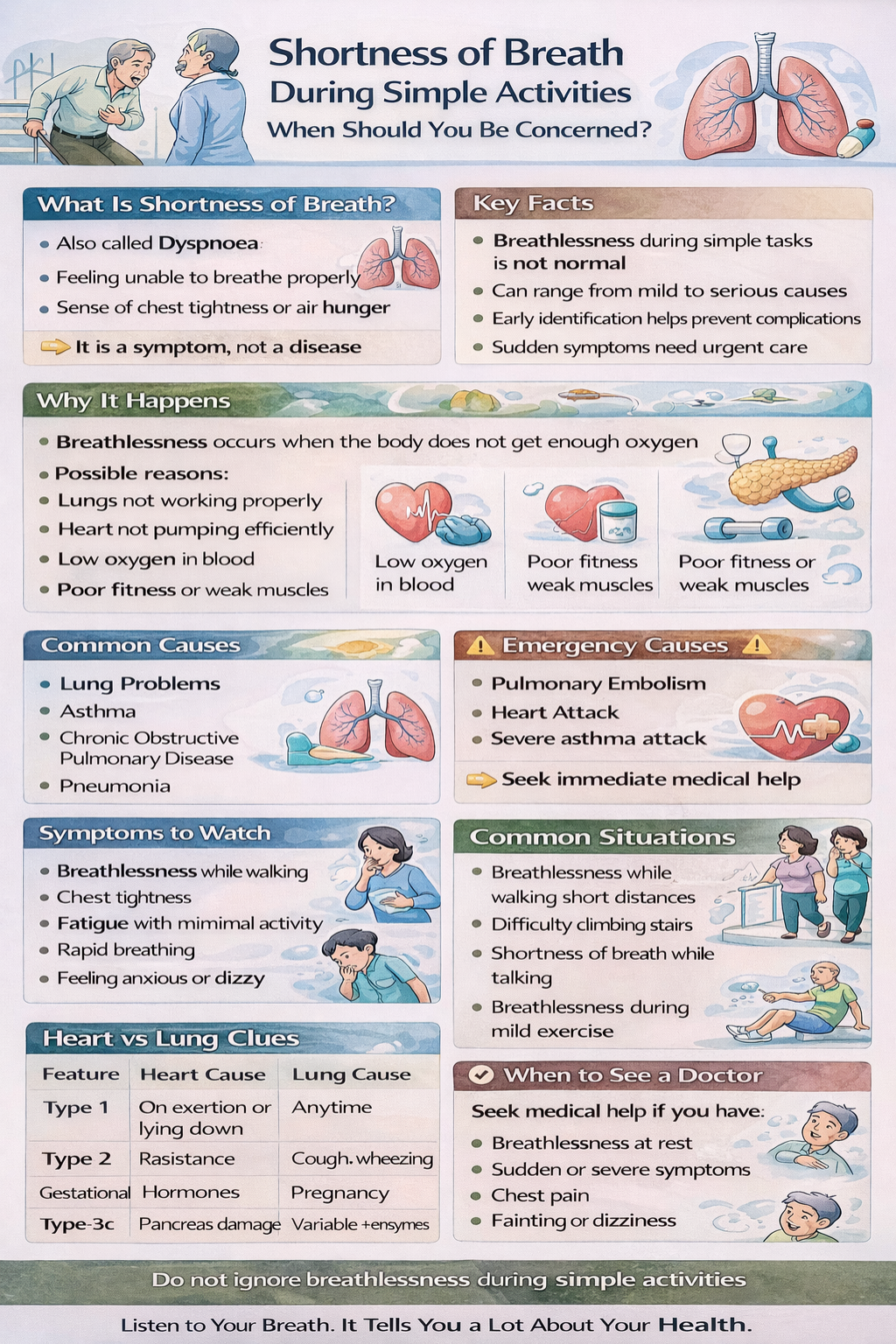
Shortness of breath (also called dyspnoea) is not the same as “breathing fast”, and understanding the reasons behind it is important. You might feel like you’re unable to take a full breath, or that it takes more effort just to breathe normally. Some say they feel tightness in their chest, air hunger, a sense of suffocation despite plenty of air surrounding them.
This occurs when demand for oxygen exceeds the supply. Your body even needs oxygen to create energy at all times. So how does your brain know when you’re not getting enough oxygen, either because your lungs can’t bring in the oxygen, your heart can’t pump it, or your muscles can’t use it?
Shortness of breath is a symptom, not a disease, and it is critical to understand why. It’s your body’s red flag that something is not functioning properly. Sometimes it is, for example, after physical or emotional effort. But when it begins during mundane daily activities, it often indicates an underlying problem that needs to be addressed.
According to the NIH (2023), dyspnoea is a symptom rather than a disease and can result from multiple underlying health conditions.
.png "MrMed")
Why Do Simple Activities Make You Breathless?
Feeling breathless while performing daily activities (e.g., ascending stairs or walking) may indicate that your body is not getting adequate oxygen.
There are several reasons for this:
Your lungs are not functioning correctly; thus, not enough oxygen enters them.
Your heart is not pumping enough oxygen through your body.
Your blood does not contain enough oxygen to provide to your muscles and organs.
Your muscles and fitness level are not using oxygen efficiently, forcing your lungs and heart to work harder to deliver the oxygen needed for you to perform activities as easily as possible.
Understanding these breathing problem causes and treatment options can help you manage symptoms early.
According to the NHS (2024), shortness of breath is a condition in which a person feels unable to breathe properly and may have difficulty getting enough air into the lungs.
.png "MrMed")
Common Shortness of Breath Causes
Here are the most common causes of breathlessness in adults, explained simply.
1. Lung-Related Causes
Asthma can cause airway inflammation and obstruction, leading to symptoms such as wheezing, chest tightness, and breathing problems.
Chronic obstructive pulmonary disease (COPD) is caused by long-term lung damage, most typically from smoking, which gradually makes it increasingly difficult to breathe.
Lung infections, such as pneumonia, can lead to fluid-filled airspaces and inflammation, both of which inhibit the lungs' ability to exchange oxygen efficiently.
Experiencing a lack of breath that is accompanied by either a cough, wheeze, or sensation of tightness in your chest.
2. Heart-Related Causes
The heart circulates oxygenated blood throughout your body; however, if the heart is weak or not functioning properly, it may lead to reduced blood flow and lower oxygen levels. Both slowed blood flow and low oxygen levels can cause a feeling of being out of breath, for example, while exercising or walking.
Examples of these types of problems include:
Blocked Arteries
Symptoms of these types of problems include:
What it feels like
Shortness of breath while lying down
Swelling in your legs
Feeling tired after very little activity
In many cases, this type of shortness of breath heart problem becomes more noticeable during physical activity.
3. Anaemia (Low Haemoglobin)
Haemoglobin is what carries oxygen in your blood. When it is low:
You do not get enough oxygen to all your tissues, and you feel tired and easily out of breath.
This is common in India because of iron deficiency.
4. Lack of Fitness (Deconditioning)
When people are not active:
They develop weaker and less efficient muscles,
Their bodies use oxygen less effectively.
As a result, you will feel short of breath when doing small things like walking a short distance or going up one flight of stairs.
Rapid, shallow breathing can occur anytime we experience anxiety, which is a common cause of shortness of breath anxiety.
The following symptoms can result from rapid, shallow breathing:
Not enough air to breathe
Chest tightness
Feeling lightheaded
Many people with anxiety symptoms develop a firm belief that they have an issue with their lungs or heart.
6. Obesity
An individual with excess weight will put pressure on their lungs, making it harder to expand them during a breath. As a result, many people with excess weight will have difficulty breathing while walking or climbing stairs.
7. Sudden Shortness of Breath Causes (Emergency)
Sudden onset of shortness of breath could indicate a life-threatening event, such as:
Pulmonary embolism
Severe asthma attack
If you experience rapid-onset shortness of breath, seek emergency medical care immediately.
Dr. Farid Bazari – Respiratory Medicine Specialist in South London: Persistent or severe shortness of breath often indicates an underlying medical condition and should be evaluated early to identify the cause, helping prevent serious complications.
.png "MrMed")
Shortness of Breath Symptoms You Should Notice
Inability to breathe easily when walking or shortness of breath while talking;
Sudden onset of difficulty breathing on exertion- climb stairs,
Tightness/pain in the chest,
Fatigue with exertion,
Quickly breathing heavily,
Anxious and panicked.
How to Tell If Shortness of Breath Is from the Heart or the Lungs
Many people wonder how can you tell if shortness of breath is from heart or lungs, and this comparison can help.
Feature | Heart Problem | Lung Problem |
When it occurs | On exertion or lying down | Anytime, often with triggers |
Other symptoms | Swelling in legs, fatigue | Cough, wheezing |
Chest pain | Possible | Less common |
Breathing sound | Usually normal | Wheezing or noisy |
Important
Only proper medical tests can confirm the cause.
.png "MrMed")
Shortness of Breath During Daily Activities (Common Breathing Problem Situations)
1. Breathlessness on Walking
Causes include low fitness levels, heart or circulation issues, or anaemia. Finding the right breathing problem solution depends on identifying the exact cause.
2. Shortness of breath When Climbing Stairs
This is generally one of the first indications that you may have a decrease in the heart's or lungs' ability to deliver oxygen to your body.
3. Breathlessness When Talking
Breathlessness while talking may indicate moderate or severe breathing difficulty.
4. Breathlessness When Exercising
Breathlessness while exercising may indicate an underlying condition or poor fitness level if it occurs frequently.
Breathlessness Treatment at Home (Mild Cases)
There are techniques available if your symptoms are mild and not caused by any serious condition.
1. Breathing Exercises
4-7-8 Breathing Method: Inhale (4 seconds), Hold Breath (7 seconds), Exhale Slowly (8 seconds). This technique decreases anxiety by controlling your breathing.
Pursed Lip Breathing Technique: Inhale through your nose, exhale softly through pursed lips. This technique will improve your ability to get oxygen into your body.
2. Improve Physical Activity
Begin with light walking
Slow increase in workout time
Avoid sudden and/or extreme exertions
3. Maintain a Healthy Weight
A weight reduction program will help you manage:
Your breathing ability
Reduce episodes of breathlessness
4. Manage Stress
Use relaxation techniques to stay calm
Don’t obsess on the symptoms of your illness or condition
5. Correct Nutritional Deficiencies
Blood Test for Haemoglobin Level
Increased intake of foods rich in iron, if applicable
When Should You See a Doctor?
Seek medical help if you have:
Breathlessness at rest
Sudden or severe symptoms
Chest pain
Fainting or dizziness
According to the NIH Breathlessness Research Study (India), in India, an estimated 626 million people experience breathlessness, with around 52 million suffering from severe symptoms that impact daily activities.
Frequently Asked Questions
1. What can cause shortness of breath even during minor exertion?
Possible causes include: lung disease or chronic obstructive pulmonary disease; congestive heart failure; anaemia; low level of physical fitness; high level of anxiety; and obesity, which can affect the amount of oxygen that is available to your body.
2. Are simple everyday activities causing me to be out of breath?
This may be the result of poor fitness levels and/or an inability of your body to use and deliver oxygen efficiently, both of which can be caused by an unknown medical problem.
3. What does 4-7-8 breathing mean?
The 4-7-8 breathing method is an exercise in which you inhale to the count of 4, hold your breath for 7, and exhale to the count of 8 to achieve a state of relaxation.
4. What are the 3 leading causes of shortness of breath?
The three leading causes are lung disease, heart disease and anaemia.
5. Why do I feel short of breath?
There could be many reasons for shortness of breath, including the following: anxiety or stress; obesity; a viral or bacterial infection; or some type of undiagnosed heart or lung disease.
6. What is the best way to treat shortness of breath in seniors?
Treatment will vary depending on the underlying cause of shortness of breath, but will generally include supplemental oxygen, bronchodilators or other medications, breathing exercises, and managing the existing health problems.
7. How can I determine whether shortness of breath may be related to anxiety?
Anxiety-induced shortness of breath typically occurs along with rapid, irregular or panicky breaths and will improve when you are able to relax or control your breathing.
8. What can I do to improve my shortness of breath while I walk?
Start slowly and gradually build your stamina until you can comfortably complete your walk; do breathing exercises; and see your physician to rule out any underlying medical issues.
Conclusion
If you're having difficulty breathing even while doing the simplest tasks, it indicates your body isn't functioning normally.
There could be a number of reasons for having problems breathing; two of them are deconditioning and anxiety. In addition, it often points to a heart, lung or blood disorder.
The most important thing is that you take notice of when it occurs. Finding out what the cause early can minimise the risk of serious complications and allow you to resume your normal lifestyle much sooner.
Read Also
References
National Health Service (NHS). Shortness of breath. Available from: https://www.nhs.uk/conditions/shortness-of-breath/
NHS Inform (Scotland). Breathlessness. Available from: https://www.nhsinform.scot/illnesses-and-conditions/breathlessness/
World Health Organisation (WHO). Chronic respiratory diseases. Available from: https://www.who.int/health-topics/chronic-respiratory-diseases
National Centre for Biotechnology Information (NCBI). Dyspnea (Shortness of Breath). Available from: https://www.ncbi.nlm.nih.gov/books/NBK499965/
Disclaimer: The content in this blog is for general informational purposes only and is not a substitute for professional medical advice, diagnosis, or treatment. Always consult your doctor or a registered dietitian before making any changes to your diet, especially if you have a medical condition or are taking prescribed medication. While the information is based on trusted sources, individual needs and results may vary. MrMed does not promote or endorse any specific food or treatment mentioned unless explicitly stated.














Comments