

World Asthma Day 2026: Theme, Significance, Symptoms & Prevention Tips





Last updated on 03 Jun 2026
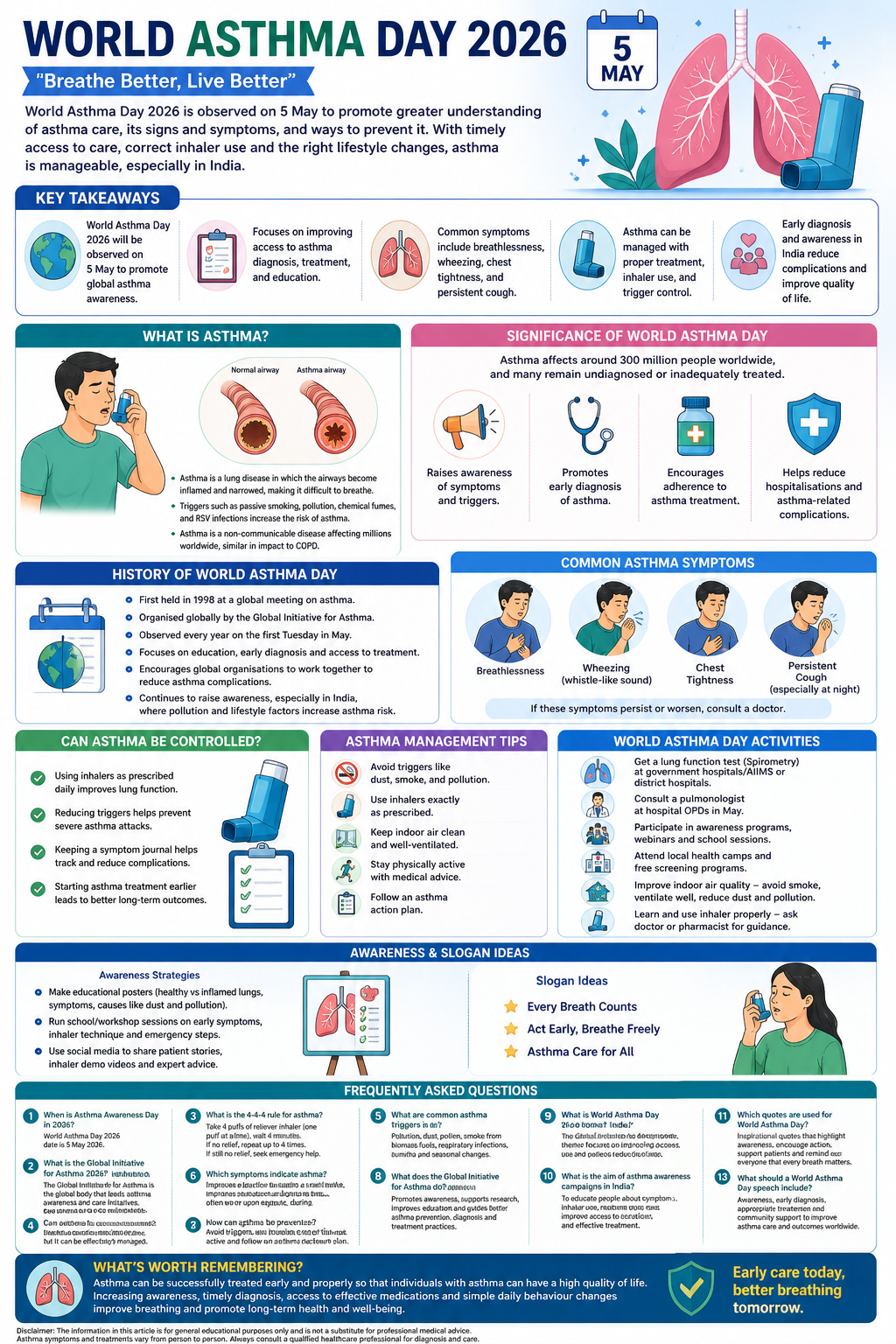
World Asthma Day 2026 takes place on 5 May, and is motivated to promote a greater understanding of asthma care, its signs and symptoms, and ways to prevent it through the efforts of the Global Initiative for Asthma, which will be focusing on how important early diagnosis, accurate inhaler usage and access to treatment are in relation to asthma management. With timely access to care and the right lifestyle changes, asthma is manageable, especially in India.
Key Takeaways
|
Asthma is a non-communicable disease affecting millions worldwide, similar in impact to COPD. World Asthma Day 2026 highlights the importance of awareness, early diagnosis, and effective management. Understanding symptoms, triggers, and prevention empowers individuals to take control of their respiratory health and improve their quality of life.
What Is Asthma
Air enters the lungs through the airways every time we take a breath. The airways deliver oxygen to the body and help to eliminate carbon dioxide waste.
Asthma is a lung disease. In asthma, the airways are inflamed and narrowed, which makes it difficult to get enough air into the body.
External factors include passive smoking, exposure to pollution or chemical fumes that tend to irritate your bronchial pathways and elevate the risk of bronchial asthma. In addition, those of you with a history of RSV or respiratory syncytial virus infection are more likely to develop asthma.

World Asthma Day Significance?
Asthma Awareness Day highlights both awareness and action. Approximately 300 million people in the world have asthma, and many have yet to receive a diagnosis or have received inadequate treatment.
Importance of World Asthma Day
Raises awareness of asthma's symptoms and triggers.
Promotes the early diagnosis of asthma.
Encourages ongoing adherence to asthma treatment.
Helps to reduce the number of hospitalisations and co-asthma-related complications
World Asthma Day History?
World Asthma Day was first held in 1998, in conjunction with a worldwide meeting on asthma, to raise awareness of asthma and its effective management. Since that time, World Asthma Day has become an important international health initiative supported by the Global Initiative for Asthma and many healthcare organisations worldwide.
World Asthma Day was created to improve the quality of care for asthma patients.
World Asthma Day is organised globally by the Global Initiative for Asthma.
World Asthma Day is observed each year on the first Tuesday in May.
World Asthma Day focuses on educating and raising awareness about asthma, increasing early diagnosis, and ensuring access to treatment for people with asthma.
World Asthma Day is designed to encourage organisations worldwide to work together to find ways to reduce the complications of asthma.
Today, World Asthma Day continues to be an important part of increasing awareness around asthma, especially in countries such as India, where there is an increasing number of incidences of asthma associated with pollution and lifestyle issues.
What are the Different Kinds of Asthma?
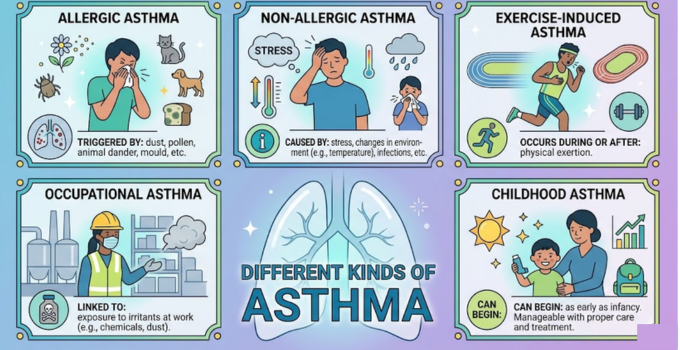
Different types of asthma can occur based on triggers, environmental factors, and age of onset.
Allergic Asthma: Is triggered by dust, pollen, animal dander, mould, etc.
Non-allergic Asthma: Is caused by a heightened sensitivity to changes in your body because of stress; changes in the environment because of temperature; infections, etc.
Exercise-induced asthma: Occurs during and/or after physical exertion.
Occupational Asthma: Linked to exposure to irritants found at work, such as some chemicals and dust.
Childhood Asthma: Can begin as early as infancy and is often manageable with proper care and treatment.
What do those symptoms actually mean?
Asthma symptoms can vary widely from person to person and are not always obvious.
You may be short of breath.
You may hear wheezing (whistle-like sound).
You may feel tightness in your chest.
You may have a cough that doesn't go away, especially at night.
It is a good idea to have these symptoms evaluated if they persist or worsen over time.
Can Asthma Be Controlled?
According to a systematic review and meta-analysis titled Prevalence of Asthma Among Children in India, analysing 33 studies across a pooled sample of 167,626 Indian children, the estimated prevalence of asthma was 7.9% (95% CI: 6.3–9.6%). Prevalence was found to be higher among boys and in urban areas, highlighting the urgent need for early diagnosis and primary-level healthcare support for children across India.
With proper treatment and lifestyle changes, asthma can be successfully controlled. Most people can avoid severe asthma attacks and have an active lifestyle.
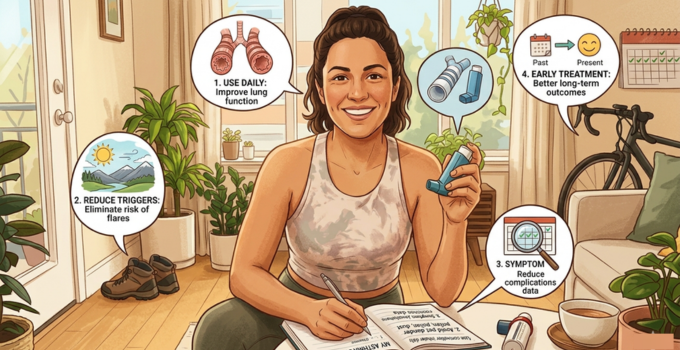
Using inhalers as prescribed daily improves lung function.
Reducing triggers will help to eliminate the risk of severe asthma flares.
Keeping a symptom journal will provide valuable data to reduce the risk of complications.
Starting asthma treatment earlier will lead to better long-term outcomes.
What Asthma Management Actually Looks Like?
According to a study on knowledge, attitudes, and practices of bronchial asthma patients in India, published in the International Journal of Public Health (2013) 59.28% of asthma patients preferred oral tablets, capsules, or syrups over inhalers as their mode of drug administration, with inhalational therapy being only the second choice for 36.42% of patients highlighting a significant barrier to effective asthma control in the Indian setting.
Dr Anant Mohan, Professor & Head of Pulmonary, Critical Care & Sleep Medicine, AIIMS New Delhi, emphasised that he no longer recommends SABA-only inhalers for asthma management, urging a shift toward ICS-formoterol as both maintenance and reliever therapy for better long-term control.
You do not need a complicated routine to manage asthma. Small, consistent habits make a big difference.
Avoid triggers like dust, smoke, and pollution.
Use inhalers exactly as prescribed.
Keep indoor air clean and ventilated.
Stay physically active with medical advice.
Follow an asthma action plan.
You do not need perfection. Even small changes help.
World Asthma Day Activities?
World Asthma Day is an occasion to go beyond generic messaging and instead take concrete actions that help people detect, manage, and prevent asthma. In India, World Asthma Day provides an opportunity to offer screening services, connect with specialists, and raise awareness in your community. These activities encourage early asthma detection and improve the quality of asthma care.
Specifically, you can
Get a lung function test (Spirometry): Visit government hospitals - like AIIMS, or other district hospitals - that offer free and/or low-cost spirometry during health awareness campaigns.
Consult a pulmonologist: Many hospitals have dedicated outpatient departments (OPDs) for asthma evaluation in May.
Participate in awareness programs: Organisations such as the Indian Chest Society conduct public education programs and webinars on asthma.
Attend your local health care clinic: Many NGOs and urban health centres provide free asthma screening programs in their local communities.
Improve indoor air quality: by avoiding smoke, ensuring proper ventilation, eliminating dust, and reducing indoor air pollution.
Learn how to use your inhaler properly: Ask your doctor and/or pharmacist for a demonstration of proper inhaler technique.
World Asthma Day Poster 2026 & Slogan Ideas?
World Asthma Day 2026: Effective examples of real-world awareness strategies
Make educational posters
depict healthy and inflamed (swollen) lungs
List possible asthma symptoms to look out for
Highlight common causes of asthma attacks, like dust and pollution
Run school/workshop sessions
teach how to recognise early asthma symptoms
Demonstrate proper technique for using an inhaler
show the necessary steps needed in case of an asthma attack/emergency
Use social media effectively by
posting real patient stories about asthma
posting short videos demonstrating the use of inhalers
posting validated doctor/nurse-recommended strategies for asthma management
Slogans should encourage people to act by raising awareness, promoting early diagnosis, and encouraging treatment, even if they sound good.
Every Breath Counts: Informs people to take their symptoms seriously
Act Early, Breathe Freely: Encouraging/Promoting early diagnosis and treatment
Asthma Care for All: Encouraging/Promoting equal access to health care
Frequently Asked Questions
1. When is Asthma Awareness Day in 2026?
World Asthma Day 2026 date is 5 May 2026.
2. What is the Global Initiative for Asthma 2026?
The Global Initiative for Asthma is the global body that leads asthma awareness and care initiatives.
3. What is the 4-4-4 rule for asthma?
The 4-4-4 rule is a simple emergency guide used during an asthma attack. Take 4 puffs of your reliever inhaler (one puff at a time), then wait 4 minutes. If symptoms do not improve, repeat this step up to 4 times. If there is still no relief or symptoms worsen, seek emergency medical help immediately.
4. Can asthma be cured permanently?
Asthma cannot always be cured, but it can be effectively managed with treatment and lifestyle changes.
5. What are the common asthma triggers in India?
In India, common asthma triggers include air pollution, dust, pollen, smoke from biomass fuels, respiratory infections, humidity, and seasonal weather changes.
6. Which quotes are used for World Asthma Day?
Inspirational quotes highlight awareness, encourage action, support patients, and remind everyone that every breath matters in asthma care.
7. What should a World Asthma Day speech include?
A speech should emphasise awareness, early diagnosis, appropriate treatment, and community support to improve asthma care and outcomes worldwide.
8. What is the aim of an asthma awareness campaign in India?
Campaigns educate people about symptoms, inhaler use, stigma reduction, and improving access to early diagnosis and effective asthma treatment.
9. What are good social media post ideas for asthma awareness?
Share messages promoting awareness, early detection, support, and encouraging healthy breathing habits using engaging hashtags and simple language.
10. What is the World Asthma Day 2026 theme?
The Global Initiative for Asthma theme focuses on improving access to diagnosis, treatment, inhaler use, and patient education worldwide.
11. Which symptoms indicate asthma?
Symptoms include breathlessness, wheezing, chest tightness, and persistent cough, often worsening at night, during exercise, or upon exposure.
12. How can asthma be prevented effectively?
Prevention includes avoiding triggers, using inhalers correctly, maintaining clean environments, staying active, and following a doctor-recommended asthma action plan.
13. What does the Global Initiative for Asthma do?
The Global Initiative for Asthma promotes global awareness, supports research, improves education, and guides better asthma prevention, diagnosis, and treatment practices.
What’s Worth Remembering?
Asthma can be successfully treated early and properly so that individuals with asthma can have a high quality of life. Asthma can be improved by increasing awareness, obtaining a timely diagnosis, and ensuring access to effective medications. Simple daily behaviour changes, coupled with appropriate medical intervention, will improve a person's ability to breathe well and remain healthy in the long term.
Read Also
References
Singh S, Salvi S, Mangal DK, Singh M, Awasthi S, Mahesh PA, et al. Prevalence, time trends and treatment practices of asthma in India: the Global Asthma Network study. ERJ Open Res. 2022 May 30;8(2):00528-2021 https://pubmed.ncbi.nlm.nih.gov/35651368
Sodhi R, Prasad R, Kushwaha RAS, Kant S, Verma SK, Garg R, et al. A study to know the knowledge, attitude, and practices of patients of bronchial asthma. Int J Public Health. 2013;3(3):159–162. (Cited in: Swarnakar R, Dhar R. Lung India. 2024;41(3):209–216. PMID: 38687232.) https://pubmed.ncbi.nlm.nih.gov/38687232
Disclaimer: The information in this article is for general educational purposes only and is not a substitute for professional medical advice. Asthma symptoms and treatments vary from person to person. Always consult a qualified healthcare professional for diagnosis and c













Comments