

Iron Deficiency Anaemia in Indian Women: Prevalence, Screening, and Dietary Correction




Last updated on 07 Aug 2026
Anaemia is a health issue that strikes more than half of women in India, with most of them oblivious to it. This does not happen because the symptoms are hard to see; it is because fatigue, breathlessness, pale skin, and lack of concentration have become so normal that women simply come to accept them as the price of a busy week.
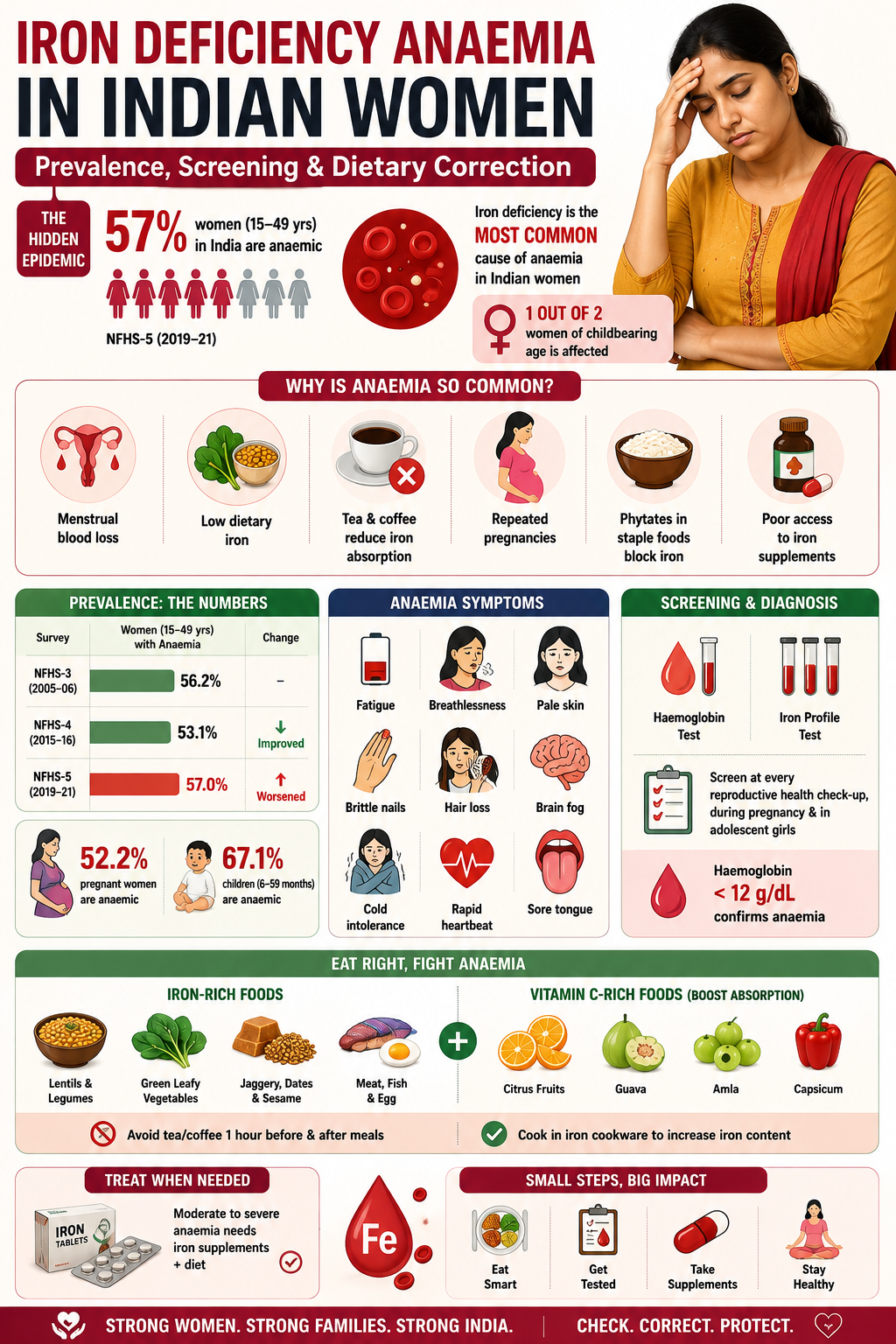
Anaemia in Indian women has become more prevalent in recent years instead of decreasing and has risen from 53% in NFHS-4 (2015-16) to 57% in NFHS-5 (2019-21) despite the fact that many government initiatives meant to solve the problem were launched. Statistically, for every two women of childbearing age you meet on the streets of India, one suffers from this health problem. The majority of cases of anaemia can be traced back to iron deficiency.
Key Takeaways
|
Why Is Anaemia So Common in Indian Women?
Published analyses of NFHS-5 data confirm that iron deficiency affects approximately 50 per cent of India's population and that an estimated 15 to 20 per cent of maternal deaths in India are directly attributable to anaemia, making iron deficiency one of the most consequential and preventable causes of maternal mortality in the country.
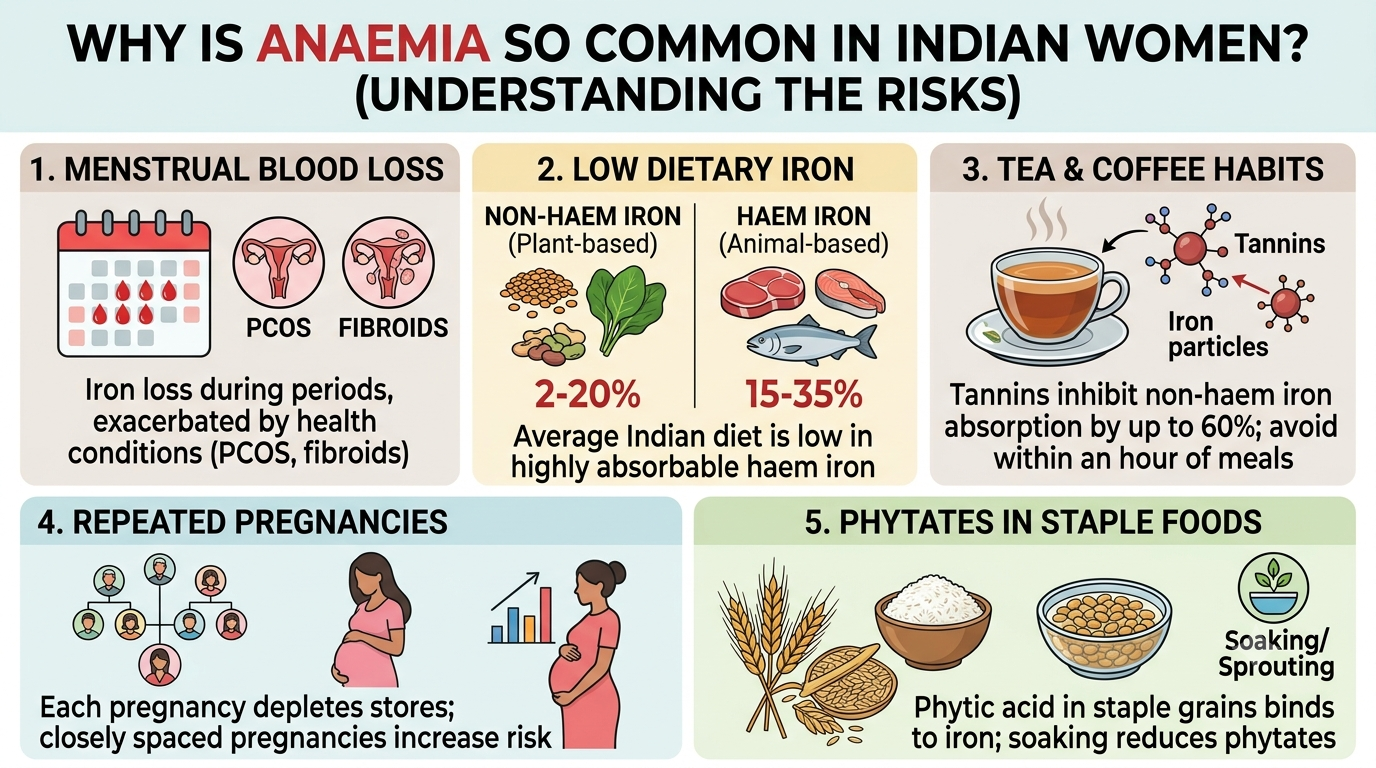
Menstrual blood loss: Women lose iron with every menstrual cycle. Those with heavy or prolonged periods, common in women with PCOS, fibroids, or hormonal imbalances, lose significantly more, often faster than dietary intake can replenish.
Low dietary iron: The majority of iron in the average Indian diet is non-haem iron from lentils, spinach, and legumes. Non-haem iron is absorbed at only 2 to 20 per cent efficiency, compared to 15 to 35 per cent for haem iron from meat and fish. A largely vegetarian diet places Indian women at structural dietary disadvantage for iron.
Tea and coffee habits: Iron deficiency in India affects 50 per cent of the population, and tannins in tea and coffee, consumed widely alongside or after meals, significantly inhibit non-haem iron absorption. Drinking tea within an hour of eating an iron-rich meal can reduce absorption by up to 60 per cent.
Repeated pregnancies: Each pregnancy depletes maternal iron stores. Women with closely spaced pregnancies or inadequate supplementation during and after pregnancy have progressively lower stores.
Phytates in staple foods: Phytic acid in wheat, rice, and legumes binds to iron in the gut, reducing absorption. Most Indian staple meals contain multiple phytate-rich foods.
Poor access to supplementation: Despite the government's Anaemia Mukt Bharat initiative distributing weekly iron and folic acid supplements to adolescent girls and pregnant women, coverage and compliance remain inconsistent.
Prevalence of Anaemia in Indian Women: What the Numbers Show
Prevalence of anaemia in Indian women across successive NFHS rounds tells a troubling story:
Survey | Women aged 15-49 with Anaemia | Change |
NFHS-3 (2005–06) | 56.2% | - |
NFHS-4 (2015–16) | 53.1% | ↓ Improved |
NFHS-5 (2019–21) | 57.0% | ↑ Worsened |
Between 2015 and 2021, over 60 per cent of India's Aspirational Districts saw an increase in anaemia prevalence, with some districts recording rates above 80 per cent.
Prevalence of iron deficiency anaemia in pregnancy in India is particularly concerning: 52.2 per cent of pregnant Indian women are anaemic, a figure that contributes directly to maternal mortality, low birth weight, and premature birth.
Prevalence of anaemia in children in India is even higher: 67.1 per cent of children aged 6 to 59 months were anaemic in 2019-21, representing an increase from the previous survey round and reflecting the intergenerational transmission of iron deficiency from anaemic mothers to their children.
Anaemia Symptoms: What Iron Deficiency Feels Like
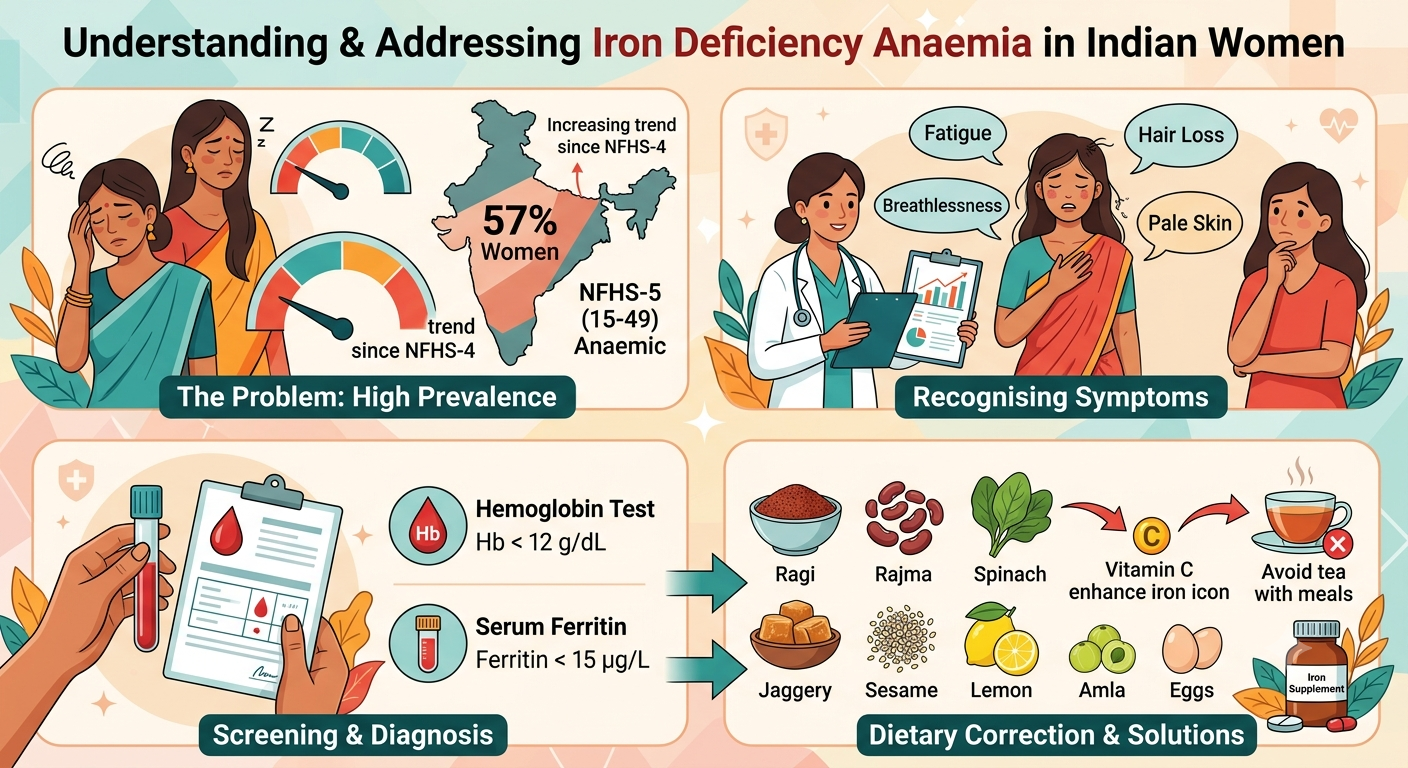
Anaemia symptoms develop gradually, which is part of why they are so often missed. The body adapts remarkably well to slow-developing iron deficiency until the depletion reaches a point where it cannot compensate.
Iron deficiency symptoms and symptoms of iron deficiency anaemia in Indian women include:
Symptom | Why It Happens |
Persistent fatigue | Red blood cells carry oxygen; fewer cells means less oxygen to muscles and brain |
Breathlessness on mild exertion | Heart works harder to compensate for reduced oxygen-carrying capacity |
Pale skin, gums, and inner eyelids | Reduced haemoglobin reduces skin colour in well-vascularised areas |
Cold hands and feet | Poor circulation as blood prioritises core organs |
Hair loss and brittle nails | Keratin production is reduced when iron is unavailable |
Brain fog and poor concentration | The brain requires oxygen continuously; anaemia reduces its supply |
Pica (craving for ice, clay, chalk) | A recognised but poorly understood symptom of severe iron deficiency |
Restless leg syndrome | Iron-dependent dopamine pathways in the brain are affected |
Rapid or irregular heartbeat | Compensatory mechanism for reduced oxygen delivery |
Low haemoglobin in women does not always produce obvious symptoms until levels drop significantly. Many women with haemoglobin between 10 and 12 g/dL feel chronically tired but attribute it to their schedule rather than their iron stores.
Anaemia Diagnosis: What Tests to Get
Anaemia diagnosis begins with a simple, inexpensive blood test.
Haemoglobin test (Hb): The most basic screening measure. Anaemia is defined as haemoglobin below:
12 g/dL in non-pregnant women (WHO threshold)
11 g/dL in pregnant women
11.5 g/dL in adolescent girls (10-17 years)
Iron profile test: Confirms iron deficiency as the cause of anaemia and guides treatment decisions. The iron profile test typically includes:
Serum iron: the amount of iron in blood
Serum ferritin: the iron storage marker; the earliest indicator of depletion before haemoglobin falls
TIBC (Total Iron Binding Capacity): rises in iron deficiency
Transferrin saturation: low in iron deficiency anaemia
Ferritin is particularly important: women can be iron-depleted with normal haemoglobin if stores are low but not yet exhausted. A ferritin below 15 µg/L confirms iron deficiency even when haemoglobin is still within normal range.
Anaemia Screening: Who Should Be Tested and When
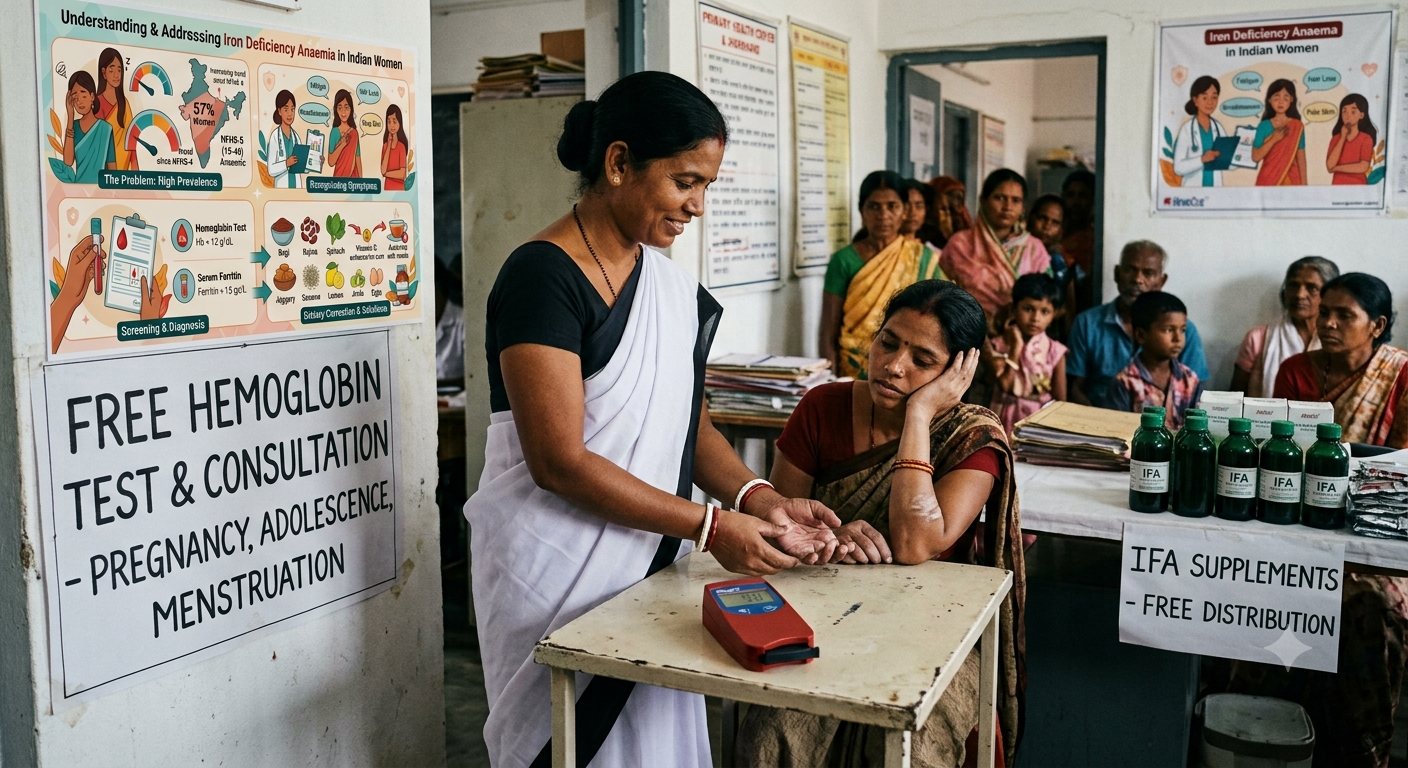
Anaemia screening should not wait for symptoms. The groups who need proactive, regular screening include:
All women of reproductive age, at least once every 1 to 2 years
Adolescent girls annually, particularly in government schools under NAS programmes
All pregnant women at the first antenatal visit and again in the third trimester
Women with heavy periods, PCOS, fibroids, or recent pregnancy
Vegetarian and vegan women who are structurally at higher dietary risk
Women reporting chronic fatigue, breathlessness, or hair loss without another clear cause
Anaemia screening is available at all government sub-health centres, primary health centres, and private diagnostic labs across India. The haemoglobin test alone costs ₹50 to ₹150 at most labs; a full iron profile costs ₹300 to ₹800. Under Anaemia Mukt Bharat, government facilities offer free haemoglobin testing for pregnant women and adolescent girls.
Anaemia Diet: Foods That Help and Foods That Hinder
What causes iron deficiency anaemia in women is often a combination of dietary factors that can be meaningfully corrected through awareness and planning.
Iron-Rich Foods for an Anaemia Diet
Food | Iron Content | Notes |
Ragi (finger millet) | 3.9 mg/100g | One of the richest plant sources; widely available in South India |
Rajma (kidney beans) | 6.1 mg/100g | Soak overnight and cook well; reduces phytates |
Methi leaves (fenugreek) | 1.9 mg/100g | Commonly used in cooking; easy to include daily |
Jaggery | 11 mg/100g | Traditional source; pairs well with sesame |
Sesame seeds (til) | 14.5 mg/100g | Excellent source; use in laddoos, chutney |
Spinach and dark leafy greens | 2–4 mg/100g | Cook lightly; pairs well with lemon for absorption |
Pomegranate | 0.3 mg/100g | Lower in iron but high in Vitamin C, which enhances absorption |
Eggs (yolk) | 2.1 mg/100g | Good for non-vegetarians; widely accessible |
Chicken liver | 9–12 mg/100g | Richest haem iron source; highly absorbed |
The Vitamin C Rule
Non-haem iron absorption increases by 2 to 4 times when consumed alongside Vitamin C. Squeeze lemon on dal and vegetables, eat amla (Indian gooseberry) alongside iron-rich meals, or follow an iron-rich breakfast with a glass of fresh orange juice. This is one of the most evidence-backed and simple dietary changes for improving iron absorption.
What to Avoid Around Iron-Rich Meals
Tea and coffee: contain tannins that inhibit iron absorption; wait 1 hour after eating
Calcium-rich foods (milk, curd, paneer): calcium and iron simultaneously compete for the same transporter
Antacids: reduce stomach acid needed to convert iron to its absorbable form
High-phytate foods without soaking: soak and sprout legumes to reduce phytic acid content
Iron Supplements: When Food Alone Is Not Enough
Dr Sujata Dalvi, Senior Obstetrician and Gynaecologist at Nowrosjee Wadia Maternity Hospital, Mumbai, and lead author of a large multicentre Indian IDA study, addresses: "IDA is highly prevalent among women of reproductive age in India. Despite the wide availability of oral iron formulations, real-world evidence on prescribing practices, treatment outcomes, and patient experiences remains limited."
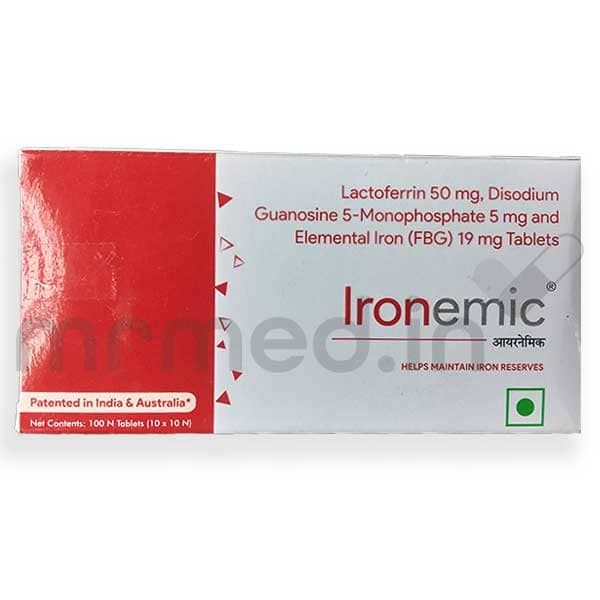
Commonly prescribed iron supplements in India include:
Ferrous sulphate: most widely used; 100–200 mg elemental iron daily; can cause constipation and dark stools
Ferrous gluconate / ferrous fumarate: better tolerated; fewer GI side effects
Ferric ammonium citrate: liquid formulations; used in children and those with GI intolerance
Iron sucrose or ferric carboxymaltose (IV iron): for severe anaemia or those who cannot tolerate oral iron
Take oral iron on an empty stomach with water or Vitamin C for maximum absorption. If GI side effects are significant, taking it with a small meal, accepting slightly reduced absorption, is better than stopping supplementation entirely.
Do not self-prescribe iron supplements. A haemoglobin test and iron profile test, with medical guidance, should determine dose and duration.
FAQs
Q1. What is the prevalence of anaemia in India according to NFHS-5?
57 per cent of Indian women aged 15 to 49 were anaemic in 2019–21, up from 53 per cent in the previous survey round. This represents more than half of all women of reproductive age in India.
Q2. What are the most common iron deficiency anaemia symptoms in Indian women?
Persistent fatigue, breathlessness on exertion, pale skin and gums, hair loss, brittle nails, cold hands, and difficulty concentrating. Many women normalise these symptoms rather than seeking testing.
Q3. Which test confirms iron deficiency anaemia?
A haemoglobin test confirms anaemia; a serum ferritin test (part of the iron profile) confirms iron deficiency specifically. Ferritin can be low even when haemoglobin is still normal, making it the most sensitive early marker.
Q4. Can diet alone correct iron deficiency anaemia?
For mild deficiency in the early stages, yes, particularly with careful pairing of iron-rich foods with Vitamin C and avoidance of inhibitors. For moderate to severe anaemia, iron supplements are needed alongside dietary correction.
Q5. Why is anaemia so common in Indian women despite government programmes?
Multiple overlapping causes: predominantly non-haem iron diets, high tea consumption suppressing absorption, menstrual losses, repeated pregnancies, and inconsistent supplementation uptake. Awareness at the household level remains the largest gap.
Final Thoughts
Iron-deficiency anaemia isn’t only an obscure clinical condition in Indian women. It is one of the most common, underdiagnosed, and unaddressed health problems in the country. More than 50% of women in the age group of 15 to 49 are affected, and the figures have only gone up, much to the chagrin of medical professionals and the government both.
The good part is that most of the cases can be cured easily. A haemoglobin test costs only about ₹150. Eating a diet consisting of foods like ragi, rajma, lemon, and methi can help you craft iron-rich meals.
Hence, if you feel tired all the time or find it difficult to perform simple tasks, do have yourself checked. It is a quick and inexpensive procedure, and the outcome could transform your life.
Read Also
References
Mog M, Neogi D, Bharadwaz MP, Panda BK, Sil A. Prevalence and determinants of anaemia among women of reproductive age in Aspirational Districts of India: an analysis of NFHS 4 and NFHS 5 data. BMC Public Health [Internet]. 2024 Feb [cited 2026 Jul 09];24(1). Available from: https://pmc.ncbi.nlm.nih.gov/articles/PMC10860231/
Ministry of Health and Family Welfare, Government of India. National Family Health Survey-5 (NFHS-5) India 2019–21 [Internet]. New Delhi: MoHFW; 2022 [cited 2026 Jul 09]. Available from: https://dhsprogram.com/pubs/pdf/FR375/FR375.pdf
Ajmera AK, Soni RK, Mishra RM. Assessing the prevalence of iron deficiency anaemia and risk factors among children and women: a case study of rural Uttar Pradesh. Clin Epidemiol Glob Health [Internet]. 2024 [cited 2026 Jul 09]. Available from: https://www.ceghonline.com/article/S2213-3984(24)00041-1/fulltext
Disclaimer: This article is for general informational and awareness purposes only. It does not constitute medical advice. If you suspect iron deficiency anaemia, consult a qualified physician for appropriate testing and treatment.












Comments