

Swollen Feet During Pregnancy: Causes, Remedies, and When to Worry





Last updated on 02 Jan 2026
Swollen feet are one of the most common discomforts experienced by expectant mothers during pregnancy. The medical term for this swelling is oedema, and it usually affects the feet, ankles, and sometimes the legs. It happens because your body retains extra fluid to support your growing baby, and while it’s mostly harmless, it can be uncomfortable. This article explains the causes, safe remedies, and when swelling may be a sign to seek medical attention.
Why Swelling Happens During Pregnancy
1. Increased Blood and Fluid Volume
During pregnancy, the body produces up to 50% more blood and body fluids to meet the baby's needs. This natural process often results in mild fluid retention, especially in the lower limbs.
2. Pressure from the Growing Uterus
As the uterus expands, it presses on the veins in the pelvic area, slowing the return of blood from your legs to your heart. This leads to fluid accumulation and causes swollen legs, ankles, and feet.
3. Hormonal Changes
Pregnancy hormones like progesterone and relaxin cause the veins to relax, allowing more fluid to leak into surrounding tissues. These hormonal effects also make your body retain sodium and water, leading to oedema in pregnancy.
4. Lifestyle and Environmental Factors
Standing for long periods, exposure to hot weather, lack of physical movement, or sitting with crossed legs can exacerbate swelling. The swelling is often more noticeable in the evening or after a long day.
5. Third Trimester Water Retention
Swelling is most common in the third trimester, as the baby’s weight and the pressure on major veins peak. This is also when many women notice tight shoes or puffy feet by the end of the day.
Common Symptoms
The National Health Mission (NHM) document Guidelines for Antenatal Care and Skilled Attendance at Birth stipulates key antenatal screening and counselling practices. While it does not single out foot swelling, it emphasises regular monitoring of maternal circulatory status, oedema, and complications as part of routine antenatal care.
Puffiness in the feet, ankles, or lower legs.
Shoes or sandals are feeling tighter than usual.
Mild aching or heaviness in the legs.
Swelling that increases throughout the day and eases overnight.
Imprints on the skin when pressing gently with a finger (pitting oedema).
Safe and Effective Remedies for Swollen Feet During Pregnancy
Dr Arati Adhe, Consultant Gynaecology & IVF, P.D. Hinduja Hospital & Medical Research Centre, emphasises that “If the swelling is mild, even small changes in one’s lifestyle can relieve the same.” “Swelling of feet in pregnancy is common, but if the pattern is different or involves other body parts, then it must never be ignored.”
1. Elevate Your Feet Regularly
Keep your legs elevated whenever possible. Resting your feet on a stool or lying down with a pillow under your legs helps improve circulation and reduce swelling.
2. Stay Hydrated
Drinking enough water may sound counterintuitive, but proper hydration helps prevent your body from retaining excess fluid. Aim for at least 8–10 glasses a day unless your doctor advises otherwise.
3. Move and Stretch Often
Light exercise, such as walking, swimming, or prenatal yoga, improves blood flow and helps reduce water retention. Even simple ankle rotations or calf stretches at your desk can make a difference.
4. Wear Comfortable Footwear
Avoid tight shoes or socks that restrict circulation. Choose soft, supportive footwear with adequate arch support to reduce strain on your feet.
5. Use Compression Stockings
Mild compression socks can help prevent fluid from pooling in your legs. They are particularly useful if you spend long periods standing or sitting during the day.
6. Reduce Salt Intake
High sodium levels cause your body to retain more water. Avoid processed and packaged foods that are often loaded with salt. Instead, opt for home-cooked meals rich in potassium, like bananas, spinach, and sweet potatoes.
7. Try Foot Massage or Warm-Cool Soaks
A gentle foot massage can stimulate circulation and reduce tension. Alternating warm and cool water soaks can also soothe swollen feet and provide quick relief.
8. Sleep on Your Left Side
This position reduces pressure on the main vein that returns blood to your heart, improving circulation and reducing swelling in the feet and ankles.
9. Wear Loose, Breathable Clothing
Avoid tight waistbands, socks, or leggings that can restrict blood flow. Opt for breathable cotton fabrics and maternity wear that provide comfort and support.
10. Stay Cool and Rest Often
Hot weather can worsen swelling. Stay indoors during peak heat, use fans, and rest with your feet elevated whenever possible.
Dietary Tips: Foods to Eat and Avoid
A recent article in the Journal of the Association of Physicians of India outlines the evaluation of leg oedema in pregnancy (including in the Indian context), noting that though most oedema is physiological, unilateral or asymmetric swelling demands investigation (risk of DVT) in late pregnancy.
Foods That Help Reduce Swelling:
Potassium-rich foods: bananas, avocados, oranges, spinach, and lentils.
Vitamin C-rich foods: citrus fruits, strawberries, and bell peppers.
Magnesium-rich foods: almonds, leafy greens, and oats.
Hydrating foods: watermelon, cucumber, and coconut water.
Foods to Avoid:
Packaged snacks, chips, and ready-made meals are high in salt.
Excess caffeine or sugary drinks.
Fried and oily foods slow digestion and contribute to bloating.
When to Worry About Swelling
While most swelling is normal, certain signs may indicate a more serious problem:
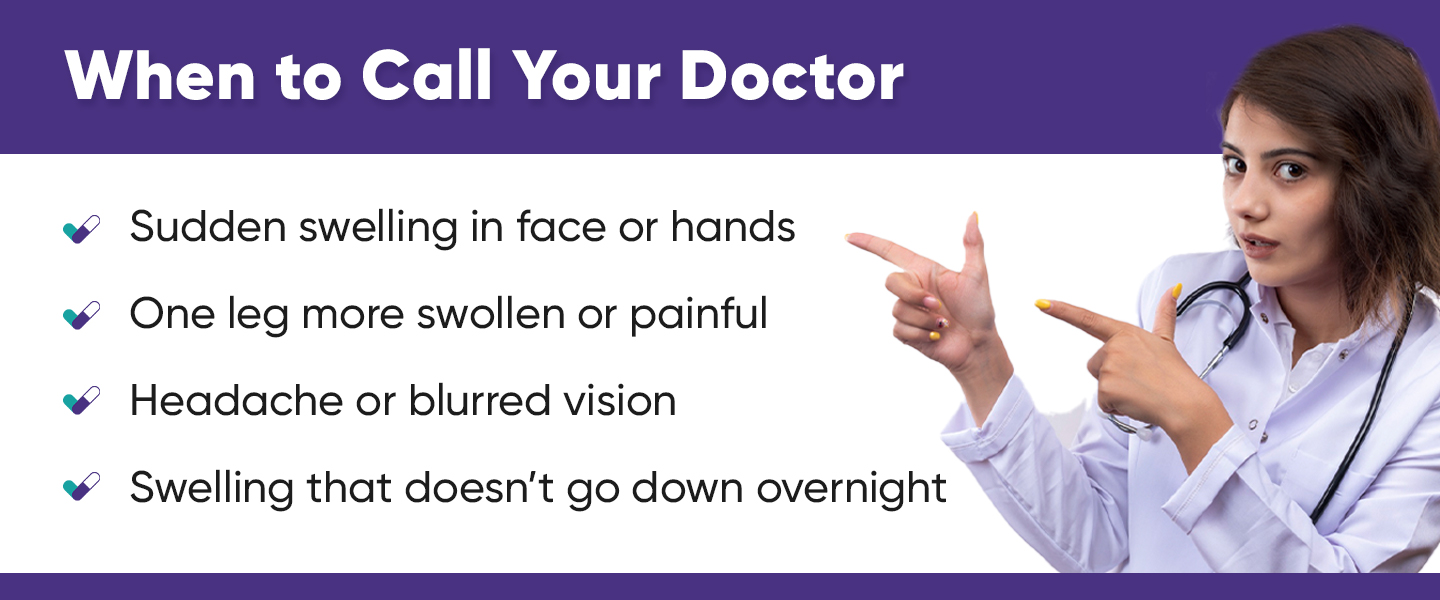
Sudden or severe swelling of the face, hands, or around the eyes.
Swelling that appears overnight or worsens quickly.
Pain, redness, or warmth in one leg (possible blood clot).
Headache, blurred vision, or abdominal pain (possible pre-eclampsia).
Persistent swelling that doesn’t improve with rest or lifestyle changes.
If you experience any of these symptoms, contact your healthcare provider immediately.
Natural Remedies for Pregnancy Swelling
Soak your feet in cool (not ice-cold) water for 10–15 minutes.
Practice gentle prenatal yoga poses that enhance lymphatic flow.
Use a pregnancy pillow to elevate your legs while sleeping.
Include herbal teas, such as dandelion or ginger (after consulting a medical professional), to support fluid balance.
Schedule regular foot massages or reflexology sessions with a certified prenatal therapist.
Coping Tips for Everyday Comfort
Avoid standing for extended periods, and take regular sitting breaks.
When sitting, move your toes and ankles to promote circulation.
Wear breathable cotton socks to prevent sweating and friction.
Try cold compresses on swollen ankles for quick relief.
Avoid crossing your legs while sitting.
Keep track of your swelling patterns and note what triggers them.
When to Expect Improvement
Mild swelling typically begins in the second trimester and reaches its peak in the third. Most women notice a significant reduction in swelling within a few days to weeks after delivery as hormone levels and blood volume return to normal.
FAQs
1. Is swelling normal during pregnancy?
Yes. Most pregnant women experience mild swelling, especially in the feet and ankles. It’s caused by fluid retention and increased pressure on the veins as the baby grows.
2. How can I reduce swelling naturally?
Elevate your feet, stay hydrated, reduce your salt intake, wear compression socks, and stay active regularly. Gentle exercises, such as walking or swimming, help improve circulation.
3. When should I worry about swollen feet?
Seek medical help if swelling is sudden, severe, or accompanied by headaches, blurred vision, or pain, as these may indicate pre-eclampsia.
4. Are there foods that make swelling worse?
Yes. Processed and salty foods can contribute to increased water retention. Replace them with potassium-rich options, such as bananas, leafy greens, and avocados.
5. Does foot massage help with swelling?
Yes. A gentle massage improves circulation, reduces discomfort, and provides relief. Always ensure massages are done gently and safely during pregnancy.
Final Thoughts
Swelling in the feet and ankles is a common occurrence during pregnancy for most women and is typically not a sign of a serious condition. By staying active, eating wisely, staying hydrated, and resting with your feet elevated, you can keep the swelling manageable and remain comfortable.
However, never ignore sudden or painful swelling; your body’s signals are important. When in doubt, speak to your obstetrician. With awareness and care, you can navigate this phase smoothly and focus on what truly matters: a healthy you and a healthy baby.
Read also
References
Disclaimer: The content in this blog is for general informational purposes only and is not a substitute for professional medical advice, diagnosis, or treatment. Always consult your doctor or a registered dietitian before making any changes to your diet, especially if you have a medical condition or are taking prescribed medication. While the information is based on trusted sources, individual needs and results may vary. MrMed does not promote or endorse any specific food or treatment mentioned unless explicitly stated.












Comments