

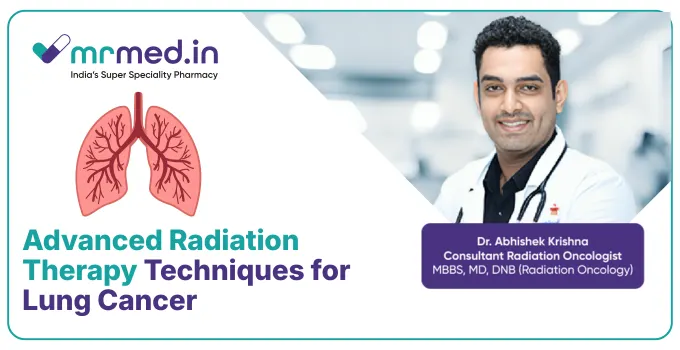
Advanced Radiation Therapy Techniques for Lung Cancer





Last updated on 02 Jan 2026
Key Takeaways
|
Dr Abhishek Krishna, Consultant Radiation Oncology, explained that radiation therapy for lung cancer has evolved significantly over the past decade, with modern precision techniques allowing doctors to target tumours more accurately while sparing healthy tissues. These advancements have improved treatment outcomes, reduced side effects, and expanded options for patients who cannot undergo surgery. This article breaks down the most widely used advanced techniques, how they work, and what patients can expect during their treatment journey.
Understanding Modern Radiation Techniques
In today’s lung cancer treatment landscape, two advanced methods are dominant: SBRT (Stereotactic Body Radiation Therapy) and IMRT (Intensity-Modulated Radiation Therapy). Both techniques use highly focused beams, but they differ in delivery, precision, and clinical application.
SBRT is often recommended for small, early-stage lung tumours, especially when cancer surgery is not feasible. This technique delivers high-dose radiation with millimetre accuracy, allowing treatment to be completed in just a few sessions. Its growing adoption reflects strong data on tumour control and the success rates of SBRT for lung tumours, which continue to improve with better imaging and planning systems.
IMRT, on the other hand, is designed to shape radiation beams around complex tumour structures. This method allows for dose modulation across different regions of the tumour, making it valuable in cases where cancer lies close to sensitive organs. Many patients benefit from the benefits of IMRT for lung cancer patients, especially when tumours involve the mediastinum or lymph nodes.
How These Techniques Work
To understand how SBRT works for lung cancer, it helps to know that the therapy uses multiple beams from various angles, each delivering a portion of the total dose. Advanced imaging tracks tumour motion caused by breathing, allowing radiation to hit only the target while protecting healthy lung tissue. This accuracy makes SBRT an option for patients who need definitive treatment delivered within one to five sessions.
IMRT uses computer-controlled linear accelerators to adjust beam intensity during treatment. This innovation enables clinicians to deliver higher doses to the tumour while minimising exposure to the heart, oesophagus, and spinal cord. Because of this beam-shaping capability, IMRT is widely recognised among advanced radiation therapy options for lung cancer.
Choosing Between SBRT and IMRT
The differences between SBRT and IMRT lie mainly in dosage, duration, and tumour characteristics. SBRT is best suited for small, well-defined tumours, while IMRT is ideal for larger or more complex cancers involving nearby structures. The choice depends on tumour size, location, stage, and the patient’s overall health.
Doctors may also combine IMRT with systemic treatments to enhance effectiveness, especially in locally advanced lung cancer.
What Patients Can Expect
Patients frequently ask what to expect during lung cancer radiation treatment. While each plan is personalised, most individuals undergo a planning CT scan, followed by daily sessions for several weeks (IMRT) or a few high-precision sessions (SBRT). Treatment is painless and typically lasts 10–20 minutes.
Most people tolerate therapy well, though some may experience fatigue, skin redness, or throat discomfort. Understanding strategies for managing side effects from radiation therapy helps patients navigate treatment with confidence.
FAQs
1. How is SBRT different from conventional radiation therapy?
SBRT delivers very high doses of radiation in a small number of sessions with millimetre-level precision. This allows for shorter treatment schedules and high tumour control rates, especially in early-stage lung cancer.
2. Who is an ideal candidate for IMRT?
IMRT is often recommended for patients with tumours located near sensitive organs such as the heart, oesophagus, or spinal cord. Its beam-shaping technology allows safe delivery of targeted radiation even in complex tumour locations.
3. What are the common side effects of advanced radiation therapy?
Most patients experience mild fatigue, throat discomfort, or temporary skin irritation. Modern techniques like SBRT and IMRT reduce the risk of long-term complications by limiting radiation to healthy tissues.
Final Thoughts
Modern radiation techniques offer powerful, precise, and safer options for lung cancer care. By tailoring treatment to individual tumour characteristics, clinicians can achieve better outcomes while protecting quality of life.
Read also
Disclaimer: The information provided in this article is for general awareness and educational purposes only. It should not be taken as a substitute for professional medical advice, diagnosis, or treatment. Always consult your doctor or a qualified healthcare provider with any questions regarding liver cancer, its stage, or treatment options. Do not ignore professional advice or delay seeking care because of information presented here. While insights are shared by Dr Abhishek Krishna, Consultant Radiation Oncologist, and are based on reliable medical sources, individual patient needs and outcomes may vary. MrMed does not endorse or promote any specific hospital, product, or treatment unless clearly stated.













Comments