

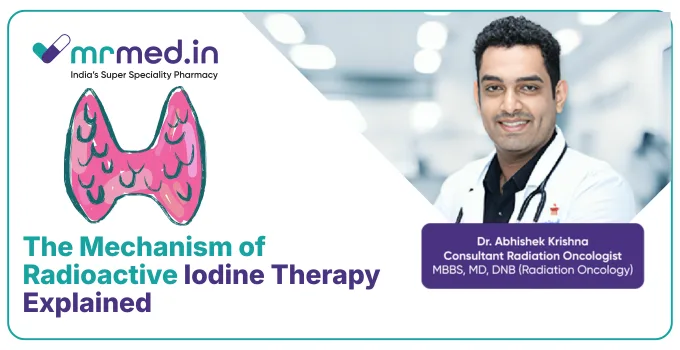
The Mechanism of Radioactive Iodine Therapy Explained





Last updated on 07 Jan 2026
Key Takeaways
|
According to Dr Abhishek Krishna, Consultant Radiation Oncologist, KMC Hospital, Mangalore, the general public typically associates radioactivity with fear and confusion. Patients undergoing thyroid therapy often want to understand more clearly how Radioactive Iodine works in their bodies, as well as why it is used, to better alleviate their fears, increase their knowledge and experience with medical treatments, allow them to make active choices about the medical treatment they receive.
Why the Thyroid Responds Uniquely to This Treatment
The thyroid gland is unique in that it can absorb iodine from the bloodstream. This exceptional property underlies the use of Radioactive Iodine Therapy. When an individual is administered a radioactive form of iodine, cancerous thyroid cells preferentially absorb iodine over other cell types. This makes Radioactive Iodine Therapy highly targeted and effective.
Regarding the treatment of thyroid cancer, the radiation used is not from outside the body, but rather works from within the body, directly on the malignant thyroid tissue.
How the Therapy Works at a Cellular Level
In general, the radioactive isotope used for this type of treatment is known as I-131. When ingested, I-131 is absorbed into the bloodstream and specifically taken up by malgined thyroid cells.
I-131 kills malignant thyroid cells by emitting radiation directly within them, damaging their DNA to such an extent that they cannot survive or divide. Thus, the primary mechanism of action by which I-131 destroys cancer cells is radiation-induced DNA damage, while causing minimal damage to adjacent normal tissues.
Why It Is Used After Surgery
Following thyroid surgery, residual thyroid tissue may remain. Therefore, radioactive iodine therapy may be administered to eliminate these residual cells, thereby reducing the risk of recurrence. It also enables physicians to more effectively track and monitor their patients through blood tests and scans over time.
Many healthcare providers utilise this method (radioactive iodine therapy) as part of the RAI Therapy India protocol due to India's high risk of thyroid cancer in certain patient populations.
Preparing the Body for Treatment
To achieve the highest possible success rates, proper preparation for radioactive iodine treatment can improve outcomes. For example, many healthcare providers will recommend that their patients be placed on a low iodine diet for 2-3 weeks immediately before the start of their radioactive iodine therapy.
This will increase the amount of radioactivity absorbed by thyroid cells and, therefore, enhance iodine-131 absorption.
Also, temporarily stopping the patient's thyroid hormone medication(s), depending on the physician's treatment plan for that particular instance of patient, is highly recommended.
Safety and Side Effects
Concerns about the adverse effects of radioactive iodine in treating thyroid cancer are very common among patients receiving treatment. In general, most side effects of radioactive iodine are very mild and temporary, such as dry mouth, changes in taste, neck discomfort, or fatigue. Serious issues with radioactive iodine therapy are rare if the patient has been selected properly.
Effectiveness and Outcomes
Another concern that is common to many families is whether using radioactive iodine on one patient carries any risk of exposing other family members to the radiation. With some common safety measures that will limit exposure during a brief time after using the radioactive iodine therapy, the risk to family members will be very low if followed properly.
The success rate of using radioactive iodine to treat thyroid cancer is very good in people who are appropriately selected for treatment. It is particularly effective at causing the death of the remaining thyroid tissue and at decreasing the risk of a thyroid cancer recurrence. It has been administered to patients for at least several decades, and many studies have shown its efficacy.
Final Thoughts
The method by which radioactive iodine therapy works is to exploit the thyroid gland's ability to take up iodine and kill cancerous cells. Only the tissue that absorbs iodine will be targeted, allowing for great precision, safety, and effectiveness when used as directed. Understanding how radioactive iodine works helps patients feel more informed about their treatment, rather than fearful.
FAQs
1. How does radioactive iodine therapy target thyroid cancer cells?
By exposing thyroid carcinoma to a radioactive form of Iodine, the normal metabolic process that allows thyroid carcinoma to take up Iodine as fuel becomes the basis for Radioactive Iodine Therapy; this is administered in either capsule or liquid form, with no pain or discomfort during the treatment.
2. Is radioactive iodine therapy painful or uncomfortable?
A large majority of patients who are treated with Radioactive Iodine Therapy will excrete the Iodine in their Urine, Saliva and through their other Excretory pathways within a few days of receiving Radioactive Iodine Therapy.
3. How long does radioactive iodine stay in the body?
Most of the radioactive iodine leaves the body through urine, saliva, and sweat within a few days. Small amounts may remain for a few weeks, which is why short-term safety precautions are advised after treatment.
Read Also
Hypothyroidism & Effective Weight Management Guide
Disclaimer: The information provided in this article is for general awareness and educational purposes only. It should not be taken as a substitute for professional medical advice, diagnosis, or treatment. Always consult your doctor or a qualified healthcare provider with any questions regarding liver cancer, its stage, or treatment options. Do not ignore professional advice or delay seeking care because of information presented here. While insights are shared by Dr. Abhishek Krishna, Consultant Radiation Oncologist, and are based on reliable medical sources, individual patient needs and outcomes may vary. MrMed does not endorse or promote any specific hospital, product, or treatment unless clearly stated.













Comments