


Should You Get a Second Opinion for Cancer? How, When and What to Carry





Last updated on 12 Nov 2026
A cancer diagnosis can bring several difficult decisions, often within a short period. You may be asked to have surgery, to go on to chemotherapy, to consider radiotherapy or to consider a targeted therapy. You'll naturally be wondering whether that's the right treatment for you.
A second opinion in that situation is useful. It doesn't mean in any way that your first oncologist is wrong. It just gives you another specialist's view prior to making a major decision.
Key takeaways
|
What is a second opinion for cancer?
A second opinion is an independent medical assessment by another doctor who reviews your diagnosis, medical history, investigation reports, and proposed treatment plan.
According to the US National Cancer Institute (NCI), the second doctor may agree with the original diagnosis and treatment plan, may have questions about it or may recommend a different approach. The whole point is to help the patient understand their condition and make an informed decision.
Importantly, you don't have to get a second opinion and then switch hospitals/doctors. You can have a second opinion and still carry on with your current oncologist.
In an interview with the Dana-Farber Cancer Institute, Dr Ann S. LaCasce, MD, MMSc (oncologist and director of the Dana-Farber/Mass General Brigham Fellowship in Hematology/Oncology) goes on to explain the value of consulting with another specialist:
"A second oncologist may see something different, be able to offer additional options, or provide further information on your disease."
When to get a second opinion for cancer
There's no single stage at which a patient has to get a second medical opinion. There are, however, certain circumstances in which a second opinion on a cancer diagnosis is particularly worthwhile.
1. Immediately after a cancer diagnosis
If you've just been diagnosed with cancer, you may wish to have another specialist look at your biopsy report, imaging and all your other investigations prior to treatment commencing.
2. When the diagnosis or biopsy findings are uncertain
A cancer biopsy report will tell you what type of cancer it is and what the cancer is like. In some instances, you will need further interpretation, further staining or molecular testing.
3. Before undergoing major cancer surgery
Cancer surgery can involve significant physical and emotional considerations. Before undergoing a major operation, you may want to understand whether surgery is the best approach or whether other treatments should be considered first.
For instance, some patients may be eligible for treatment before surgery, such as neoadjuvant chemotherapy, to shrink the tumour.
4. When multiple cancer treatment options are available
Some cancers can be treated using different combinations of surgery, chemotherapy, radiation therapy, immunotherapy and targeted therapy.
A second opinion can help you to understand why one treatment is preferred over another and whether other options might be appropriate in your particular case.
5. When cancer returns or does not respond to treatment
If it progresses on treatment or relapses after remission, then it may be worth seeing another specialist.
The second oncologist can review the previous treatment response and assess whether a different treatment combination, molecular test or clinical trial may be appropriate.
6. When dealing with a rare or advanced cancer
Rare cancers and advanced cancers will often require specialist expertise and a multi-disciplinary approach to treatment planning.
Consult specialists who specialise in your particular cancer, as they will be in a much better position to help you consider treatment options that may not be available at every hospital.
Is it worth getting a second opinion for cancer? What research shows
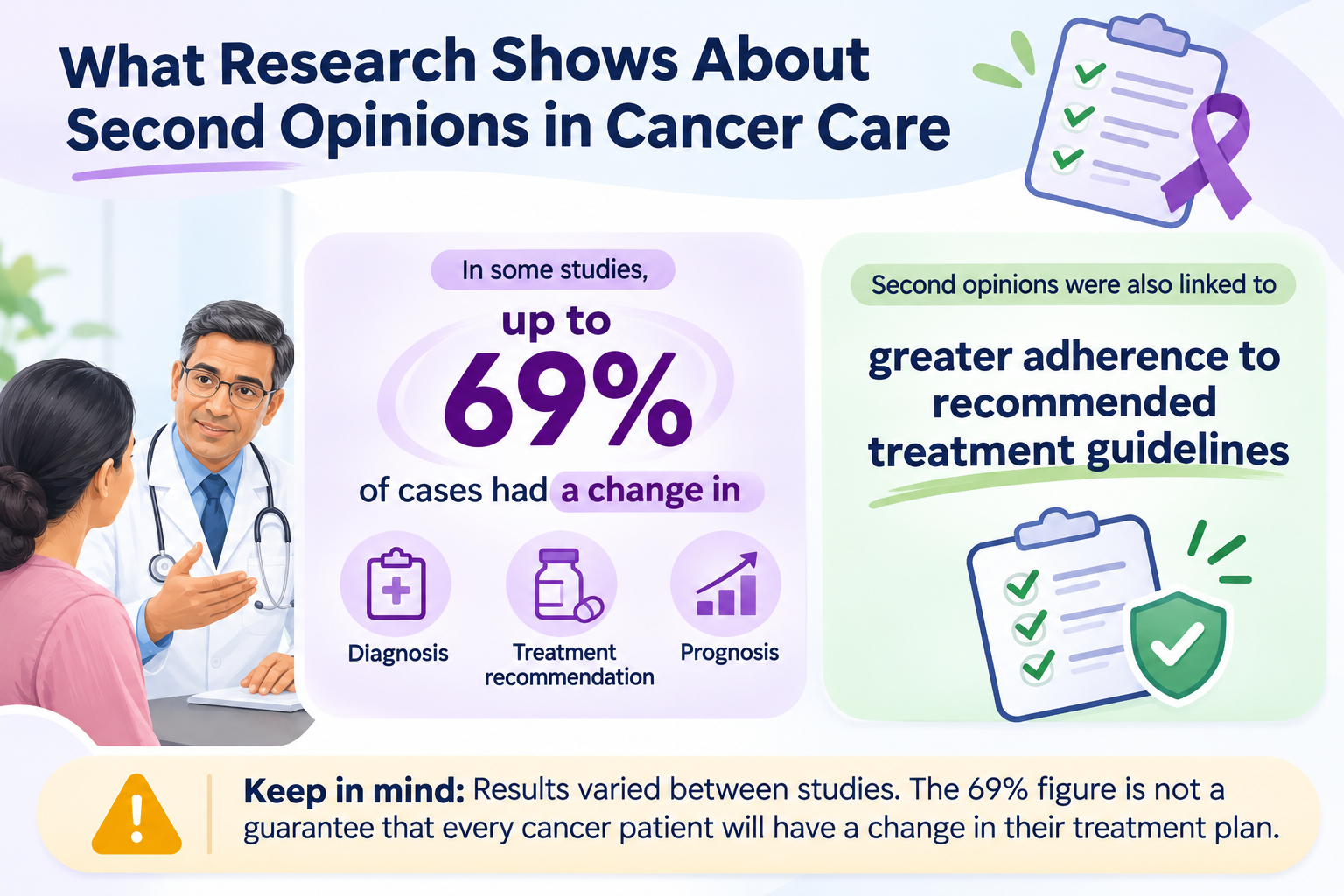
Yes, a second opinion can make a real difference, especially in the case of a complex cancer diagnosis or where the range of treatment options is very limited.
A 2026 review published in The Oncologist, titled Patient-driven second opinions in oncology: a review, examined research on patient-initiated second opinions.
How to get a second opinion for cancer: A step-by-step guide
Getting a second medical opinion doesn't have to be all that complicated. You basically just need to find an appropriate specialist, get your records together and then arrange a consultation.
Step 1: Speak to your current oncologist
Let your treating oncologist know if you would like another specialist to have a look at your diagnosis or your treatment plan.
You don't need to feel uncomfortable about asking. Your oncologist may well also recommend that you see another specialist or indeed another cancer centre.
Step 2: Find an oncologist who specialises in your cancer type
Choose a specialist with experience treating your specific cancer, rather than going with the hospital with the best overall ranking or the most positive online reviews.
For example:
Cancer type or treatment need | Specialist to consult |
Breast, lung or colorectal cancer | Medical oncologist |
Cancer requiring surgical removal | Surgical oncologist |
Cancer requiring radiation | Radiation oncologist |
Uncertain biopsy or pathology findings | Oncopathologist |
Complex imaging findings | Oncoradiologist |
For complicated cases, a multidisciplinary team (MDT) review can be particularly helpful. It brings together specialists from different disciplines to discuss the diagnosis and treatment plan.
When looking for the best oncologist in India for your condition, consider:
Their experience with your particular cancer.
Their qualifications and specialist training.
Their experience with the proposed treatment.
Their association with an established cancer centre.
Whether they clearly discuss the benefits, risks and alternatives of treatment.
Step 3: Collect your medical records
Before scheduling your cancer treatment consultation, make sure you've got all your medical reports in order.
Your second oncologist should have all the information they need to understand your diagnosis, your disease stage, your previous investigations and the treatment that's been recommended.
If possible, get digital copies of your reports so they can be shared securely for an online consultation.
Step 4: Schedule the consultation
You can arrange a second opinion through:
A different hospital or cancer centre.
A specialist oncology clinic.
An online cancer second opinion service.
A multi-disciplinary cancer review programme.
Step 5: Discuss the recommendations and decide your next steps
After the consultation, compare the two doctors' recommendations.
If they agree, you may feel more confident about proceeding with the proposed treatment.
If they disagree, do not immediately assume that one doctor is wrong. Ask both specialists to explain their reasoning, including the evidence, test findings and treatment guidelines supporting their recommendations.
You can also ask for a joint review or for the opinion of a further specialist if the differences remain.
Medical documents required for a cancer second opinion
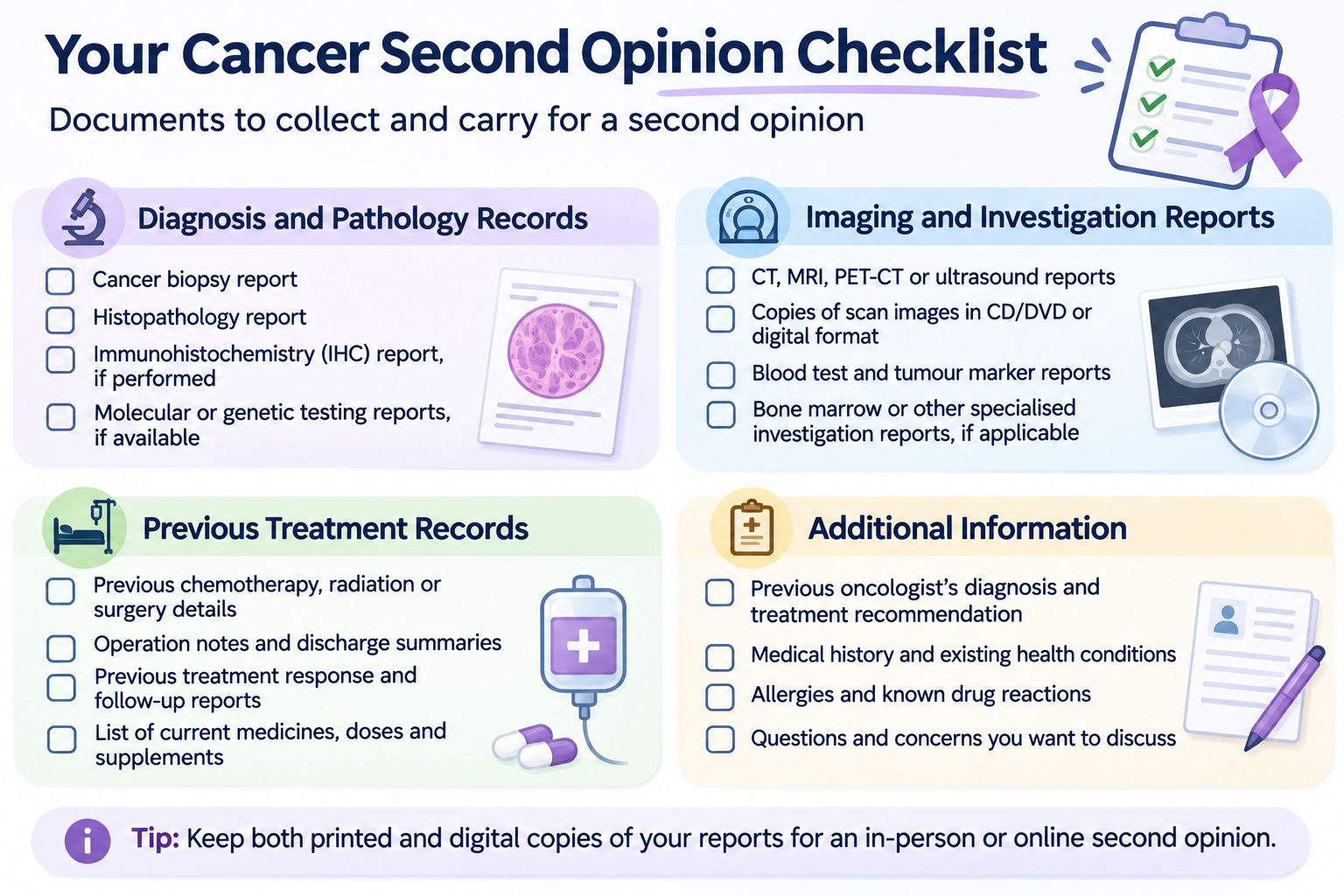
One of the most important parts of obtaining an accurate second opinion is having the correct medical records.
Here's a practical checklist of the documents you'll need in order to get a cancer second opinion.
Online second opinion for cancer in India
Travelling to another city to consult a senior oncologist can be difficult for patients undergoing cancer investigations or treatment.
An online second opinion for cancer can make specialist guidance more accessible, particularly for people living in areas with limited specialised cancer centres.
Depending on the service, patients can upload their records digitally and have an experienced cancer specialist review them as part of the initial assessment, without having to travel for the first consultation.
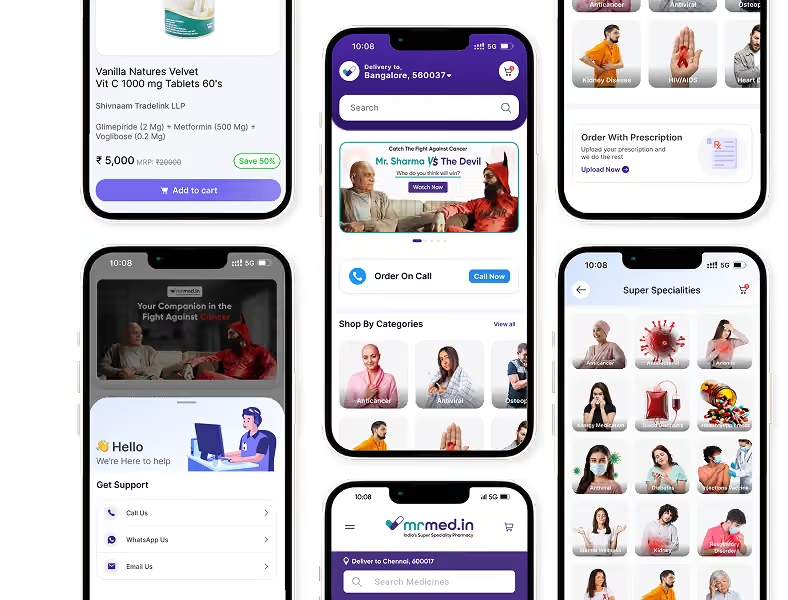
MrMed & Navya Cancer Second Opinion
MrMed, in collaboration with Navya, offers access to specialist cancer second opinions via an online service.
The service enables patients to get expert input without necessarily travelling to another city for the initial review.
How to get started:
Visit the MrMed & Navya Cancer Second Opinion service.
Register and submit the required medical documentation.
Follow the service team's instructions for case review.
Receive the specialist's recommendations and discuss from there.
This can be particularly useful for a patient looking for an alternative view on a cancer diagnosis, in terms of comparing treatments or determining whether their current treatment is the right one.
Will getting a second opinion delay cancer treatment?
A second opinion doesn't necessarily mean you're going to be delayed in getting treatment. In a lot of cases, the second opinion can be had whilst you're still in the care of your treating oncologist.
For some cancers, treatment needs to begin promptly. In other cases, there may be enough time to consider the diagnosis, to understand the various treatment options and to make a considered decision.
To avoid unnecessary delays:
Get your second opinion arranged as soon as possible after you've got your diagnosis.
Keep your biopsy and imaging reports ready.
Inform your treating oncologist that you're looking for a second opinion.
Ask whether your proposed treatment can safely be put on hold until the review is complete.
Do not independently postpone surgery, chemotherapy or other prescribed treatment.
If your symptoms are rapidly deteriorating or it's a medical emergency, seek medical attention immediately rather than waiting for a second opinion.
Conclusion
A cancer diagnosis can be overwhelming, but you do not have to make every treatment decision without having looked at your options. Getting a second opinion on your cancer can be of great value in terms of confirming your diagnosis, understanding what your treatment options are and enabling you to make more informed decisions about your care.
You can, of course, get a second opinion in person, or you can go the online route. Having your records in order and then discussing the second opinion with your treating oncologist will make the process a lot easier. The point is not to second-guess your care at all; it's simply to feel that you are well informed, well advised and well supported through your cancer journey.
FAQs
Q1. Should I get a second opinion after a cancer diagnosis?
Yes, you can consider getting a second opinion after a cancer diagnosis, particularly before beginning major treatment. Another oncologist can review your biopsy, imaging and pathology reports to confirm the diagnosis and assess whether the proposed treatment is appropriate.
Q2. When should you get a second opinion on cancer?
The ideal time is often after receiving your diagnosis and before starting treatment. However, you can also seek another opinion if cancer progresses, returns or does not respond to the current treatment.
Q3. Can I get a second opinion for cancer treatment online in India?
Yes. Several oncology services offer online second opinions in India. Patients can share their medical records digitally for specialist review and receive recommendations without travelling for an initial consultation. MrMed, in collaboration with Navya, provides access to a network of oncology specialists for this purpose.
Q4. Is it worth getting a second opinion for cancer if both doctors recommend the same treatment?
Absolutely. Agreement between specialists can provide reassurance that your diagnosis and treatment plan have been appropriately evaluated. It can also help you understand the reasoning behind the recommendation and feel more confident about proceeding.
Q5. Can I continue treatment with my first oncologist after getting a second opinion?
Yes. You do not have to change your treating oncologist after receiving another opinion. You can discuss the recommendations with your existing doctor and decide how to proceed with your care.
Q6. What is the 28-day rule for cancer?
The 28-day rule refers to an NHS England standard under which patients urgently referred with suspected cancer should receive a diagnosis or confirmation that cancer has been ruled out within 28 days of referral. It is a diagnostic target, not a rule requiring patients to wait 28 days before starting treatment.
This standard applies to the NHS in England and is not a universal cancer-care timeline in India.
Read also
References
Medical disclaimer:
This article is intended for general educational purposes and should not replace professional medical advice, diagnosis or treatment. Always consult your treating oncologist before making changes to your cancer treatment.
















Comments