

Preventing Muscle Loss on GLP-1s: The Best Whey and Plant Protein Supplements





Last updated on 04 Nov 2026
Losing weight can bring changes that go beyond what you see on the weighing scales. Along with body fat, the body may also lose some muscle and other lean tissues. This is an important consideration for people taking GLP-1 medications, such as semaglutide and tirzepatide, which can reduce appetite and make smaller meals feel more satisfying.
For some people, eating less becomes much easier than before. They may feel full after a few bites or experience nausea that makes regular meals difficult. Although these changes can support weight loss, they can also make it harder to obtain enough protein and other essential nutrients.
Protein helps the body maintain muscle and repair tissues. When everyday meals do not provide enough, protein powders and shakes may offer additional support. However, not everyone needs a supplement. The right choice depends on dietary preferences, nutritional needs and digestive tolerance.
Key Takeaways
|
Understanding Muscle Loss During GLP-1 Treatment
GLP-1 medications act on pathways involved in appetite, fullness and blood glucose regulation. As appetite decreases, people may naturally eat smaller portions or feel full after just a few bites. This can support weight management but may also lead to inadequate protein and calorie intake.
A 2025 clinical advisory published in Obesity Pillars discusses the importance of nutrition and physical activity during GLP-1 treatment. An analysis of body composition from the STEP 1 semaglutide trial reported the following average changes:
Measure | Average change |
Total body weight | −13.6 kg |
Fat mass | −8.3 kg |
Lean body mass | −5.3 kg |
These figures represent average changes in the analysed trial population, not what everyone taking semaglutide will experience. Lean body mass includes muscle and other non-fat tissues, so the 5.3 kg figure should not be interpreted as muscle loss alone.
The findings highlight why body composition matters during weight loss. The amount of muscle lost can vary with age, the speed of weight reduction, protein intake and physical activity.
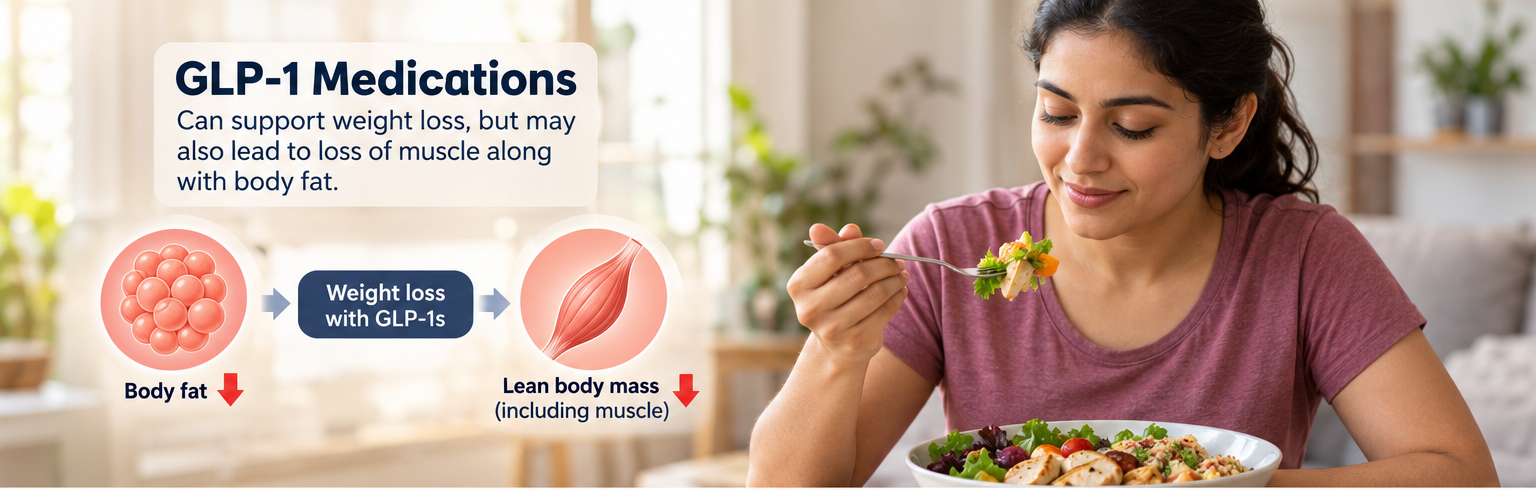
Protein helps support muscle maintenance, but it is not the only factor. Resistance exercise and adequate overall nutrition also play important roles.
Meeting Protein Needs During Weight Loss
There is no single protein target suitable for everyone taking semaglutide or tirzepatide. Requirements depend on body size, age, activity, nutritional status and existing health conditions.
For context, the general adult protein reference intake commonly used in the United States is 0.8 g per kg of body weight per day. Some clinical guidance discusses higher intakes, around 1.2–1.6 g/kg/day, for selected adults undergoing weight loss. These higher amounts are not suitable for everyone, and people with obesity may need an adjusted approach to calculating their requirements.
For example, a hypothetical adult weighing 70 kg would calculate 84–112 g of protein per day using the higher range. This is an illustration, not a recommendation for everyone of that weight.
A doctor or registered dietitian can help establish an appropriate target, particularly for people with kidney disease or those struggling to eat enough. Protein from ordinary food counts towards the daily total. Eggs, curd, yoghurt, paneer, dal, lentils, tofu, fish and chicken can all contribute.
Protein Powders and Shakes for GLP-1 Support
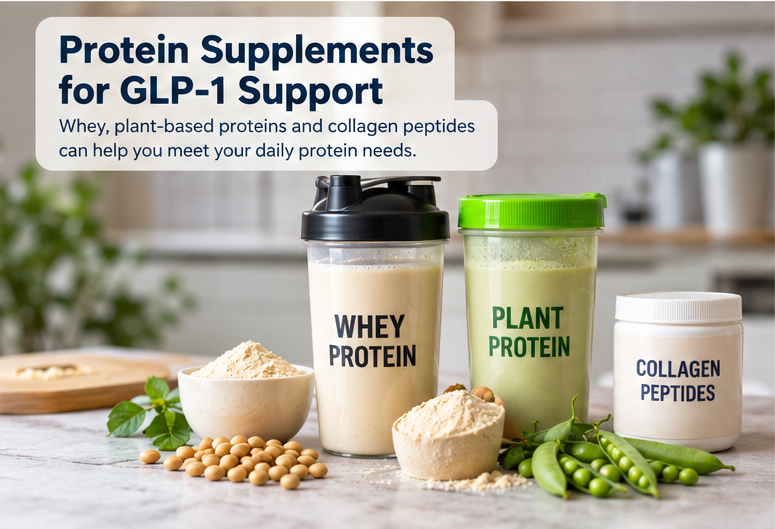
Protein Supplements can help increase protein intake when appetite is low or preparing a full meal feels difficult. However, high-protein powders are not essential for everyone. Someone who already meets their nutritional needs through a balanced diet may not benefit from an additional supplement.
When comparing products, check the protein content per serving, calorie count, ingredients, added sweeteners and allergens. A powder that works well for one person may cause digestive discomfort for another.
High-protein shakes can be useful between meals or after exercise, depending on individual needs. However, most protein powders do not provide the complete range of nutrients found in a balanced meal. Their purpose is to fill a nutritional gap, not to replace regular meals unnecessarily.
Whey Protein Supplements for GLP-1 Users
Whey protein comes from milk and contains all nine essential amino acids needed to build and repair tissues. It can be a practical option for people who consume dairy and tolerate it well.
Whey protein concentrate generally contains more lactose and fat than whey protein isolate, although the amounts vary by product. Isolate may suit some people who are sensitive to lactose, but it is not guaranteed to prevent bloating.
Examples of whey protein supplements
1. Myprotein Impact Whey Isolate
Myprotein Impact Whey Isolate is one option for people looking for a concentrated whey protein powder. The manufacturer's Indian listing reports approximately 23 g of protein per 30 g serving for its Matcha Green Tea formulation. Other flavours may have different nutritional values, so check the exact product label.
2. Optimum Nutrition Gold Standard 100% Whey
Optimum Nutrition Gold Standard 100% Whey is another established option. It contains a blend of whey protein sources, including isolate and concentrate. Check the specific pack for protein content, calories and allergens.
Neither product has been established as the best option specifically for people taking GLP-1 medications. Their usefulness depends on whether they help meet an appropriate protein target without causing digestive discomfort.
People with a milk allergy should avoid whey protein. Those with lactose intolerance may need to check the lactose content and consider an alternative.
Plant Protein Options for GLP-1 Users
Plant-based proteins offer alternatives for vegetarians, vegans and people who prefer not to consume dairy. Common sources include soy, peas and rice.
Soy protein provides all nine essential amino acids. Other plant proteins vary in their amino acid profiles, so a suitable blend may be useful.
Examples of plant protein supplements
1. OZiva Plant Protein + Pro-Digest
OZiva Plant Protein + Pro-Digest is an example of a plant-based product marketed for digestive support. It may suit someone looking for a dairy-free option, but its name does not guarantee that it will prevent bloating. Check the current packaging for protein content, ingredients and sweeteners.
2. Pea and soy protein powders
Plain pea protein and soy protein powders offer additional plant-based options. A pea-and-rice blend can provide a complementary amino acid profile, depending on its formulation.
Plant protein is not automatically easier to digest than whey. Added fibres, sweeteners and other ingredients may contribute to bloating in some people.
Whey vs Plant Protein on GLP-1 Medications
Both types can contribute to daily protein intake. Neither is automatically better for everyone.
Factor | Whey protein | Plant protein |
|---|---|---|
Main source | Milk | Peas, soy, rice and other plants |
Essential amino acids | Contains all nine | Depends on the source and formulation |
Dairy-free | No | Usually, but check ingredients |
Suitable for vegans | No | Yes, if all ingredients are plant-based |
Digestive considerations | Lactose may be an issue | Some added ingredients may cause discomfort |
For someone who tolerates dairy, whey isolate may be a practical choice. For someone following a vegan diet, soy protein or a suitable plant blend may be more appropriate.
The Best protein powder for GLP-1 weight loss is not necessarily the most expensive product. Consider its protein content, nutritional quality, digestive tolerance and suitability for your diet.
Managing Nausea and Bloating During Protein Intake
Reduced appetite can make it difficult to eat enough. Some people find that sweet drinks, large portions or the smell of food become unappealing.
A thick, strongly flavoured shake may be particularly difficult to tolerate during periods of nausea. A few adjustments may help:
Start with a smaller serving.
Add more water to make the shake thinner.
Try an unflavoured or less sweet powder.
Sip slowly rather than drinking the shake quickly.
Choose another protein source if the taste or smell is unpleasant.
For readers looking for How to drink protein shake when nauseous on Ozempic, these adjustments may make a drink easier to manage. They will not resolve every cause of nausea.
The US National Institute of Diabetes and Digestive and Kidney Diseases guidance on prescription medicines for weight management provides information about these treatments and their side effects.
When choosing an easy-to-digest protein powder for GLP-1 bloating, check whether lactose, added fibres or sugar alcohols may be contributing to discomfort. No product can guarantee freedom from bloating. Persistent nausea, vomiting or difficulty eating and drinking should be discussed with the prescribing clinician.
Practical Tips for GLP-1 Protein Intake
Meeting protein needs may be easier when the day is planned around smaller, manageable meals.
Include protein in regular meals. Eggs, curd, paneer, tofu, dal, lentils, fish and chicken can all contribute.
Spread intake throughout the day. Smaller portions may be easier to manage than consuming most of the day's protein at once.
Use supplements when needed. A shake can fill a gap when appetite is low.
Include resistance exercise. The US Centers for Disease Control and Prevention's adult physical activity guidance recommends muscle-strengthening activities on at least two days a week.
Stay hydrated. Reduced intake, nausea and vomiting can increase the risk of dehydration.

These habits can form part of GLP-1 Weight Loss Support Diets, but the plan should be tailored to individual nutritional needs, preferences and treatment side effects.
Protecting Muscle While Taking Ozempic or Wegovy
Ozempic and Wegovy both contain semaglutide, although they have different approved uses and dosing regimens. People taking either medicine should follow their prescribed treatment plan rather than adjusting the dose independently.
Understanding How to prevent muscle loss on Ozempic or How to prevent muscle loss on Wegovy starts with adequate nutrition, sufficient protein and appropriate resistance exercise.
If weight is falling rapidly, eating has become difficult or strength is declining, ask your prescriber or a registered dietitian to review your nutrition and treatment. Do not stop or change your medicine without medical advice.
Collagen Peptides and Other Supplements
Collagen peptides are often marketed for skin, joints and general wellness. However, collagen is not a complete protein because it does not provide all nine essential amino acids in the proportions needed to serve as a primary protein source.
For muscle maintenance, whey, soy, or an appropriate plant protein blend is generally a more suitable primary choice. Vitamins and minerals may also be useful when a specific nutritional need has been identified, but they should not be added automatically simply because someone is taking a GLP-1 medicine.
FAQs
Q1. Why am I losing muscle on Tirzepatide?
Weight loss can involve a reduction in both fat and lean tissue. Reduced appetite may make it difficult to consume enough protein and calories, while insufficient resistance exercise can make muscle maintenance more challenging. A healthcare professional can review your intake, strength and rate of weight loss.
Q2. How much protein per day on semaglutide?
Protein needs vary with body size, age, activity, nutritional status and health conditions. Some adults undergoing weight loss may be advised to aim for approximately 1.2–1.6 g/kg/day, but this range is not suitable for everyone. A registered dietitian can help establish an appropriate target.
Q3. Is whey protein good for GLP-1 patients?
Whey protein can help people meet their protein requirements when food intake is insufficient. It is not essential for everyone, and people with a milk allergy or difficulty tolerating lactose may need another option.
Q4. Can plant protein help maintain muscle?
Yes. Plant protein can contribute to muscle maintenance when total protein intake is adequate. Soy protein and suitable plant blends are practical options for people following vegetarian or vegan diets.
Q5. How much protein to avoid muscle loss on GLP-1?
There is no single amount that guarantees muscle preservation. Protein requirements depend on individual circumstances, and adequate intake should be combined with resistance exercise and sufficient overall nutrition.
Q6. What are the best supplements for GLP-1 users?
There is no universal supplement combination for everyone taking GLP-1 medicines. Some people may benefit from protein powder, while others may need specific vitamins or minerals depending on their diet and medical history.
Q7. Which supplement is best for fat loss and muscle gain?
No supplement guarantees both fat loss and muscle gain. Protein powder can help meet protein requirements, while resistance exercise supports muscle maintenance. The right approach depends on individual nutritional needs and health.
Conclusion
Weight loss can change more than body size. Maintaining muscle, strength and adequate nutrition deserves attention throughout treatment with GLP-1 medications.
Whey protein and plant-based powders can both be useful when regular meals do not provide enough protein. The right choice depends on nutritional needs, dietary preferences, digestive tolerance and existing medical conditions. No supplement can guarantee muscle preservation or replace a balanced diet and appropriately adapted resistance exercise.
If reduced appetite, nausea or digestive discomfort makes eating difficult, small practical adjustments may help. Persistent symptoms, ongoing weakness or concerns about muscle loss should be discussed with a healthcare professional.
The aim is not simply to reach a lower number on the scales, but to support health, strength and nutritional wellbeing throughout the weight-loss journey.
Also Read
Collagen, Biotin, and Hair Supplements for GLP-1 Weight Loss
How to Protect Your Skin and Muscle Mass While Taking GLP-1 Medications
References
Disclaimer: This article is for informational purposes only and should not replace professional medical advice. Consult your doctor or a registered dietitian before starting supplements or making significant dietary changes while taking GLP-1 medications.















Comments