


Green Tea: Benefits, Side Effects, Best Time to Drink and How It Works





Last updated on 19 Aug 2026
Green tea has been consumed for thousands of years in Asia, and not just because of an emerging wellness trend; there really seems to be merit in using it for health benefits. The science behind the benefits of drinking green tea has not only caught up with the original practice, but also provides significantly more interesting and complex information about its effects than many people are aware of.
This blog discusses what green tea actually does in the body, as well as providing an honest assessment of the research regarding its benefits and how much should be consumed daily; what time of day it is best consumed; and finally, what other issues to consider when making a decision on whether or not to drink green tea.
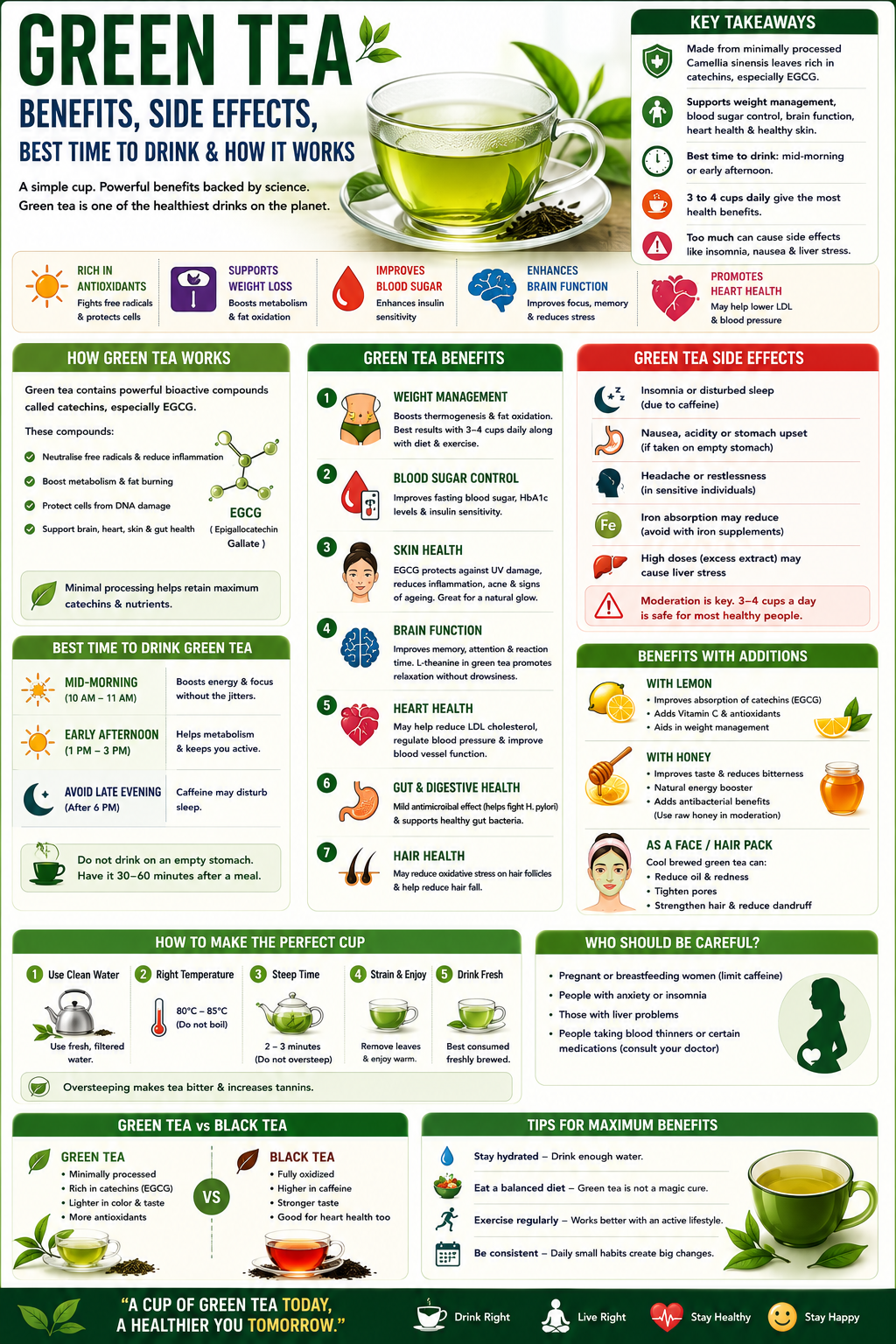
Key Takeaways
|
How Green Tea Works: The Science Behind the Sip
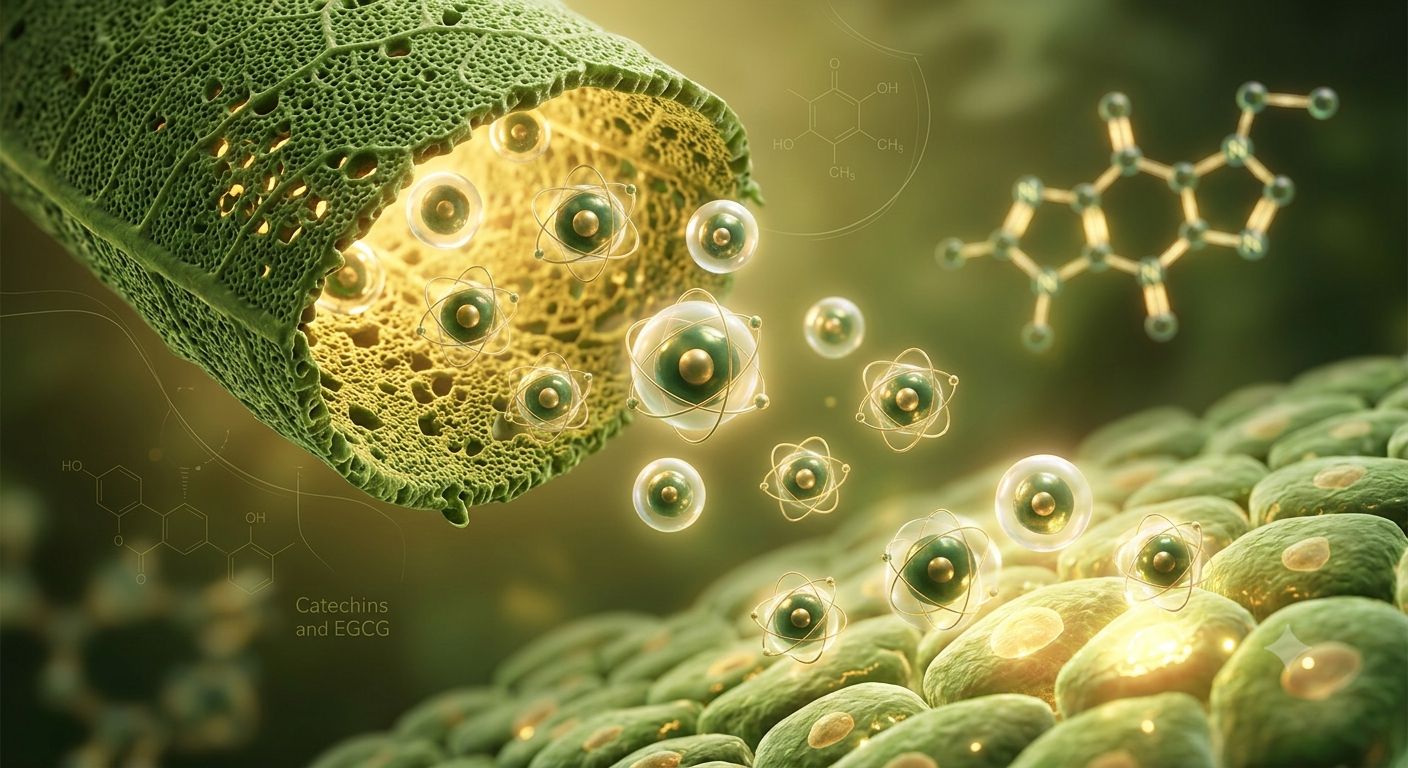
When comparing types of tea, it is important to note the differences between black and green. Simply put, black tea is "fully oxidised," while green tea has undergone minimal processing. This minimal processing means that, in terms of pharmacological properties, green tea contains high levels of catechin (antioxidant) compounds, such as epigallocatechin gallate (EGCG), the most studied and abundant catechin.
As an example, they can neutralise free radicals that damage cells, modulate metabolic pathways involved in fat burning, and exert powerful anti-inflammatory effects on numerous body tissues. A review of the publications about the biological effects of EGCG published in the International Journal of Molecular Sciences (2025) has established that EGCG is positively associated with providing benefits to dermatology, oncology, metabolism, and neurology, making green tea one of the most nutritionally and pharmacologically beneficial beverages known to science from a plant-based source.
Green Tea Benefits: What the Evidence Actually Supports

Weight Management
Green tea weight loss is one of the most-searched topics about the beverage, and the evidence is real; the science does support the idea that there may be some truth to it. Green tea contains caffeine and catechins, which can help boost thermogenesis (the production of heat) and oxidise fat. A meta-analysis published in 2024 examines the effects of green tea supplements on weight loss. Research suggests that consuming three to four cups daily, approximately 600 to 900 mg of catechins, provides the most effective dose for green tea's weight-loss benefits. It works best as part of a broader approach that includes diet and exercise, not as a standalone solution.
Blood Sugar and Metabolic Health
One meta-analysis of 15 separate studies performed in 2024 shows evidence that drinking green tea improves fasting blood sugar, HbA1c levels, and insulin resistance outcomes significantly for individuals with pre-diabetes or type 2 diabetes. This is one of the more widely researched benefits of drinking green tea.
Green Tea Benefits for Skin
Green tea benefits for skin are becoming better understood.EGCG has antioxidant, anti-inflammatory, and photoprotective properties; it helps protect skin cells against oxidative damage from UV radiation while reducing inflammation associated with acne-prone skin and shows potential for treating conditions like psoriasis and alopecia. The next scoping review, published in 2025, supports this conclusion, confirming that those who drink green tea and those who use its polyphenols, particularly EGCG, can demonstrate significant anti-ageing properties with regard to skin. A green tea cleansing mask made with cooled, brewed tea is also a popular topical application. The polyphenols can reduce excess sebum and calm redness when applied directly.
Green Tea Benefits for Stomach
Dr Anjali Mukerjee, Founder and Director of Health Total India's leading lifestyle modification company with over 60 centres nationwide and a member of the Brooke Bond Tea Council, has long incorporated green tea into structured metabolic health programmes, treating it as a functional food that supports weight management and digestive health through natural plant compounds rather than pharmaceutical intervention.
Green tea benefits for stomach function include mild antimicrobial effects (EGCG is active against Helicobacter pylori, the bacterium linked to gastric ulcers) and support for gut microbiome diversity. However, drinking green tea on an empty stomach can irritate the gastric lining due to its tannin content, which is exactly why timing matters.
Green Tea Benefits for Hair
The focus of these studies is primarily on EGCG's ability to reduce oxidative stress at the follicle level, as well as its potential to inhibit DHT (5-alpha-reductase), which is involved in hair loss pathways. There are currently a small number of large-scale human clinical studies; however, several studies demonstrate positive results from topical green tea extract for hair loss compared with oral consumption.
Benefits of Green Tea With Lemon and Honey

Benefits of green tea with lemon: adding freshly squeezed lemon juice to your favourite green tea will greatly improve the absorption of catechins. The vitamin C content of lemon will also help stabilise EGCG while in the digestive tract and will increase the amount of EGCG that eventually gets into your bloodstream. The combination of green tea and lemon is the only scientifically proven green tea combination that works, so you can be assured that you are doing something good for your health.
Benefits of green tea and honey: Honey can also greatly improve the flavour of your green tea, but it adds calories from sugar. If you are drinking green tea for weight management, be sure to limit the amount of honey you use, as a little honey (1/2 teaspoon) provides an enjoyable flavour without adding many extra calories to your daily intake.
Green tea with lemon and honey benefits. Using both lemon and honey in your green tea will help you absorb more catechins from the lemon, make the drink more palatable with the honey, and provide you with a nice hot drink to enjoy in the morning.
Best Time to Drink Green Tea
The best time to drink green tea is not something most people think about carefully but it genuinely affects both the experience and the benefit.
Timing | Recommendation | Why |
First thing in the morning (empty stomach) | Not recommended | Tannins irritate the gastric lining and may cause nausea |
30–45 minutes after breakfast | Ideal | Avoids gastric irritation; good for metabolism |
Mid-morning (10–11 am) | Ideal | Peak alertness benefits from caffeine + L-theanine |
Before exercise | Good for fat oxidation | EGCG + caffeine support fat burning during exercise |
Best time to drink green tea for weight loss | 30 min before exercise or between meals | Maximises thermogenic effect without interfering with nutrient absorption |
After meals | With caution | Tannins can reduce iron absorption from plant foods. Wait 30-45 minutes |
Late evening or at night | Not recommended | Caffeine disrupts sleep even when not strongly felt |
Side effects of green tea at night include difficulty falling asleep, restless sleep, and increased heart rate in caffeine-sensitive individuals. The best time to drink green tea is therefore largely determined by what you want from it and your sensitivity to caffeine.
Green Tea Side Effects: The Honest List
General Side Effects
Green tea side effects are real, even if they are dose-dependent and mostly avoidable with sensible use:
Nausea: most common when drunk on an empty stomach
Insomnia and restlessness: from caffeine, particularly if drunk after 3 pm
Headaches: in caffeine-sensitive individuals
Reduced iron absorption: tannins bind to non-haem iron, a concern for vegetarians and those with anaemia
Liver stress: rare but documented with very high-dose green tea extract supplements, not standard brewed tea
Green Tea Side Effects for Females
Green tea side effects for females warrant specific mention. Excessive consumption of green tea extract can reduce folate absorption, a concern during pregnancy. Additionally, consuming excessive amounts of green tea may have a minor oestrogenic effect on women, although normal dietary consumption is not a concern. Pregnant and breastfeeding women should limit their consumption of green tea to one or two cups per day and should not consume excessive amounts of supplements containing green tea.
The picture for females is genuinely nuanced. A 2021 review in Molecules found that EGCG's mild oestrogenic and anti-angiogenic properties have been shown to reduce fibroid volume and endometriosis symptoms, meaning that at appropriate dietary amounts, the same compounds that carry theoretical concern may actually be beneficial for certain female health conditions.
Green Tea With Lemon Side Effects
Side effects are mild. Lemon's acidity can worsen acid reflux in those prone to it, and for people with sensitive tooth enamel, acidic drinks are best consumed through a straw or followed by water.
How to Drink Green Tea Without the Side Effects
How to drink green tea without the side effects is simpler than most people assume:
Never drink it on an empty stomach
Brew at 70-80°C, not boiling water, as boiling water degrades catechins and increases bitterness
Limit to three to four cups daily; more does not proportionally increase benefit
Space it away from iron-rich meals by at least 30 minutes
Avoid it after 3 pm if you are sensitive to caffeine
Opt for brewed tea over high-dose supplements
FAQs
Q1. What is the best time to drink green tea?
Mid-morning or 30 to 45 minutes after breakfast. Avoid it on an empty stomach and after 3 pm if caffeine affects your sleep.
Q2. What is the best time to drink green tea for weight loss?
Thirty minutes before exercise or between meals. This is when EGCG and caffeine together most effectively support fat oxidation.
Q3. Does adding lemon to green tea enhance its benefits?
Yes. Vitamin C in lemon stabilises catechins and improves their absorption in the gut it is one of the more evidence-based combinations.
Q4. What are the main green tea side effects for females?
High-dose supplements can affect folate absorption and have mild hormonal activity. At normal dietary amounts, two to four cups of green tea are considered safe. Pregnant women should limit intake and avoid supplements.
Q5. How many cups of green tea should I drink daily?
Three to four cups provide the catechin dose most consistently linked to health benefits. Beyond that, the additional benefit is marginal, and the side effect risk, particularly for sleep and the stomach, increases.
Final Thoughts
Green tea isn’t a cure-all, but it’s truly one of the best proven functional drinks. Scientific studies are increasing in number that support green tea's health benefits for weight loss, blood sugar control, skin ageing, and brain health. The negative effects from drinking too much green tea, while real, can be minimised and managed by following some simple guidelines.
Drink green tea in mid-morning and add a squeeze of lemon if you like. Don’t expect to see results overnight. Drinking green tea consistently over weeks and months will lead to your desired outcomes. If you have any underlying medical conditions or are taking any prescribed medications, check with your physician before consuming increased quantities of green tea.
Read Also
References
Rovaldi E, Di Donato V, Paolino G, Bruno M, Medei A, Nisticò SP, Pellacani G, Kiss N, Azzella G, Banvolgyi A, Cantisani C. Epigallocatechin-gallate (EGCG): an essential molecule for human health and well-being. Int J Mol Sci [Internet]. 2025 Sep 22 [cited 2026 Jun 25];26(18):9253. Available from: https://www.mdpi.com/1422-0067/26/18/9253
Febrinasari RP, Benedictus B, Tan K, Mardhiati Y, Putri SK, Choiri S, et al. Green tea as a cosmetic agent for skin aging: a scoping review. Avicenna J Phytomed [Internet]. 2025 [cited 2026 Jun 25]. Available from: https://www.ncbi.nlm.nih.gov/pmc/articles/PMC12441187/
Nogueira OA, Abrahão V, Souza Crippa A, Freitas JL, Silva Junior OC, et al. Green tea supplementation in adults with obesity: a systematic review of clinical studies. Discover Food [Internet]. 2025 Oct 8 [cited 2026 Jun 25]. Available from: https://link.springer.com/article/10.1007/s44187-025-00628-8
Disclaimer: This article is for general informational purposes only and is not a substitute for professional medical advice. If you have a medical condition or take regular medication, consult a physician before making significant changes to your green tea intake or taking green tea supplements.












Comments