

Accessing Specialty Medicines in India: Prescriptions, Documents, and Sourcing





Last updated on 17 Sep 2026
Under Rule 36 of the Drugs and Cosmetics Act, India authorizes the import of unapproved drugs for personal use with permission from the Central Drugs Standard Control Organisation (CDSCO), provided you present a prescription from a registered medical practitioner. While this single sentence outlines the legal provisions, for families dealing with rare diseases, cancer requiring unavailable medication in India, or any other disorder needing biologics from abroad, it raises more questions than it answers.
The specialty medicines used for rare diseases, expensive and often biologically complex drugs prescribed for cancers, exotic diseases, autoimmune diseases and other serious diseases occupy a peculiar niche in the Indian pharmacological market. Some are already authorised and available in licensed chemists' shops; some are approved but available only in major urban areas, while others have not yet been approved for the Indian market.
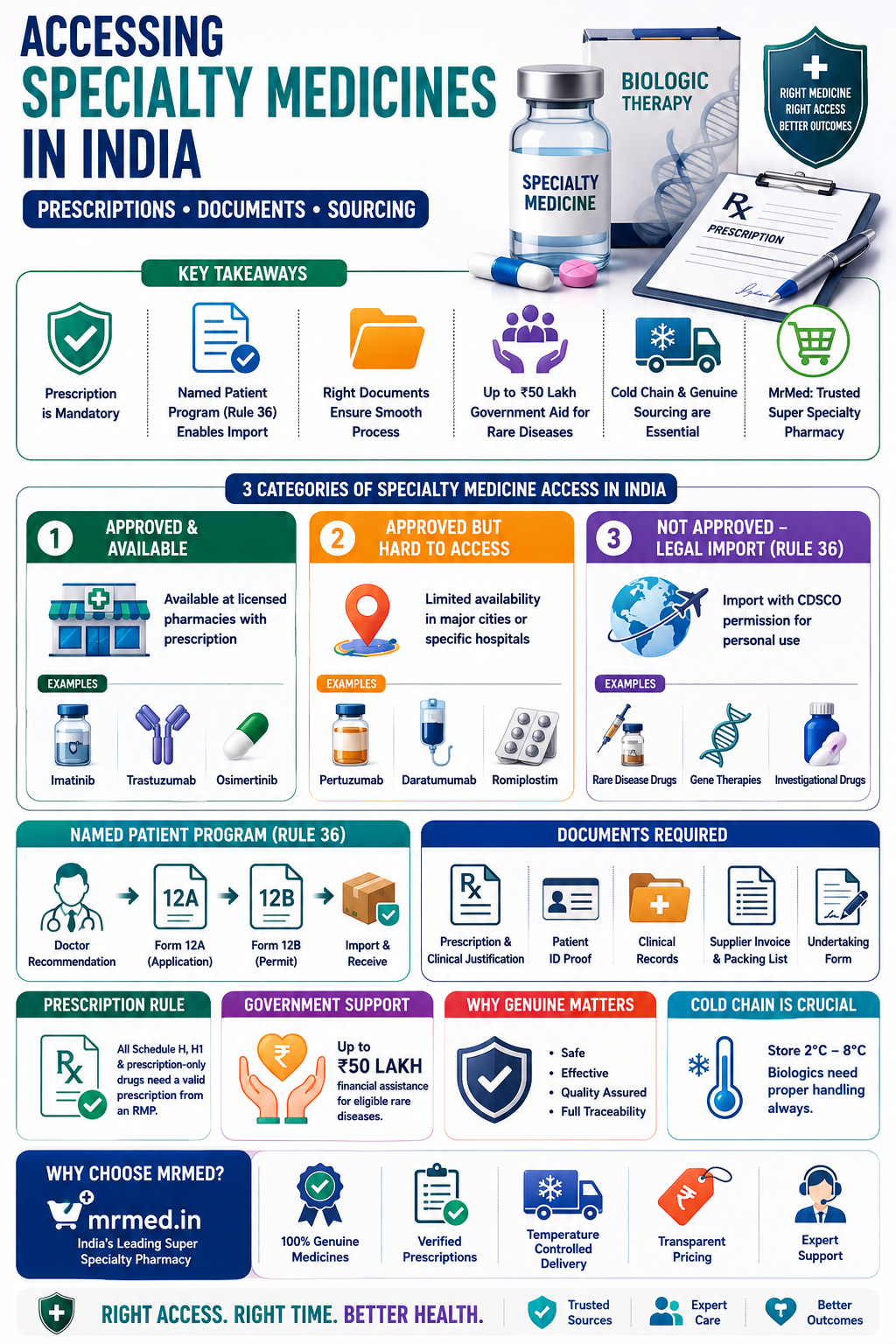
Key Takeaways
|
What Are Specialty Medicines?
The global scale of the issue explains the Indian access challenge. A 2025 PMC analysis of FDA drug approvals 2000-2024 confirmed that specialty medicines represent less than 5 per cent of prescriptions but account for 54 per cent of global pharmaceutical spending, with median annual list prices for newly launched specialty drugs exceeding USD 350,000 in 2024. In India, where most patients pay entirely out of pocket, this global pricing reality makes every access pathway described in this blog a clinical necessity, not a convenience.
Specialty medicines are a pharmacological and regulatory category defined by complexity rather than a single characteristic. They are generally distinguished from standard medicines by one or more of the following:
They treat serious, chronic, rare, or complex conditions: cancers, rare diseases, autoimmune disorders, HIV, hepatitis C, and organ transplant management
They are biologics, biosimilars, or complex small molecules requiring special manufacturing, storage, or administration
They are high-cost, typically costing ₹10,000 or more per dose, and often hundreds of thousands per month
They require specialist prescribing, clinical monitoring, or both
They may require cold chain storage (2°C to 8°C) and specialised delivery
Super specialty medicines is an informal term in India for medicines at the highest tier of this category, typically oncology biologics, rare disease enzyme replacement therapies, gene therapies, and complex immunotherapies. These are often the hardest to access, most expensive, and most frequently targeted by counterfeiters.
High-cost specialty medicines in India include monoclonal antibodies (trastuzumab, rituximab, pembrolizumab), targeted therapies (osimertinib, imatinib), rare disease treatments (enzyme replacement therapies for Gaucher disease, Fabry disease, Pompe disease), antiviral specialty drugs, and advanced gene therapies now entering clinical use.
The Three Categories of Specialty Medicine Access in India
Understanding which category your required medicine falls into determines the access pathway:
Category 1: CDSCO-Approved and Commercially Available
The medicine has received approval from the Central Drugs Standard Control Organisation (CDSCO) and is marketed in India by a licensed manufacturer or importer. It is available at licensed hospital pharmacies and licensed retail or online pharmacies with a valid prescription.
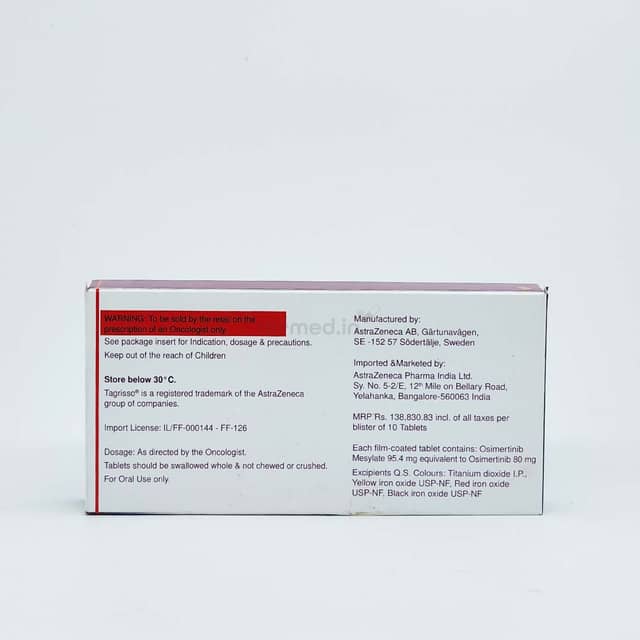
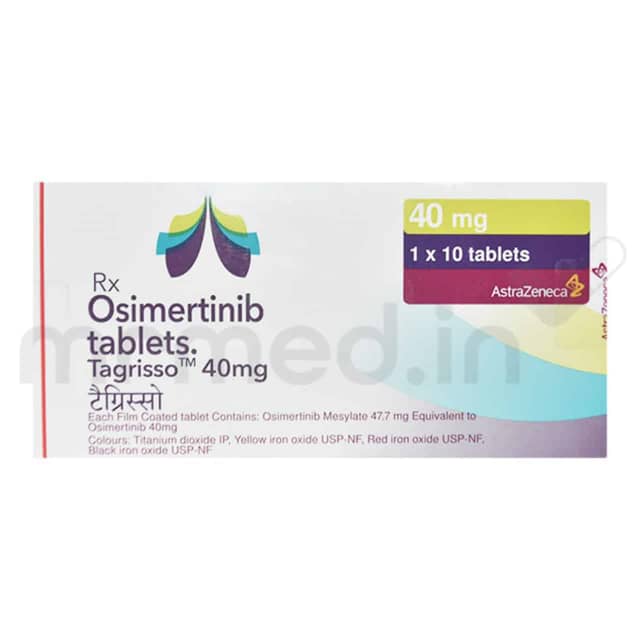
Examples: Imatinib (Gleevec/Glivec), trastuzumab biosimilars (Canmab, Herclon), rituximab biosimilars (Reditux, Maball), osimertinib (Tagrisso), semaglutide (Ozempic, Rybelsus), tirzepatide (Mounjaro).
Access pathway: Valid prescription → licensed pharmacy → purchase with GST invoice.
Category 2: CDSCO-Approved but Limited Availability
The medicine is approved but not widely distributed; available only at select hospital pharmacies in major cities or through manufacturer patient access programmes.
Examples: Certain imported branded biologics, recently approved rare disease treatments, high-cost gene therapies.
Access pathway: An oncologist or specialist can identify the nearest stocked facility, manufacturer patient assistance programme, or licensed online pharmacy with sourcing capability.
Category 3: Not Approved in India; Named Patient Import Required
The medicine has not received CDSCO marketing approval in India but is approved in another country and medically necessary for a specific patient. This is where the Named Patient Programme and Rule 36 import provisions apply.
Examples: Certain rare disease enzyme replacement therapies, newer oncology drugs before India-specific CDSCO approval, some gene therapies not yet registered in India.
Access pathway: Rule 36 / Named Patient Programme (Form 12A → Form 12B → import).
Do I Need a Prescription to Buy Specialty Medicines in India?
Yes, without exception, for all Schedule H and Schedule H1 drugs, which essentially include all specialty medicines.
Schedule H drugs: Require a prescription from a registered medical practitioner. Cannot be legally sold over the counter. Dispensed only by pharmacies with a valid drug licence.
Schedule H1 drugs: Additional requirements: the pharmacy must retain the prescription. Many psychotropics, controlled substances, and high-alert oncology agents fall in this category.
Can I buy specialty medicines online in India? Yes, through a licensed online pharmacy that displays a valid drug licence number, verifies prescriptions before dispensing, and provides a full GST invoice with batch documentation.
Any specialty pharmacy in India, online or offline, that offers to dispense specialty medicines without a prescription is operating illegally and should be treated as a serious risk to medicine safety.
How to Buy Specialty Medicines in India: The Step-by-Step Framework
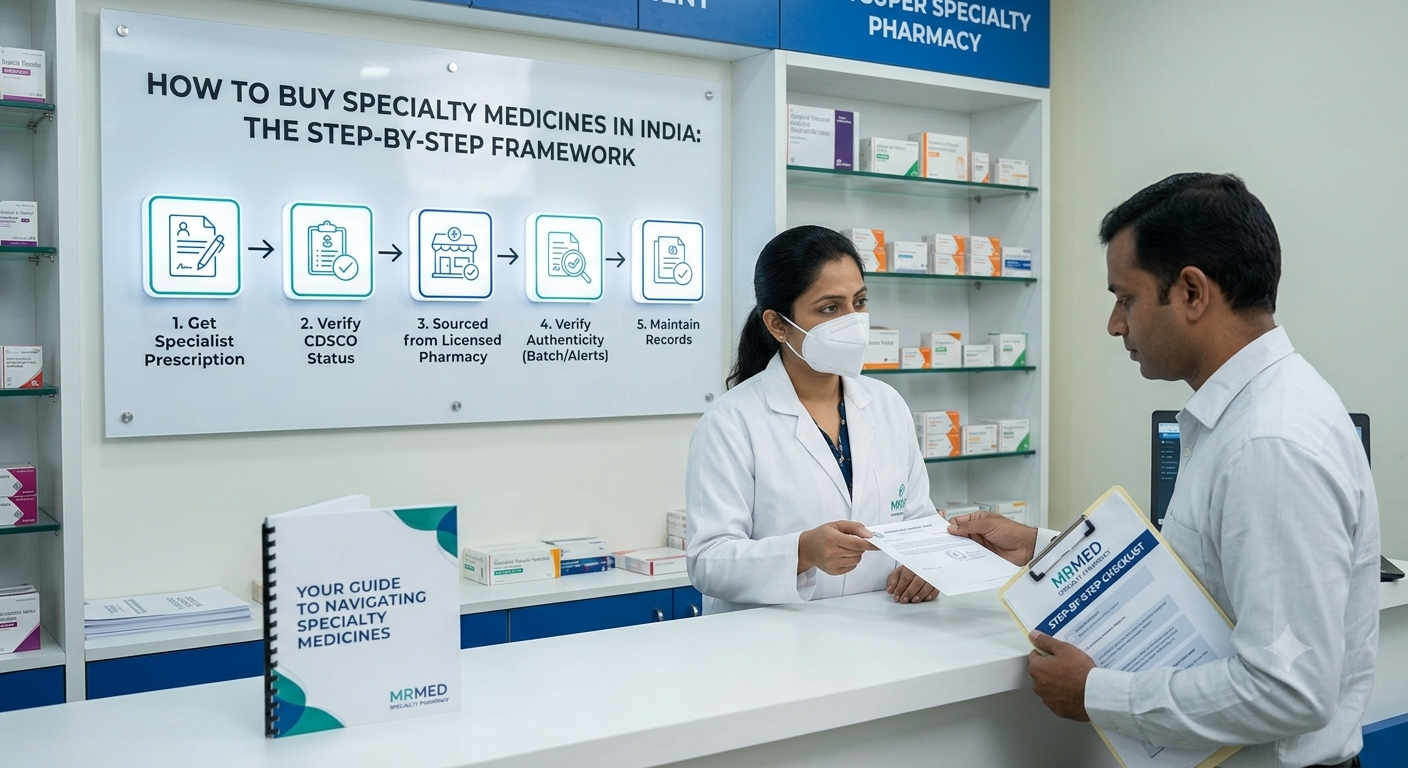
How to buy specialty medicines in India follows a clear, documented process regardless of the specific medicine:
Step 1: Get the right specialist prescription.
The prescription must come from a registered medical practitioner (RMP) with a valid Medical Council registration number. For specialist medicines (oncology drugs, rare disease therapies), the prescription should ideally come from the relevant specialist oncologist, neurologist, or metabolic disease specialist, not a general physician.
Step 2: Identify which category the medicine falls into.
Use the CDSCO-approved drugs list at cdsco.gov.in to verify whether the medicine has Indian marketing approval. If it does, proceed to a licensed pharmacy. If it does not, the Named Patient Programme is the legal import route.
Step 3: Source from a licensed pharmacy.
For approved medicines: hospital pharmacies, licensed retail pharmacies, or licensed online pharmacies such as MrMed. Always require a full GST invoice with batch number, expiry date, manufacturer name, and licensed distributor details.
Step 4: Verify authenticity.
Check the batch number against the CDSCO drug alerts portal (cdsco.gov.in). Confirm the manufacturer is on the approved list for that medicine. For biological medicines, verify cold chain compliance.
Step 5: Maintain documentation.
Keep all invoices, prescriptions, and batch records. For imported medicines, retain the CDSCO Form 12B permit and customs clearance documents.
The Named Patient Programme in India: How to Import Unapproved Medicines
Rule 36 of the Drugs and Cosmetics Rules, 1945 governs how to import medicines to India that are not yet approved by CDSCO. The process is formal and documented, and when managed correctly, it typically takes 1 to 8 weeks.
What Is the Named Patient Programme?
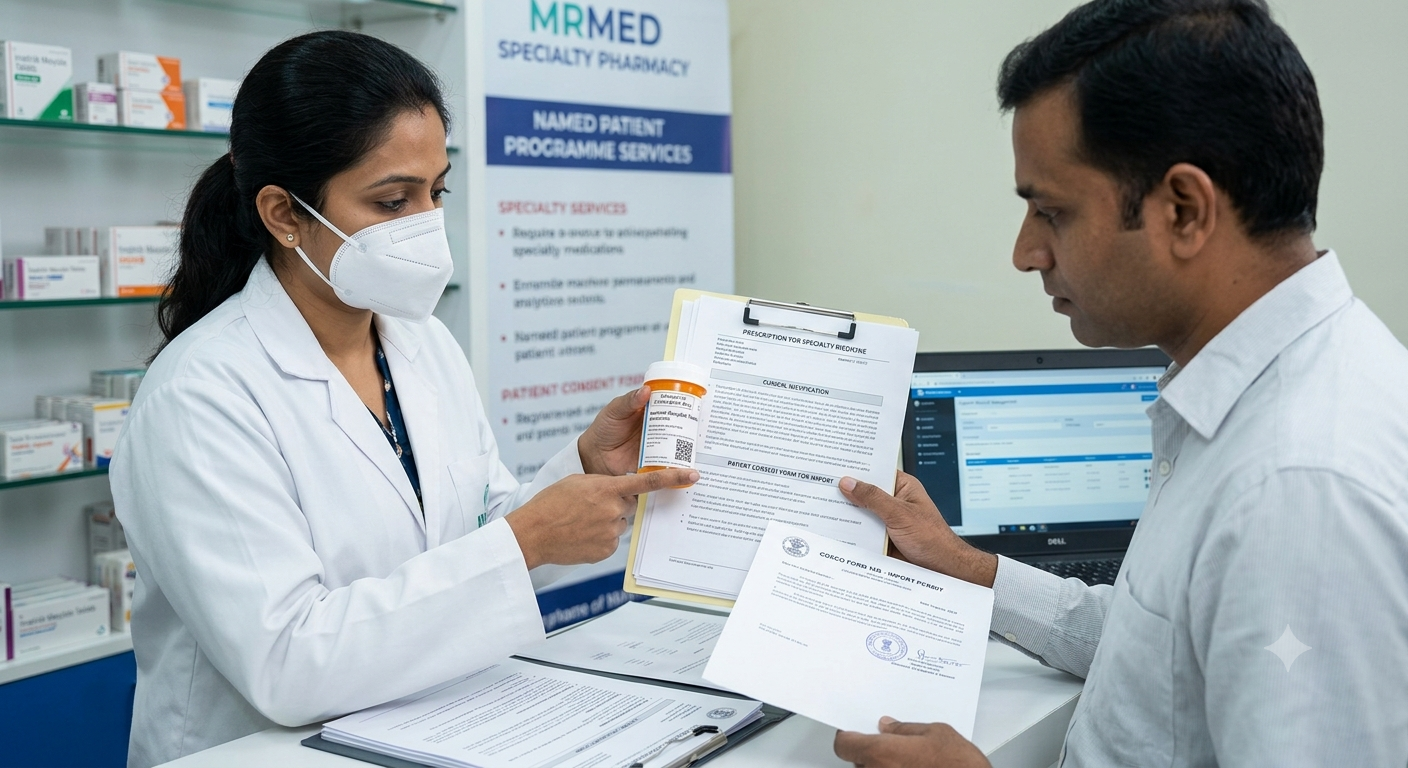
The Named Patient Programme allows patients, on the recommendation of a registered medical practitioner, to legally import small quantities of medicines not approved or marketed in India for personal use. This pathway operates under Rule 36 of the Drugs and Cosmetics Rules, 1945 through Form 12A (application) and Form 12B (permit) issued by CDSCO.
Documents Required to Import Medicines to India
Document Source | Documents Required |
From the treating physician | Valid prescription with RMP registration number, diagnosis details, treatment duration and dosage, clinical justification letter |
From the patient | Government-issued identity proof (Aadhaar, passport), address proof, clinical records supporting diagnosis |
From the supplier (international) | Invoice, manufacturer details, drug name and quantity, country of origin, regulatory approval documentation from the country of export |
Application documents | Form 12A (application for import permit) submitted to CDSCO |
How long does it take? CDSCO indicates priority processing, often 1 to 2 days if papers are complete. The end-to-end timeline from initial request to delivery, including international shipping and customs clearance, typically ranges from 2 to 8 weeks, depending on the specific drug and country of origin.
Import duties on specialty medicines: Life-saving medicines are generally exempt from import duties. Standard import duties apply to non-life-saving specialty medicines; confirm duty status with a licensed import specialist before proceeding.
Who Can Help Navigate the Named Patient Programme?
Several licensed organisations in India facilitate Named Patient Programme applications, preparing CDSCO documentation (Form 12A / 12B), coordinating with international suppliers, managing customs clearance, and ensuring cold chain compliance for temperature-sensitive biologics. These include licensed specialty importers and established online specialty pharmacies with import capability.
Rare Disease Medicines India: Government Support Available
A 2025 PMC report from the Indian Society of Human Genetics annual conference at NIMHANS Bengaluru confirmed that NITI Aayog is actively working with geneticists and clinicians to develop affordable rare disease therapies in India.
India has a specific government framework for accessing rare disease medicines that most families do not know about. The National Policy for Rare Diseases (2021), developed by the Ministry of Health and Family Welfare, provides:
Financial assistance of up to ₹50 lakh per patient for treatment of rare diseases through the Rashtriya Arogya Nidhi (RAN) scheme, administered through identified Centres of Excellence
National Centres of Excellence identified at AIIMS (New Delhi, Mumbai, Jodhpur, Bhubaneswar), PGI Chandigarh, JIPMER Puducherry, and several other institutes as referral hubs for diagnosis, treatment, and research on rare diseases
National Rare Disease Registry to collect and guide policy and care delivery
How to access government rare disease support:
Obtain a formal diagnosis and confirmation of the rare disease at a Centre of Excellence
Apply through the treating Centre of Excellence for RAN financial assistance
The Centre of Excellence can facilitate the Named Patient Programme application for medicines not commercially available in India
If your condition qualifies under the National Policy for Rare Diseases, accessing this support should be the first step before exploring private sourcing options that will cost significantly more out of pocket.
Unavailable Medicines in India: What to Do When the Drug Doesn't Exist Here
Unavailable medicines in India is a category that arises for several reasons:
The medicine is in regulatory review but not yet approved by CDSCO
The medicine is approved internationally, but the manufacturer has not yet sought Indian approval
The medicine is approved in India, but supply has been discontinued
The medicine is too recently approved globally for Indian approval to have been sought
The pathway in each case:
Rule 36 / Named Patient Programme: The primary legal route for medicines not approved in India, valid for personal use under prescription
Compassionate Use / Expanded Access: Some manufacturers offer compassionate use programmes for patients with life-threatening conditions who cannot wait for regulatory approval. Contact the manufacturer's India office directly.
Manufacturer Patient Access Programmes: Many pharmaceutical companies, particularly for high-cost oncology drugs, operate financial assistance or early access programmes in India. Ask your oncologist specifically about these before assuming full retail cost.
Clinical Trials: For medicines in development, enrolment in an ongoing clinical trial may provide access to the drug at no cost. Check CTRI (Clinical Trials Registry India) at ctri.nic.in for open trials in your condition.
Imported Medicines in India: Verification and Safety
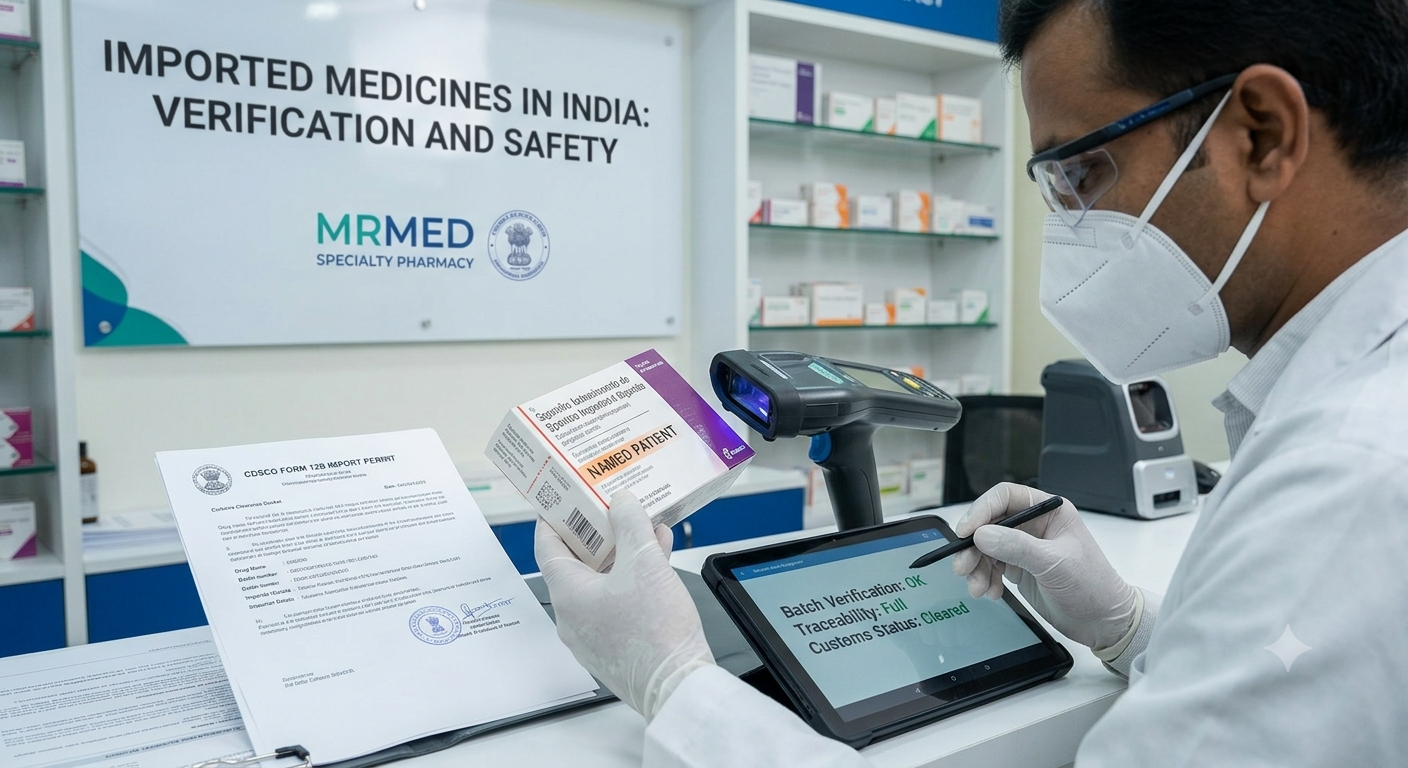
Imported medicines in India carry a higher counterfeiting risk than domestically manufactured approved drugs because the complexity of the international supply chain creates more opportunities for criminal infiltration.
How to get imported specialty medicines in India safely:
Source only through licensed importers or licensed online specialty pharmacies with documented import capability
Require Form 12B (CDSCO import permit) to be shared with you as part of the transaction documentation
Verify customs clearance documentation: genuine, legally imported medicines will have Indian customs clearance records
Inspect packaging for language consistency: genuine branded products intended for Indian import will typically have English labelling, and any relabelling over original text is a red flag
Never purchase imported specialty medicines through social media, messaging apps, or unregulated online marketplaces
How to check if a medicine is genuine in India: Check the batch number against the CDSCO drug alerts portal at cdsco.gov.in. Scan the QR code or barcode using the M-Rx app (Ministry of Health). Verify the manufacturer against the CDSCO approved products database. For imported branded products, call the manufacturer's India office to verify batch authenticity.
What Is the Best Website for Buying Medicine in India?
What is the best website for buying medicine in India for specialty, super-specialty, and rare disease medicines? The criteria that define a reliable platform:
Valid drug licence number displayed publicly on the website
Prescription verification required before dispensing, no exceptions
Full GST invoice with batch number, expiry date, manufacturer, and licensed distributor details
Cold chain delivery capability for temperature-sensitive biologics
Transparent, published pricing, not negotiated grey-market pricing
CDSCO-compliant sourcing from licensed distributors
Import capability for Named Patient Programme medicines
Traceable delivery with full documentation
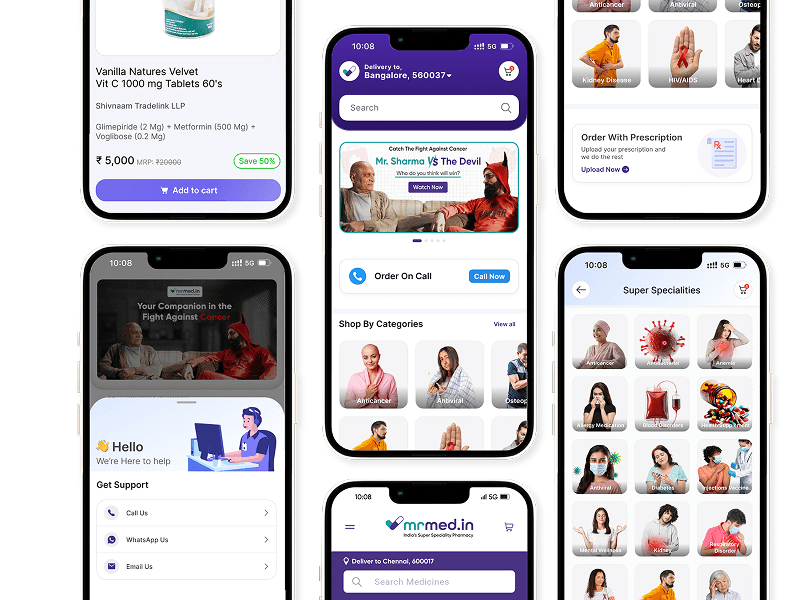
MrMed India's leading online super specialty pharmacy meets all of these criteria. Founded specifically to improve access to specialty, oncology, and rare disease medicines across India, MrMed provides:
Pan-India delivery of approved specialty medicines
Full prescription verification and batch documentation
Cold chain-compliant delivery for biologics
Transparent, competitive pricing on licensed branded and biosimilar specialty drugs
Named Patient Programme sourcing support for medicines not available domestically
A searchable medicine catalogue covering hundreds of specialty drugs across therapeutic categories
FAQs
Q1. How can I access specialty medicines in India?
Through licensed hospital or retail pharmacies for approved medicines; through a licensed online specialty pharmacy like MrMed for approved medicines with pan-India delivery; and through the Named Patient Programme (Rule 36 / Form 12A-12B) for medicines not yet approved in India.
Q2. Can I import prescription medicines from another country to India?
Yes, legally, under Rule 36 of the Drugs and Cosmetics Rules, 1945, with a valid prescription from a registered medical practitioner and a CDSCO-issued import permit (Form 12B). CDSCO processes Named Patient Programme imports for personal use, often within 1 to 2 days when documentation is complete.
Q3. How can I source rare disease medicines in India?
Contact the National Centre of Excellence nearest to you for your condition. Apply for Rashtriya Arogya Nidhi financial assistance (up to ₹50 lakh per patient). If the medicine is unavailable domestically, the Centre of Excellence can facilitate Named Patient Programme documentation for import.
Q4. How do I check whether a medicine is genuine in India?
Verify the batch number at the CDSCO drug alerts portal (cdsco.gov.in). Scan the QR code using the M-Rx app. Confirm the manufacturer against the CDSCO approved products database. Buy only from licensed pharmacies with a full GST invoice and batch documentation.
Q5. Do I need a prescription to buy specialty medicines in India?
Yes, all Schedule H and H1 specialty medicines require a valid prescription from a registered medical practitioner. Any pharmacy dispensing without a prescription is operating illegally.
Final Thoughts
Accessing specialty medicines in India is navigable, but it requires understanding which category your medicine falls into, which legal pathway applies, and which sourcing channel meets the minimum standard of documentation and verification.
The worst outcomes in this space happen when families, under time pressure and financial stress, turn to unverified channels that promise faster or cheaper access and end up with counterfeit or substandard products. The Delhi cancer medicine racket. The Gurugram fake Mounjaro seizure. The WHO alerts on falsified monoclonal antibodies. These are not abstract risks. They are documented recent events in India's specialty medicine supply chain.
The safer path is the documented one: prescription from a registered specialist, purchase from a licensed pharmacy, GST invoice with batch documentation, CDSCO verification. It takes slightly more effort. It is worth it.
MrMed exists to make that safer path more accessible with transparent pricing, prescription verification, genuine sourcing, and pan-India delivery for hundreds of specialty medicines across every therapeutic category.
Read Also
References
Central Drugs Standard Control Organisation [Internet]. New Delhi: CDSCO, Ministry of Health and Family Welfare; [cited 2026 Sep 09]. Approved new drugs list. Available from: https://cdsco.gov.in/opencms/opencms/en/Approval_new/Approved-New-Drugs/
Reserve Meds [Internet]. 2026 Apr 22 [cited 2026 Sep 09]. India cross-border specialty drug access. Available from: https://reservemeds.com/countries/india
Central Drugs Standard Control Organisation [Internet]. New Delhi: CDSCO; [cited 2026 Sep 09]. Drug alerts: spurious drugs. Available from: https://cdsco.gov.in/opencms/opencms/en/Notifications/Alerts/
Disclaimer: This article is for general informational and educational purposes only. The Named Patient Programme, import regulations, and government financial assistance programmes described above are subject to change and may vary by individual circumstance. Always consult a licensed pharmacist, your treating specialist, and a regulatory professional for guidance specific to your situation.














Comments