

Why Your Stomach Feels Bloated Every Day And How To Fix It





Last updated on 15 Apr 2026
Daily bloating in the stomach can be caused by factors such as gas production, loose stools due to slow digestion, chronic constipation, a poor diet, certain foods that trigger an allergy or sensitivity, or bad habits. Bloating often reflects what you ate and how you ate it. The first step in addressing bloating is to understand how you can change your habits to help reduce bloating.
Key Takeaways
|
A distended stomach can slowly ruin your whole day. You might wake up in good condition, but by the afternoon, your stomach feels taut, full or bloated. People describe it as “my stomach feels heavy and bloated every day! If you often wonder why your stomach is bloated, the answer usually lies in your daily habits.
You’re not alone if you play the guessing game about what’s making your stomach feel bloated. Daily bloating is extremely common and typically tied to diet, digestion or lifestyle habits. The good news is that the vast majority of cases can be managed with simple modifications once you understand the actual cause.
What Is Stomach Bloating?
Abdominal bloating refers to the feeling of fullness, pressure, or swelling throughout the abdomen. While bloating can sometimes be seen as an enlarged stomach (visible bloating), it can also be felt (internal bloating), depending on whether there is any swelling on the outside of the
abdominal wall.
This clearly explains, in simple terms, what causes stomach bloating.
In simple terms, abdominal bloating can occur for several reasons:
When gas accumulates in the digestive tract, this can lead to abdominal bloating and discomfort.
When food passes slowly through the digestive tract, this can contribute to abdominal bloating.
Abdominal bloating can also result from water retention or hormonal fluctuations.
Bloated Stomach Meaning
Term | Meaning |
Bloated stomach | A tight/full/swollen abdomen (usually externally) |
Internal bloating | Discomfort in the abdomen (but not visibly swollen) |
Visible bloating | An obvious expansion of the abdomen |
According to a global study published in Gastroenterology, nearly 18% of people experience bloating at least once a week, underscoring the condition's widespread prevalence.
.png "MRMED")
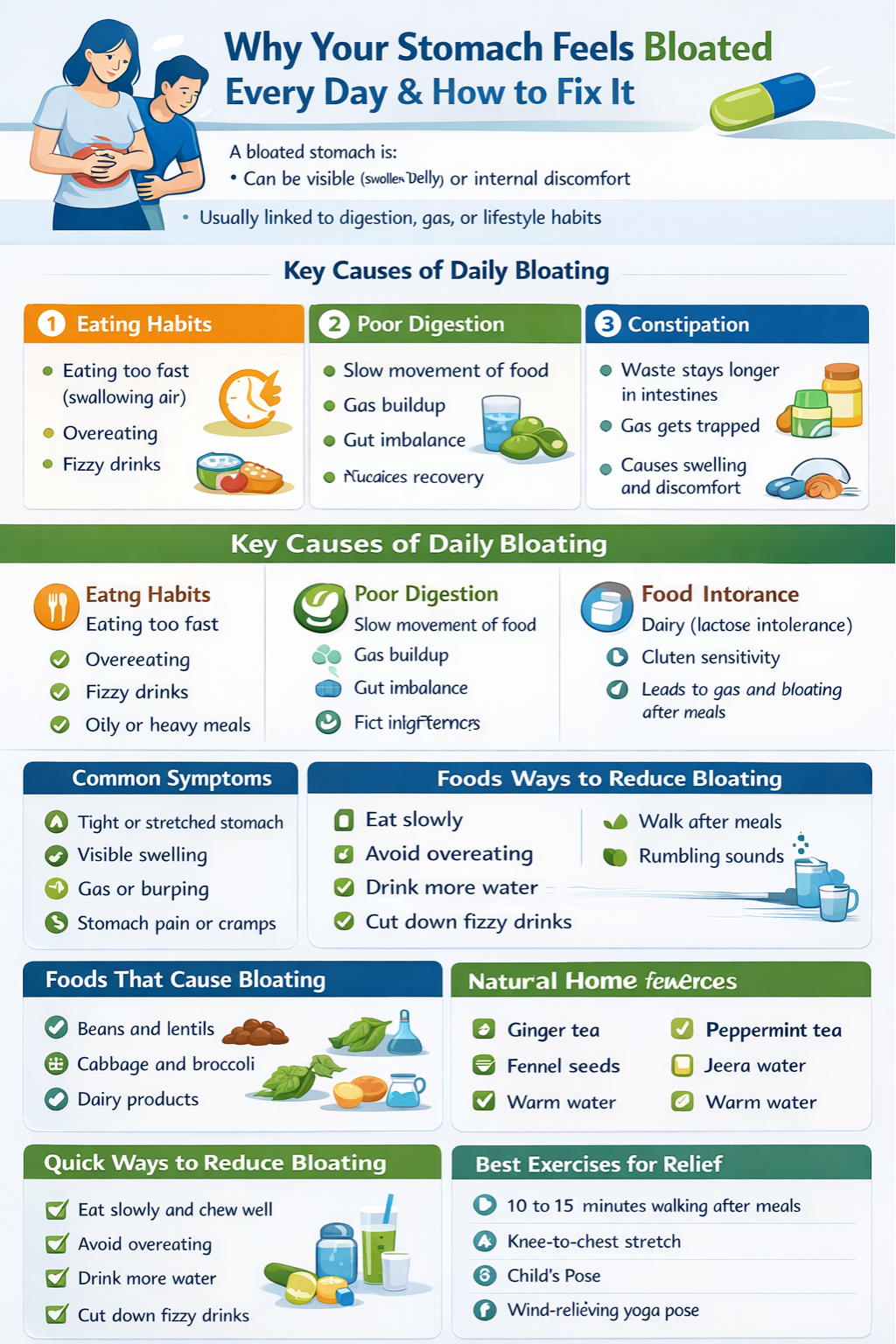
Common Symptoms of a Bloated Stomach
Bloating does not feel the same for everyone. Some feel mild fullness, while others struggle with daily discomfort.
Bloated Stomach Symptoms
Tight or stretched feeling in the abdomen
Visible swelling
Excess gas or frequent burping
Cramping or stomach pain
Feeling full after small meals
Rumbling or gurgling sounds
If these symptoms happen often, it clearly points to an ongoing digestive imbalance.
Why Your Stomach Feels Bloated Every Day
Daily bloating usually has multiple causes. Understanding the reasons for stomach bloating helps you fix the problem effectively.
1. Diet: What and How You Eat
Most bloating starts with eating habits.
Common Triggers
Eating too fast (you swallow air)
Overeating
Drinking fizzy drinks
Eating heavy, oily, or spicy food
Gas-Producing Foods
Food Type | Why It Causes Bloating |
Beans and lentils | Produce gas during digestion |
Cabbage and broccoli | Ferment in the gut |
Dairy | Hard to digest for some people |
Cause fermentation |
2. Poor Digestion and Gut Health
The digestive system must properly assist in the digestion of food. Slower digestion leads to:
Longer storage time for food in the digestive tract
Abdominal gas buildup
A feeling of fullness and discomfort.
Digestive Problems are Common
Indigestion
Imbalance of gut bacteria
3. Constipation (Often Ignored)
Constipation is one of the most common causes of daily bloating.
Waste remains in the intestines
Gas gets trapped
The stomach feels swollen
Signs of Constipation
Hard stools
Irregular bowel movements
Feeling incomplete after passing stool
4. Hormonal Changes (Especially in Women)
Hormones can slow digestion and cause water retention.
When It Happens
Before periods (PMS)
During a hormonal imbalance
This is why many people search for female bloated stomach remedies during certain times of the month.
5. Food Intolerances
Some people cannot properly digest certain foods.
Examples
Lactose intolerance (milk products)
Gluten sensitivity
This leads to bloating, gas, and discomfort soon after eating.
6. Lifestyle Habits
Your daily routine also plays a major role.
Common Causes
Sitting for long hours
Lack of exercise
Poor sleep
Quick Ways to Reduce Stomach Bloating
If you want to know how to reduce stomach bloating quickly, follow the 5 easy tips below:
Eat Slow & Chew Your Food Thoroughly.
Don't Overeat.
Drink plenty of water.
Cut Back On Soda/Fizzy Drinks.
Begin A Walking Routine After Meals.
Making these simple lifestyle changes can lead to fast and effective symptom relief.
According to Dr. Saurabh Sethi, a gastroenterologist trained at AIIMS, Harvard, and Stanford, bloating after meals is commonly linked to eating speed, food type, and bowel habits that affect digestion.
Home Remedy for Bloated Stomach and Gas
Natural remedies work well for mild and occasional bloating.
Effective Home Remedies
Ginger tea – improves digestion and reduces gas
Peppermint tea – relaxes stomach muscles
Fennel seeds (saunf) – reduce gas formation
Jeera water – supports digestion
Warm water – helps food move smoothly
These are simple and safe bloated stomach remedies you can try daily.
.png "MrMed")
Best Exercise for Bloated Stomach Relief
Moving your body helps get rid of excess gas that may be stuck in your digestive system and improves how you digest food.
Basic Exercise Options:
Walking for 10 to 15 minutes after eating
Knee-to-chest Stretch
Yoga Poses
Child's Pose
Wind-Relieving Pose
These movements are effective for relieving a bloated belly.
.png "MrMEd")
Medicine for Bloated Stomach
Your physician may recommend a prescription medication depending on what is causing your problem, if you have not benefited from the use of home remedies.
Common Treatment Options
Medicine Type | How It Helps | Examples |
Antacids | Reduce Stomach Acidity | Gelusil, Digene |
Anti-gas medicines | Break gas bubbles | |
Probiotics | Improve gut bacteria | Lactobacillus |
Digestive enzymes | Help digestion | Enzyme supplements |
.png "MrMed")
How to Get Rid of Bloated Stomach and Prevent It Long-Term
Habitual practices promote long-term relief; temporary remedies do not.
Daily Routine for Decent Digestion
Morning – Drink warm water, Consume a light breakfast
Mealtime – Eat slowly, Avoid heavy servings
Post-meal - Short walk
Daily Habits - Stay active; Reduce stress; Drink enough fluids
Evening: light evening meal; avoid lying down immediately after eating.
These are the best methods of practising consistent behaviour so that your stomach no longer feels bloated.
When Should You See a Doctor?
There is typically some intermittent bloating; however, chronic issues with bloating should be assessed.
Warning Signs
Severe abdominal pain
Chronic or prolonged bloating lasting weeks or more
Unexplained rapid weight loss
Blood in stool
Vomiting more than once
If you have any of these symptoms, you may have a serious medical condition.
Frequently Asked Questions (FAQs)
1. What is the reason for stomach bloating?
It typically occurs due to gas accumulation, slow digestion, food intolerances, or overeating.
2. Why does my stomach feel bloated every day?
Bloating well beyond your normal butt or doing so on the reg often connects back to diet habits, stress, constipation or underlying digestive disorders.
3. How to treat bloated stomach?
Dietary changes, home remedies, exercise, and medicines, if required, are included in the treatment.
4. Why do I feel bloated stomach after eating?
You might be eating quickly, overeating or eating gas-producing foods
5. What foods commonly cause bloating?
Common triggers include foods such as beans, dairy, cabbage, and fizzy drinks.
6. When should I worry about bloating?
Consult a doctor if you have persistent, painful bloating or if it is associated with weight loss or other symptoms.
What’s Worth Remembering?
You may sometimes experience discomfort from a bloated tummy; however, in general, you will learn how to manage it and make improvements after learning what causes your tummy to become bloated.
Small modifications will affect your body, so start with little changes and keep an eye on how you feel. If you don't see improvement in your symptoms, consult a physician. Using proper methods, you should see significant reductions in tummy bloating, allowing you to experience regular comfort.
Read Also
References
National Health Service (NHS). Bloating [Internet]. London: NHS; [cited 2026 Apr 4]. Available from: https://www.nhs.uk/conditions/bloating/
Lacy BE, et al. Bowel Disorders. Gastroenterology [Internet]. 2021 [cited 2026 Apr 4]. Available from: https://pubmed.ncbi.nlm.nih.gov/27144627/
Sperber AD, et al. Worldwide Prevalence and Burden of Functional Gastrointestinal Disorders. Gastroenterology [Internet]. 2021 [cited 2026 Apr 4]. Available from: https://pubmed.ncbi.nlm.nih.gov/33359314/
Medical News Today. What causes bloating? [Internet]. Brighton (UK): Healthline Media UK Ltd; [cited 2026 Apr 4]. Available from: https://www.medicalnewstoday.com/articles/322525
Healthline. Why am I so bloated? [Internet]. San Francisco (CA): Healthline Media; [cited 2026 Apr 4]. Available from: https://www.healthline.com/health/bloating
NDTV Health. Harvard-trained gut doctor explains bloating [Internet]. New Delhi: NDTV; [cited 2026 Apr 4]. Available from: https://www.ndtv.com/health/harvard-trained-gut-doctor-explains-why-you-feel-bloated-after-eating-tips-to-prevent-it-10963579
Disclaimer: The content in this blog is for general informational purposes only and is not a substitute for professional medical advice, diagnosis, or treatment. Always consult your doctor or a registered dietitian before making any changes to your diet, especially if you have a medical condition or are taking prescribed medication. While the information is based on trusted sources, individual needs and results may vary. MrMed does not promote or endorse any specific food or treatment mentioned unless explicitly stated.















Comments