


Common Causes of Sudden Blurred Vision: When Should You Seek Help?





Last updated on 22 Apr 2026
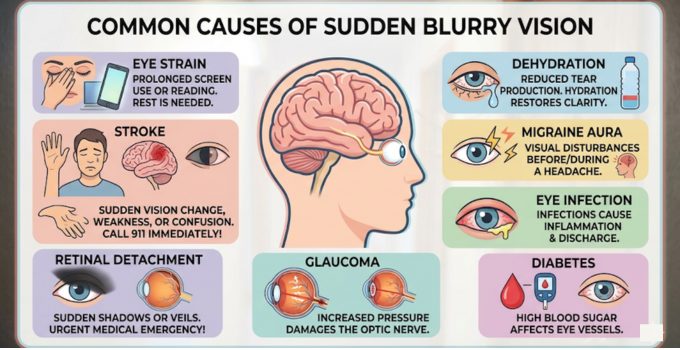
Sudden vision may become blurry for different reasons, including eye strain, dehydration, migraine headache, an eye infection, diabetes or a serious and sudden eye condition such as glaucoma, retinal detachment or stroke. Early identification of the causes and prompt treatment of sudden blurred vision will protect your eyesight, prevent complications, and restore normal vision before permanent damage occurs.
Key Takeaways
|
There are many possible causes of sudden blurry vision, ranging from harmless and temporary to serious medical emergencies.
The blurred vision causes that occur most often include:
Eye strain blurred vision:
Eye strain can cause blurred vision after prolonged screen use or reading.Dehydration blurred vision:
Dehydration can reduce tear production and cause temporary blurry vision.Blurry vision from a migraine:
Migraines can cause blurry vision before or during a headache.Eye infection blurred vision:
Eye infections can blur vision because of redness, swelling, or discharge.Diabetic blurred vision:
High blood sugar can affect the eyes, leading to blurry vision.Glaucoma blurred vision:
Glaucoma can damage the optic nerve and cause blurred vision.Retinal detachment, blurred vision:
Retinal detachment can cause sudden blurry vision and needs urgent treatment.Stroke blurred vision:
A stroke can cause sudden blurred vision along with weakness or confusion.
Why Does Sudden Blurry Vision Happen in One Eye?
According to a cross-sectional study on glaucoma at a tertiary care centre in South India, published in the Indian Journal of Ophthalmology (2023), among 6,120 newly diagnosed glaucoma patients, 79% had bilateral eye involvement, and more than half presented with advanced disease at diagnosis, confirming that glaucoma-related blurred vision often goes undetected until irreversible damage has occurred.
Sudden blurry vision in one eye, it usually means there is an issue with that eye. There could be a variety of reasons for the blurriness, including dryness or irritation of the cornea or more severe problems such as retinal detachment or sudden vision loss from glaucoma. All issues with blurred vision in one eye need to be evaluated as soon as possible.
Many things can cause blurry vision in one eye over a short period of time, including:
Symptoms of retinal detachment
Sudden loss of vision from glaucoma
Corneal abrasion
Blurred vision from an eye infection
Blocked artery to the retina
If any of these conditions are present, they can change very rapidly and must be treated as early as possible.
Why Does Sudden Blurry Vision Happen in Both Eyes?
Sudden, blurry vision in both eyes can sometimes be related to systemic health problems.
The following are blurry vision reasons :
Migraine blurred vision
Diabetes blurred vision
Dehydration blurred vision
Medication side effects
Exhaustion
If sudden blurry vision occurs in both eyes, along with dizziness, weakness, or speech problems, you should get medical care immediately.
Can Eye Strain Cause Sudden Blurred Vision?
According to Dr Kavita R Bhatnagar (Professor & Head, Department of Ophthalmology, AIIMS Jodhpur, Rajasthan), in a study published in the Indian Journal of Ophthalmology (2024), a high prevalence of computer vision syndrome was observed among Indian medical students, with 92% reporting at least one symptom while using a digital device the most frequent being eye strain, followed by blurred vision and dry eyes.
Eye strain is the number one cause of blurry vision. Staring at digital screens for long periods can fatigue your eye muscles and reduce tear production, leading to eyestrain and blurry vision when you try to focus after sleeping.
Some eye strain, blurry vision causes include:
Blurry vision after prolonged screen use.
Having dry eyes.
Having headaches.
Feeling discomfort in your eyes.
Having trouble temporarily focusing on something.
Most symptoms improve rapidly if you rest your eyes and reduce your screen time.
Can an eye infection cause blurred vision?
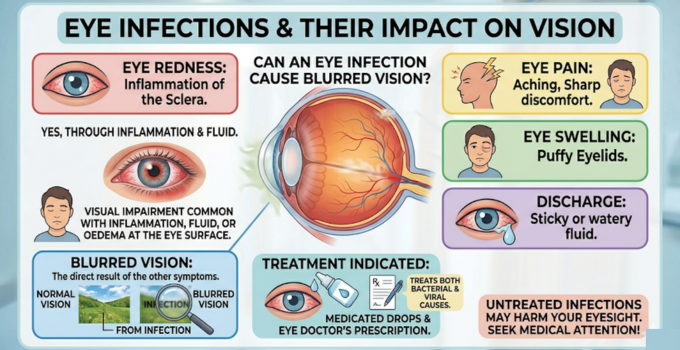
Having a visual impairment due to an eye infection is not unusual when there is inflammation, fluid, or oedema at the surface of the eye. Depending on whether the infection is bacterial or viral, untreated infections may also harm your eyesight.
Commonly found signs of an eye infection are:
Eye redness
Eye pain
Eye swelling
Discharge from the eye
Blurred vision
Medicated drops and an eye doctor’s prescription would be indicated for the treatment of an eye infection.
Why Does Diabetes Cause Blurred Vision?
According to the SMART-India Cross-Sectional Study (Lancet Global Health, 2024), a nationally representative survey of 42,147 Indian adults aged 40 years and older found that approximately 21 million people with diabetes in India have vision impairment, of whom 2.4 million are blind. Diabetic retinopathy, vision-threatening diabetic retinopathy, and diabetic macular oedema were strongly associated with blindness, making diabetes one of the leading causes of sudden and progressive blurred vision in India.
Blurred vision in people with diabetes can result from increased risk factors, including changes in eye health and elevated blood sugar levels. Your blurred vision can last for a short time or mean that you are potentially developing an eye disease due to diabetes.
Common symptoms associated with blurry vision include:
Fluctuating vision
Increased thirst and urination
Difficulty seeing clearly with both of your eyes because of the distortion of your eye’s shape
Properly controlling your blood sugar will help reduce the risk of developing long-term vision problems.
Can Glaucoma Cause Sudden Vision Loss?
An Indian Journal of Ophthalmology study reported that many glaucoma patients in India are diagnosed late, increasing the risk of irreversible vision damage. Recognising these warning signs early and seeking urgent eye care can prevent permanent vision loss.
Yes, glaucoma sudden vision loss can happen, especially in acute angle-closure glaucoma, which is a medical emergency. It occurs when eye pressure rises suddenly, leading to severe eye pain, headache, nausea, haloes around lights, and sudden vision loss in one eye. Without immediate treatment, permanent blindness can develop within hours.
Stroke-Related Sudden Blurry Vision in Both Eyes
Sudden blurred or double vision affecting both eyes simultaneously, particularly when accompanied by dizziness, weakness, slurred speech, or severe headache, may indicate a stroke.
A stroke can affect the brain’s visual pathways, causing sudden changes in vision and neurological symptoms. This is a medical emergency requiring immediate hospital attendance, as early treatment can reduce brain damage and improve recovery outcomes.
Are Eye Floaters and Blurry Vision Dangerous?
Eye floaters and blurred vision together can indicate potential retinal detachment. When the retina pulls away from the back of your eye, floaters can appear as black spots or strings.
A few examples of warning signs are:
Sudden floaters
Flashes of light
Shadows in your vision
Sudden blurry vision in one eye
Retinal detachment is a medical emergency that requires immediate treatment to preserve your vision.
What is the Best Treatment for sudden blurry vision?
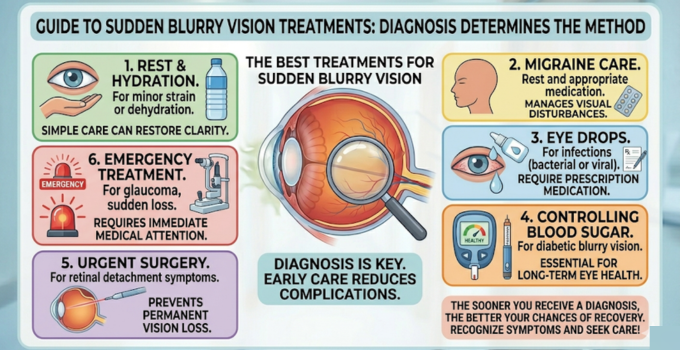
The method for treating your sudden blurry vision depends on what caused it. For minor injuries, the best way to treat them is through rest and hydration, but if the cause of your sudden blurry vision is more serious, you may require urgent care.
Examples of types of sudden blurry vision treatments include:
Hydration for dehydration
Eye drops for eye infections
Controlling your blood sugar for diabetic blurred vision
Emergency treatment for glaucoma, sudden vision loss
Surgery for retinal detachment symptoms.
The sooner you receive a diagnosis of the cause of sudden blurry vision, the better your chances of recovery and of reducing complications from your injury.
How to Fix Blurry Vision Naturally?
Some home strategies might assist if the blurred vision is mild. There are several strategies individuals can investigate for “how can I naturally help my vision,” including potential natural remedies (that work temporarily) for those looking to fix their blurry vision.
A list of potential remedies may include:
Hydration (drink water)
Taking breaks (rest your eyes)
Limit screen time
Use lubricating drops as necessary
If your symptoms persist, consult an optometrist.
Frequently Asked Questions
1. What would cause blurred vision all of a sudden?
Sudden blurred vision may be caused by dehydration, migraine, infection, glaucoma, diabetes, retinal detachment, or stroke.
2. Can blurred vision go back to normal?
Yes, blurred vision can return to normal if the cause is mild and treated early.
3. What is a red flag for blurry vision?
A red flag is sudden blurred vision with pain, headache, floaters, or weakness.
4. Why is my vision blurry after waking up?
Blurred vision upon waking may be due to dry eyes, dehydration, or eye strain.
5. When should I see a doctor for blurry vision?
You should see a doctor immediately if blurred vision appears suddenly or is accompanied by pain or weakness.
6. What causes stress blurred vision?
Stress can strain the eyes and blur vision.
7. What are remedies for sudden blurred vision?
Rest your eyes and seek care if it continues.
8. How much does a blurred vision check-up cost in India?
It usually costs ₹300 to ₹1,500.
9. When should you worry about blurred vision?
Worry if it is sudden or comes with pain.
10. What causes blurred vision with a headache?
It may be caused by migraines or eye strain.
11. Why is my vision blurry?
Blurred vision can happen due to eye strain, dry eyes, stress, or an underlying eye problem.
12. What are stroke blurred vision symptoms?
Stroke blurred vision symptoms may include sudden blurry vision, double vision, or vision loss along with weakness or dizziness.
13. What can cause blurry vision quickly?
Blurry vision can occur suddenly due to eye strain, dry eyes, migraines, or other sudden eye problems.
What’s Worth Remembering?
Sudden blurred vision may occur for simple reasons, but it can also be a warning sign of serious conditions such as glaucoma, sudden vision loss, retinal detachment, or stroke. Quick medical attention can restore vision, prevent damage, and protect long-term eye health.
.png "mrmed")
Read Also:
References
Flaxman SR, Bourne RRA, Reznikoff S, Ackland P, Braithwaite T, Cornelli MV, et al. Global causes of blindness and distance vision impairment 1990–2020. Lancet Glob Health. 2017;5(12):e1221-e1234. https://pubmed.ncbi.nlm.nih.gov/29032195
Vashist P, Senjan SS, Gupta V, Manna S, Gupta N, Shamanna BR, et al. Prevalence of diabetic retinopathy in India: Results from the National Survey 2015-19. Indian J Ophthalmol. 2021;69(11):3087-94.https://pubmed.ncbi.nlm.nih.gov/34708733
Disclaimer: This article is for informational purposes only and does not replace professional medical advice, diagnosis, or treatment. If you experience sudden blurred vision or any sudden eye problems, seek medical help immediately. Delayed treatment may increase the risk of permanent vision loss.8
















Comments