

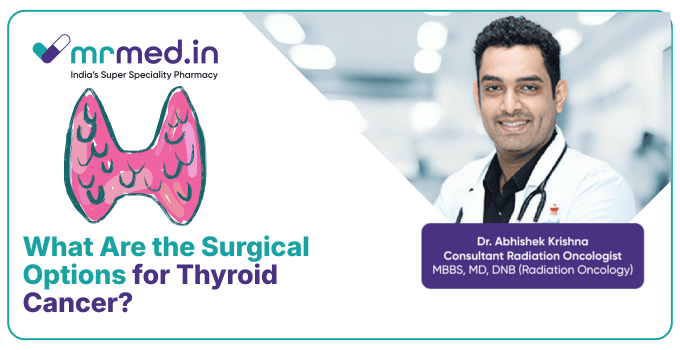
What Are the Surgical Options for Thyroid Cancer?





Last updated on 08 Jan 2026
Key takeaways
|
According to Dr Abhishek Krishna, Consultant Radiation Oncologist, KMC Hospital, Mangalore, the principal and initial step to treating thyroid cancer is usually surgery, and when a patient receives a diagnosis of thyroid cancer, they typically have a lot of questions related to that diagnosis. "What type of surgery will I have? Will my entire thyroid be taken out? How will my life be different after surgery?" Once patients understand the options available to them, they typically feel more empowered and prepared for their surgical experience.
Understanding the Main Types of Surgery
Depending on the size and type of thyroid cancer, as well as how far it has spread, surgeons can perform different types of surgery on the thyroid. When discussing treatment, most doctors will typically focus on either removing your entire thyroid gland (total thyroidectomy) or only half of it (hemithyroidectomy).
When performing a hemithyroidectomy, only the side of the thyroid that contains the cancerous mass will be removed. This is ideal when the cancerous tumour is small and limited to one lobe of the gland. However, in cases where the cancer has spread to both lobes or when the tumour is larger, physicians usually recommend removing the entire gland through a total thyroidectomy.
Although these are the two most typical forms of thyroid surgery performed for treating cancer, the ultimate decision will be customised for each patient.
Minimally Invasive and Advanced Surgical Techniques
The evolution of surgery has made considerable strides. With the introduction of minimally invasive techniques, surgeons can now perform a thyroidectomy through smaller incisions. This ultimately results in less postoperative pain and a better recovery experience for patients.
Some centres in India have also introduced robotic thyroid surgery, which offers increased precision and improved cosmetic outcomes for certain eligible patients.
These advanced techniques are not available to all patients; rather, a patient's suitability will depend on factors such as the location and size of the respective tumour.
When Lymph Nodes Are Involved
If a patient presents with a cancer that has infiltrated surrounding lymph nodes, a neck dissection may be performed during surgery for thyroid cancer. The purpose of this procedure is to remove any lymph nodes that contain cancerous cells, thereby decreasing the chance of the cancer returning in the future.
Although the idea of undergoing this surgery may be daunting, it is a well-established technique that provides essential assistance in achieving total control of the cancer when lymph node involvement occurs.
Recovery and Life After Surgery
Total thyroidectomy causes many patients to think about the future and how they will live without a thyroid. Total thyroidectomy results in the need for replacement thyroid hormone therapy for the rest of your life. This medicine replaces the thyroid hormone that your body no longer produces and allows you to live a normal, healthy, and active life like everyone else.
Many patients ask me if surgery can cure them from having thyroid cancer. Surgery is usually an excellent option for patients diagnosed with thyroid cancer at an early stage; therefore, they have a good chance for a successful outcome and indefinite control over their disease.
Costs and Possible Complications
The cost of having a thyroidectomy performed in India may differ depending on the type of hospital, location/city, and the technique of surgery, and if any additional procedures (like taking lymph nodes out) will be performed along with the thyroidectomy.
Thyroid surgery can cause complications, including changes to someone's voice, a drop in their calcium levels, or temporary difficulty with swallowing. Most patients who experience complications after thyroid surgery will recover; however, most patients will not experience complications or they will be relatively uncommon and improve with appropriate follow-up after their surgery.
Final Thoughts
The main method for treating thyroid cancer is through surgery; however, today's medical advances allow for positive outcomes when using careful preoperative assessments and skilled surgical teams. Educating yourself about your treatment options before your procedure will allow you to have a clearer mind about what to expect when you go in for your surgery, instead of fear or anxiety.
FAQs
1. Will I need lifelong medicines after thyroid cancer surgery?
You will be required to take a daily thyroid hormone pill for the rest of your life if you undergo a complete thyroidectomy, since you will no longer produce any of your body's hormones through thyroid activity; therefore, supplementing with bioidentical thyroid will allow you to maintain a normal lifestyle and be healthy.
2. Is thyroid cancer surgery risky?
When an experienced surgeon performs thyroid surgery, it is usually considered a safe procedure. Serious complications from this type of surgery are rare, and the majority of the side effects (i.e., temporary voice changes and calcium imbalance) will resolve if you take the appropriate precautions and continue with your follow-up appointments.
3. How long does it take to recover after thyroid cancer surgery?
Most patients can return to normal daily activities within one to two weeks. Complete recovery may take a few weeks, depending on the type of surgery and individual healing.
Read Also
Disclaimer: The information provided in this article is for general awareness and educational purposes only. It should not be taken as a substitute for professional medical advice, diagnosis, or treatment. Always consult your doctor or a qualified healthcare provider with any questions regarding liver cancer, its stage, or treatment options. Do not ignore professional advice or delay seeking care because of information presented here. While insights are shared by Dr. Abhishek Krishna, Consultant Radiation Oncologist, and are based on reliable medical sources, individual patient needs and outcomes may vary. MrMed does not endorse or promote any specific hospital, product, or treatment unless clearly stated.














Comments