

.png&w=1080&q=75&dpl=dpl_GzRhyff19g952KqHFmTvHDsn97pg)
Squamous Cell Carcinoma: Meaning, Causes, Symptoms, Histology & Treatment in India





Last updated on 03 Jun 2026
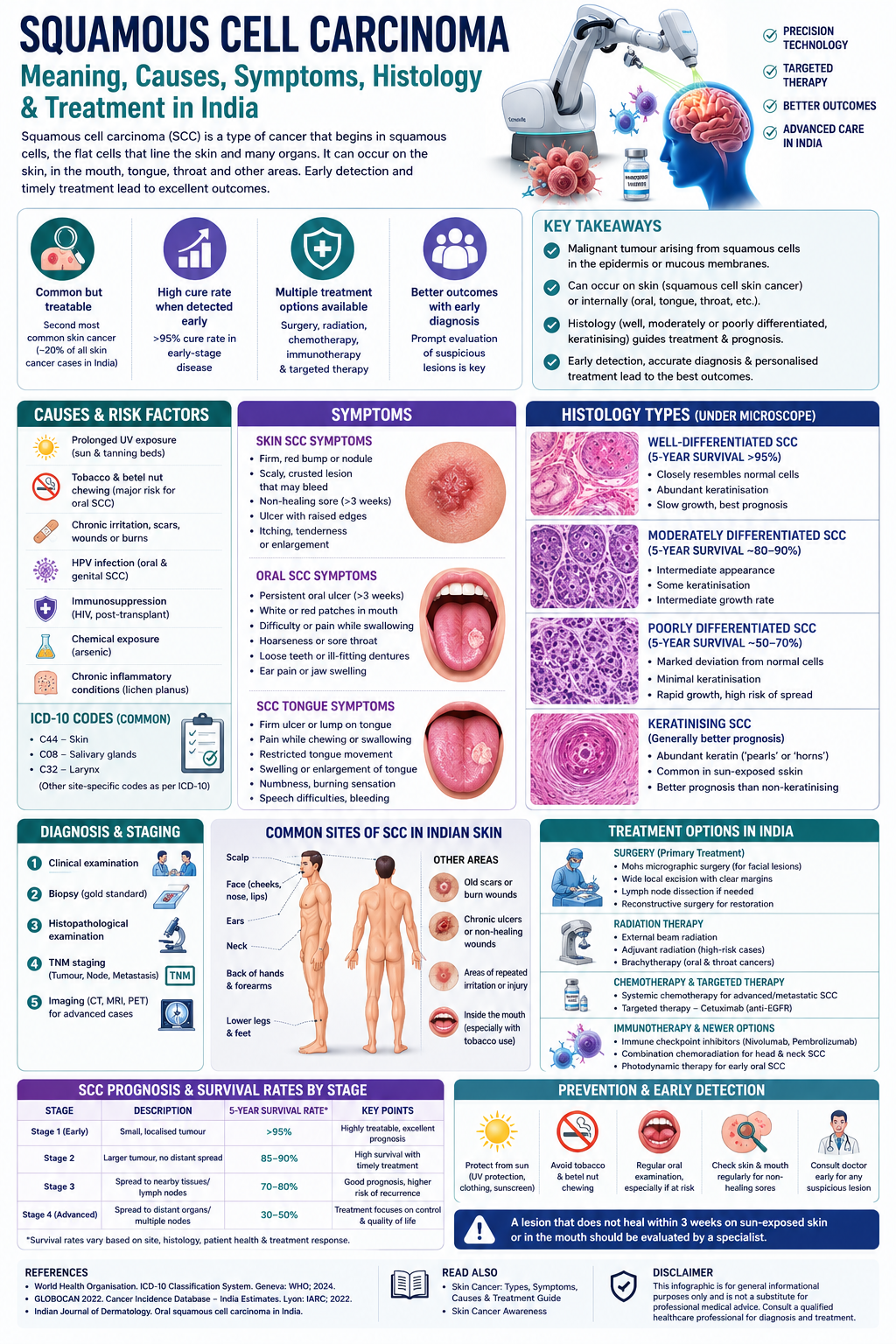
Squamous cell carcinoma is the second most common type of skin cancer, accounting for approximately 20 percent of all skin cancer cases in India. While highly treatable when detected early, squamous cell carcinoma can be difficult to understand, and understanding its risk factors and available treatment options can significantly improve outcomes. This guide covers the meaning, causes, symptoms, histology, and modern treatment approaches for squamous cell carcinoma in Indian healthcare settings.
Whether you have recently been diagnosed, are concerned about a suspicious lesion, or want to understand your risk, this comprehensive resource provides evidence-based information to help you navigate your health journey with confidence.
Key Takeaways
|
What Is Squamous Cell Carcinoma?
Squamous Cell Carcinoma (SCC) is a type of cancer that begins in squamous cells, which are thin, flat cells found on the surface of the skin and in the lining of many organs. SCC develops when these cells grow abnormally and multiply uncontrollably, forming a tumour.
What Are Squamous Cells?
Squamous cells are flat, scale-like cells that make up the outer layers of the skin.
They help protect the body from injury, infection, and environmental damage.
These cells are also found in the lining of the mouth, throat, lungs, oesophagus, cervix, and other organs.
How Does SCC Develop?
SCC occurs when squamous cells undergo genetic changes that cause them to grow out of control.
Long-term exposure to ultraviolet (UV) rays, tobacco use, chronic inflammation, or certain infections can damage these cells and increase the risk of cancer.
Over time, the abnormal cells may form a cancerous growth and, if untreated, can spread to nearby tissues or other parts of the body.
SCC vs Other Skin Cancers: Key Differences
Feature | Squamous Cell Carcinoma (SCC) | Basal Cell Carcinoma (BCC) | Melanoma |
Where it starts | Squamous cells in the outer skin layer | Basal cells in the deepest part of the epidermis | Melanocytes (pigment-producing cells) |
How common is it? | Second most common skin cancer | The most common skin cancer | Less common but more serious |
Appearance | Scaly patch, red bump, or non-healing sore | Pearly or waxy bump, sometimes with visible blood vessels | New or changing mole with irregular shape or colour |
Growth rate | Usually grows faster than BCC | Usually grows slowly | Can grow and spread quickly |
Main risk factors | Sun exposure, tobacco use, chronic wounds | Long-term sun exposure | Sun exposure, severe sunburns, and family history |
Causes and Risk Factors
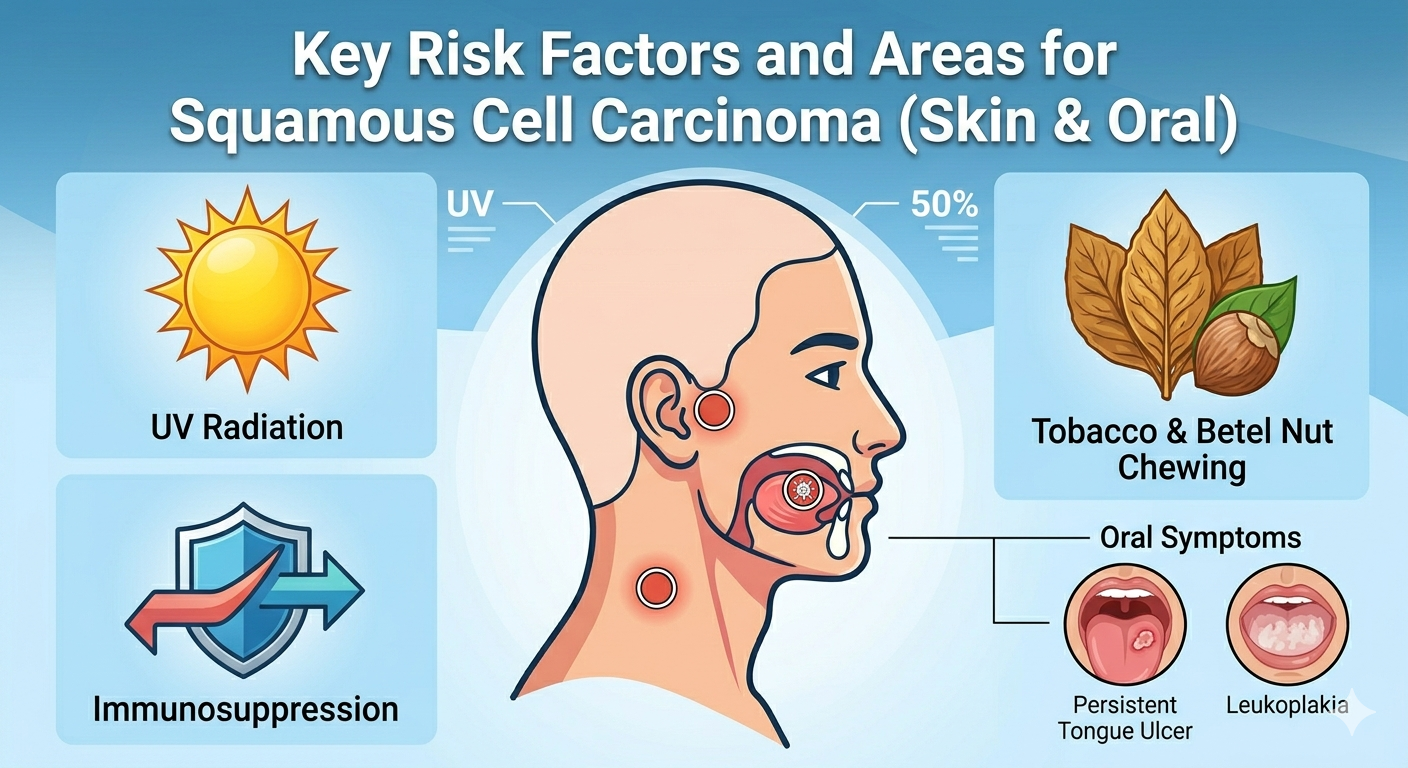
According to the World Health Organisation's ICD-10 classification, squamous cell carcinoma uses multiple codes depending on the site. Common codes include C44 (skin), C08 (salivary glands), and C32 (larynx). The ICD-10 codes for squamous cell carcinoma help standardise diagnosis and billing in Indian healthcare systems.
Primary causes of squamous cell carcinoma:
Prolonged ultraviolet (UV) radiation exposure from the sun and tanning beds.
Chronic irritation from scar tissue, wounds, or burns.
Chemical exposure, particularly to arsenic.
Immunosuppression (post-organ transplant, HIV/AIDS).
Human papillomavirus (HPV) infection, particularly for oral and genital SCC.
Chronic inflammation from conditions like lichen planus.
High-risk groups in India:
Outdoor workers in tropical regions with intense UV exposure.
Individuals with a history of sunburn, especially in childhood.
Tobacco and betel nut chewers (major risk factor for oral squamous cell carcinoma).
Fair-skinned individuals, though darker skin types also develop SCC.
Immunocompromised patients, including those with HIV infection.
Squamous Cell Carcinoma Symptoms
According to Dr Rajeev Sharma of AIIMS Delhi, early detection of squamous cell carcinoma of the skin is key to successful treatment. A lesion that does not heal within 3 weeks on sun-exposed skin should be biopsied.
Symptoms vary depending on the location and stage of the cancer.
Skin squamous cell carcinoma symptoms:
A firm, red nodule or bump on sun-exposed skin.
Scaly, crusted lesion that may bleed or refuse to heal.
Lesion with irregular borders and variable colour.
Ulceration with central depression and raised edges.
Growth that enlarges over weeks to months.
Tenderness or itching at the site.
Oral squamous cell carcinoma symptoms:
Persistent oral ulcer that does not heal within 3 weeks.
White or red patches inside the mouth (oral leukoplakia or erythroplakia).
Difficulty swallowing or painful swallowing.
Hoarseness or persistent sore throat.
Swelling of the jaw or tongue.
Loose teeth or dentures that no longer fit properly.
Ear pain referred from the mouth.
Squamous cell carcinoma tongue symptoms:
Firm ulcer or lump on the tongue surface.
Pain while chewing or swallowing.
Restricted tongue movement.
Swelling of the tongue muscles (enlargement of the tongue).
Numbness or a burning sensation.
Speech difficulties.
Bleeding from the tongue lesion.
Squamous Cell Carcinoma Histology and Pathology
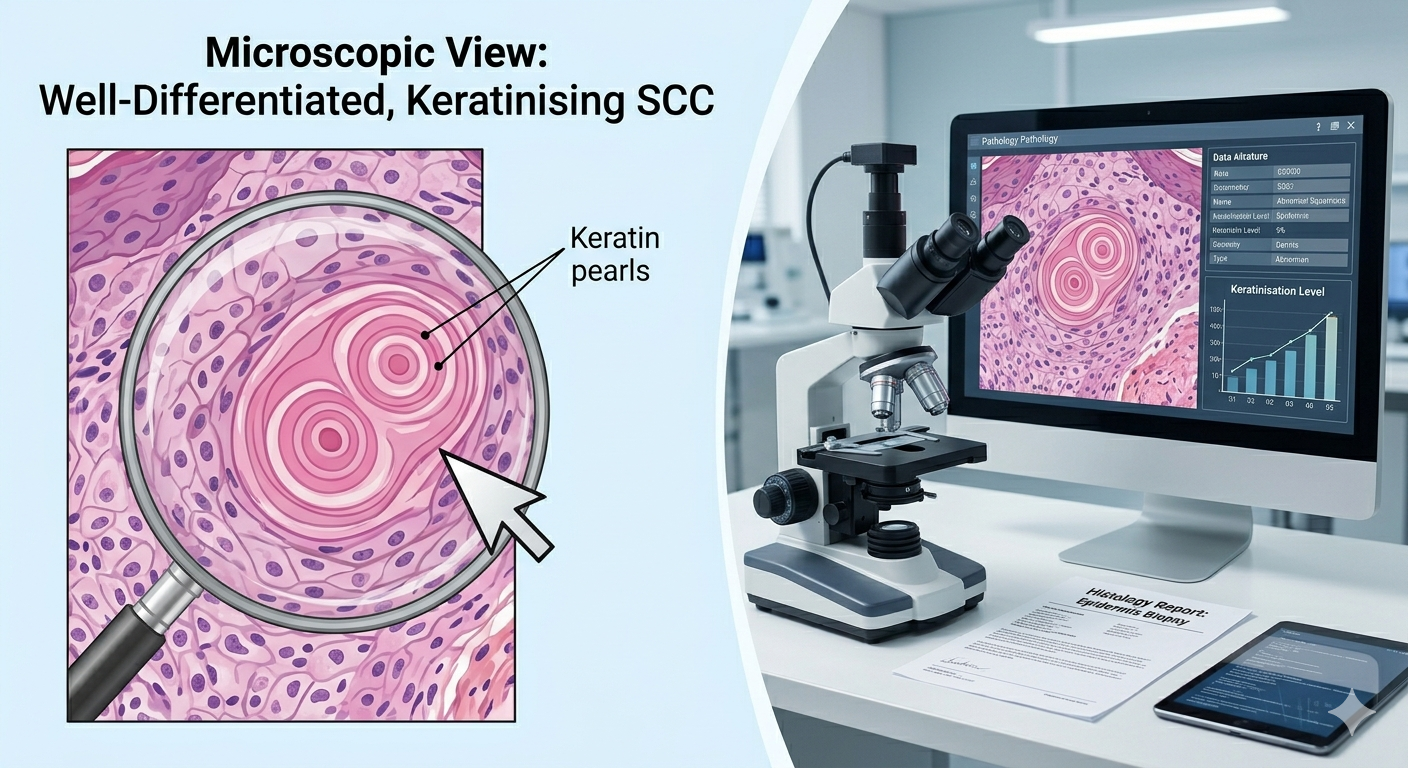
Histological and pathological examination under a microscope is essential for confirming a diagnosis of squamous cell carcinoma and determining prognosis.
Types based on squamous cell carcinoma histology:
Well-differentiated squamous cell carcinoma:
Closely resembles normal squamous cells under microscopy.
Produces keratinisation (horn-like material).
Slowest growth rate.
Best prognosis with 5-year survival exceeding 95 percent.
The most common type.
Moderately differentiated squamous cell carcinoma:
Intermediate appearance between well and poorly differentiated types.
Some evidence of keratinisation.
Intermediate growth rate.
5-year survival is around 80-90%.
Requires closer monitoring.
Poorly differentiated squamous cell carcinoma:
Significant deviation from normal squamous cell appearance.
Minimal keratinisation.
Rapid growth and aggressive behaviour.
Highest risk of metastasis.
5-year survival is around 50 to 70 percent.
Keratinising squamous cell carcinoma:
A specific subtype characterised by abundant keratin production.
Often appears clinically as a horn-like or pearl-like lesion.
Generally has a better prognosis than non-keratinising variants.
Common in sun-exposed skin.
Diagnosis and Staging
Diagnostic methods:
Clinical examination by a dermatologist or surgeon.
Skin or tissue biopsy (gold standard for confirmation).
Histopathological examination under the microscope.
TNM staging (Tumour, Node, Metastasis) to determine the extent of disease.
Imaging studies (CT, MRI, PET scan) for advanced or metastatic cases.
SCC in Indian Skin, Where It Commonly Appears
In people with Indian skin, Squamous Cell Carcinoma (SCC) can develop on any part of the body, but it is most often found in areas that receive frequent sun exposure.
Common Sites of SCC in Indian Skin
Face (especially the cheeks, nose, and lips),
Scalp, particularly in people with thinning hair or baldness,
Ears,
Neck,
Back of the hands and forearms,
Lower legs and feet.
Other Areas Where SCC May Develop
Old scars or burn wounds.
Chronic ulcers or non-healing wounds.
Areas exposed to repeated irritation or injury.
Inside the mouth, especially in people who chew tobacco or smoke.
Squamous Cell Carcinoma Treatment in India
According to the Indian Journal of Dermatology, oral squamous cell carcinoma represents 40 percent of all oral cancers in India, with tobacco and betel nut chewing identified as the primary risk factors in 75 percent of cases.
Treatment depends on tumour size, location, histology grade, and patient factors.
Surgical treatment (primary approach):
Mohs micrographic surgery (for facial lesions) removes the tumour layer by layer with microscopic examination.
Wide local excision with adequate margins.
Lymph node dissection if regional nodes are involved.
Reconstructive surgery for functional and cosmetic restoration.
Radiation therapy:
External beam radiation for inoperable lesions.
Adjuvant radiation post-surgery for high-risk features.
Brachytherapy for oral and throat cancers.
Chemotherapy and targeted therapy:
Systemic chemotherapy for metastatic squamous cell carcinoma.
Immunotherapy and targeted agents in advanced disease.
Combination approaches for optimal outcomes.
Newer treatment options available in India:
Tertiary care centres in India now offer:
Cetuximab (monoclonal antibody against EGFR) for advanced SCC.
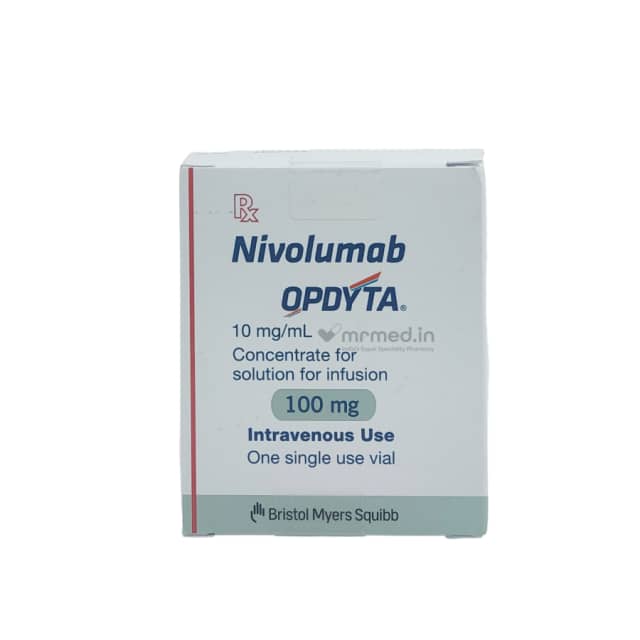
Immune checkpoint inhibitors (nivolumab, pembrolizumab) for metastatic disease.
Combination chemoradiation for head and neck SCC.
Photodynamic therapy for early-stage oral SCC.
SCC Prognosis and Survival Rates by Stage
The prognosis of Squamous Cell Carcinoma (SCC) depends on the stage at which it is diagnosed and treated. Early detection usually leads to better outcomes and higher survival rates.
Stage 1 (Early Stage)
The cancer is small and limited to its original location.
Treatment is often highly effective.
Most patients have an excellent prognosis with a high chance of recovery.
Stage 2
The tumour is larger but has not spread to distant parts of the body.
Treatment may involve surgery, radiation, or both.
Survival rates remain high when treated promptly.
Stage 3
Cancer has spread to nearby tissues or lymph nodes.
More intensive treatment may be required.
Prognosis is generally good, but the risk of recurrence is higher.
Stage 4 (Advanced Stage)
Cancer has spread to distant organs or multiple lymph nodes.
Treatment focuses on controlling the disease and improving quality of life.
Survival rates are lower compared to earlier stages, but newer therapies can help improve outcomes.
Factors That Affect Survival
Early diagnosis and treatment.
Tumour size and location.
Whether the cancer has spread.
Overall health of the patient.
Response to treatment.
FAQs
Q1. What is the difference between squamous cell carcinoma and basal cell carcinoma?
Basal cell carcinoma arises from basal cells at the base of the epidermis and grows slowly, rarely spreading. Squamous cell carcinoma arises from the outer squamous cells, grows more rapidly, and can spread to lymph nodes and organs if left untreated. Both are treatable when caught early.
Q2. What is the survival rate for well-differentiated squamous cell carcinoma?
Well-differentiated squamous cell carcinoma has an excellent prognosis with 5-year survival rates exceeding 95 percent when treated with complete surgical excision. Even moderately differentiated tumours have 80 to 90 percent 5-year survival with appropriate treatment.
Q3. Can squamous cell carcinoma be cured?
Yes, squamous cell carcinoma is highly curable when detected early. Early-stage tumours (Stage I–II) have cure rates of 90 to 95 percent. Even advanced disease can achieve remission or long-term control with multimodal therapy (surgery, radiation, chemotherapy).
Q4. What is the difference between SCC and BCC?
Squamous Cell Carcinoma (SCC) and Basal Cell Carcinoma (BCC) are both common types of skin cancer, but they develop from different skin cells. BCC grows slowly and rarely spreads to other parts of the body, while SCC can grow more quickly and has a higher chance of spreading if left untreated.
Q5. Can tobacco cause SCC?
Yes, tobacco use can increase the risk of Squamous Cell Carcinoma (SCC). Smoking and chewing tobacco expose the body to harmful chemicals that can damage cells, especially in the mouth, throat, lungs, and other tissues, making SCC more likely to develop. Early quitting can help reduce this risk.
Final Thoughts
Squamous cell carcinoma is a serious but highly treatable malignancy when detected early. Understanding the meaning, recognising symptoms, and seeking prompt medical evaluation for suspicious lesions are essential steps in protecting your health. Whether on the skin, in the mouth, or on the tongue, squamous cell carcinoma responds well to modern treatment approaches available at healthcare centres across India.
The key to the best outcomes is early detection, accurate histological diagnosis, and personalised treatment planning by experienced multidisciplinary teams. If you notice a persistent ulcer, non-healing lesion, or any of the warning signs mentioned in this guide, consult a dermatologist or surgeon without delay.
Read Also
References
World Health Organisation. ICD-10 classification system [Internet]. Geneva: WHO; 2024 [cited 2026 May 27] https://www.who.int/standards/classifications/classification-of-diseases
GLOBOCAN 2022. Cancer incidence database — India estimates [Internet]. Lyon: IARC; 2022 [cited 2026 May 27].https://gco.iarc.who.int/en
Disclaimer: This article is for general informational purposes only and is not a substitute for professional medical advice. Always consult a qualified dermatologist, surgeon, or oncologist for diagnosis and management of suspected squamous cell carcinoma. Early diagnosis and treatment offer the best outcomes.

















Comments