

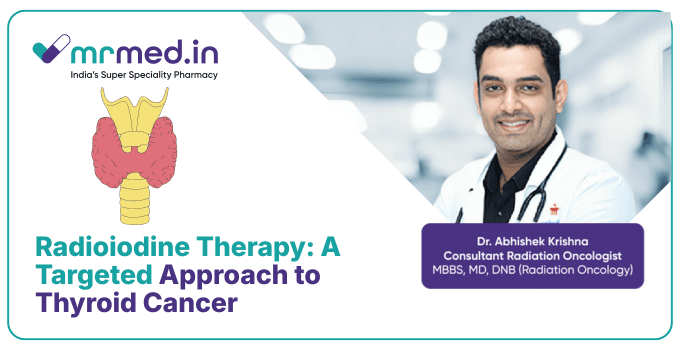
Radioiodine Therapy: A Targeted Approach to Thyroid Cancer





Last updated on 09 Jan 2026
Key takeaways
|
According to Dr Abhishek Krishna, Consultant Radiation Oncologist, KMC Hospital, Mangalore, for patients recovering from thyroid cancer surgery, being informed that further treatments must be received may be daunting and frightening due to the anxiety of not knowing what type of radiation therapies will be used, how long the side effects will last, and what life after treatment will look like. Having an understanding of how these therapies work and why they are suggested helps alleviate some of that anxiety while at the same time building self-assurance in the process of recovery.
How This Therapy Targets Thyroid Cells
It’s possible that a person will have small quantities of thyroid or cancerous tissue left in his/her body after having had his/her thyroid removed. Iodine therapy works because thyroid tissue naturally takes up iodine.
Thus, when I-131 is administered, it is taken up by any remaining thyroid tissue and emits radiation from within. As a result, those tissues are destroyed, and other organs receive only very low levels of exposure.
Therefore, radioiodine therapy is a type of targeted radiation therapy for the treatment of thyroid problems and not a whole-body radiation treatment. Thyroid ablation therapy is frequently offered to eliminate any tiny residual thyroid tissues and lessen the possibility of them returning at a later date.
Why Preparation Matters Before Treatment
Adequate preparation optimises the uptake of radioactive iodine by whatever thyroid cells remain. Therefore, in most cases, patients in India are placed on a restricted iodine diet for a specified period prior to radioactive iodine treatment. By temporarily restricting iodine intake, cancer cells can absorb radioactive iodine more readily than when iodine is present.
An additional component of preparation for RAI treatment involves increasing thyrotropin (TSH) levels. Some patients are instructed to temporarily discontinue thyroid hormone replacement, while others may receive Thyrogen or have their bodies produce TSH by withdrawing thyroid hormone. The choice of approach depends upon the patient's comfort level, health status, and the physician's recommendation.
How Cancer Cells Are Destroyed
Patients periodically inquire about the mechanism by which radioactive iodine destroys cancerous cells. Upon entering a thyroid cancer cell, the emitted radiation damages its DNA, preventing it from growing or sustaining itself. Additionally, the fact that both normal thyroid cells and cancerous cells absorb iodine makes this treatment effective, as it kills not only visible tumours but also small or hidden cancerous cells throughout the body.
Thus, radioiodine treatments can provide effective treatment for metastatic thyroid cancer even when it has metastasised to other organs, such as lymph nodes, lungs, and bone, provided that the cancerous cells can absorb iodine.
Safety and Recovery After Treatment
Small quantities of radiation exit the body through urine, sweat, and saliva following treatment. Healthcare providers recommend specific radiation safety precautions to keep family members safe after RAI, particularly children and women who are pregnant women.
Common recommendations are:
Staying a safe distance away from family members for several days
Not sharing any dishes or towels with them
Drinking lots of fluids
Practising proper hygiene.
These guidelines are only temporary; normally, they will be applicable for a short time following your RAI treatment.
Effectiveness and Long-Term Benefits
In appropriately chosen patients, particularly in patients with differentiated thyroid carcinoma (DTC), the use of radioiodine therapy has a proven high success rate. It serves to eliminate residual thyroid tissue and thus plays an important role in preventing a recurrence of thyroid cancer.
Regular follow-up examinations, including blood tests and imaging studies, may monitor the patient's recovery from the disease and help the physician achieve long-term control of the patient's condition.
Final Thoughts
Radioiodine therapy is not solely intended to destroy the remaining cancer cells; it also serves to provide reassurance for patients and reduce their long-term risks, with the objective of promoting a safer future after treatment of the thyroid cancer. With adequate preparation, education, and ongoing support, most patients can confidently resume their normal lives.
Read Also
Disclaimer: The information provided in this article is for general awareness and educational purposes only. It should not be taken as a substitute for professional medical advice, diagnosis, or treatment. Always consult your doctor or a qualified healthcare provider with any questions regarding liver cancer, its stage, or treatment options. Do not ignore professional advice or delay seeking care because of information presented here. While insights are shared by Dr. Abhishek Krishna, Consultant Radiation Oncologist, and are based on reliable medical sources, individual patient needs and outcomes may vary. MrMed does not endorse or promote any specific hospital, product, or treatment unless clearly stated.












Comments