


PCOS Is Now Called PMOS: What the Name Change Means for You





Last updated on 04 Jun 2026
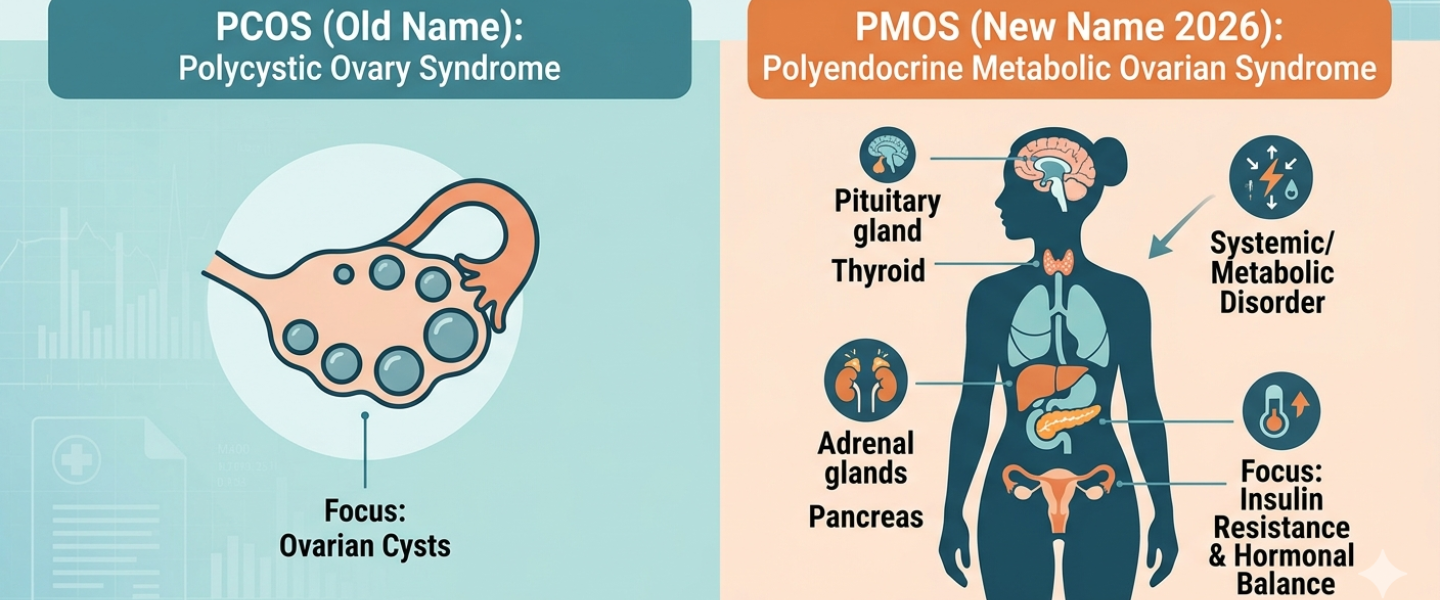
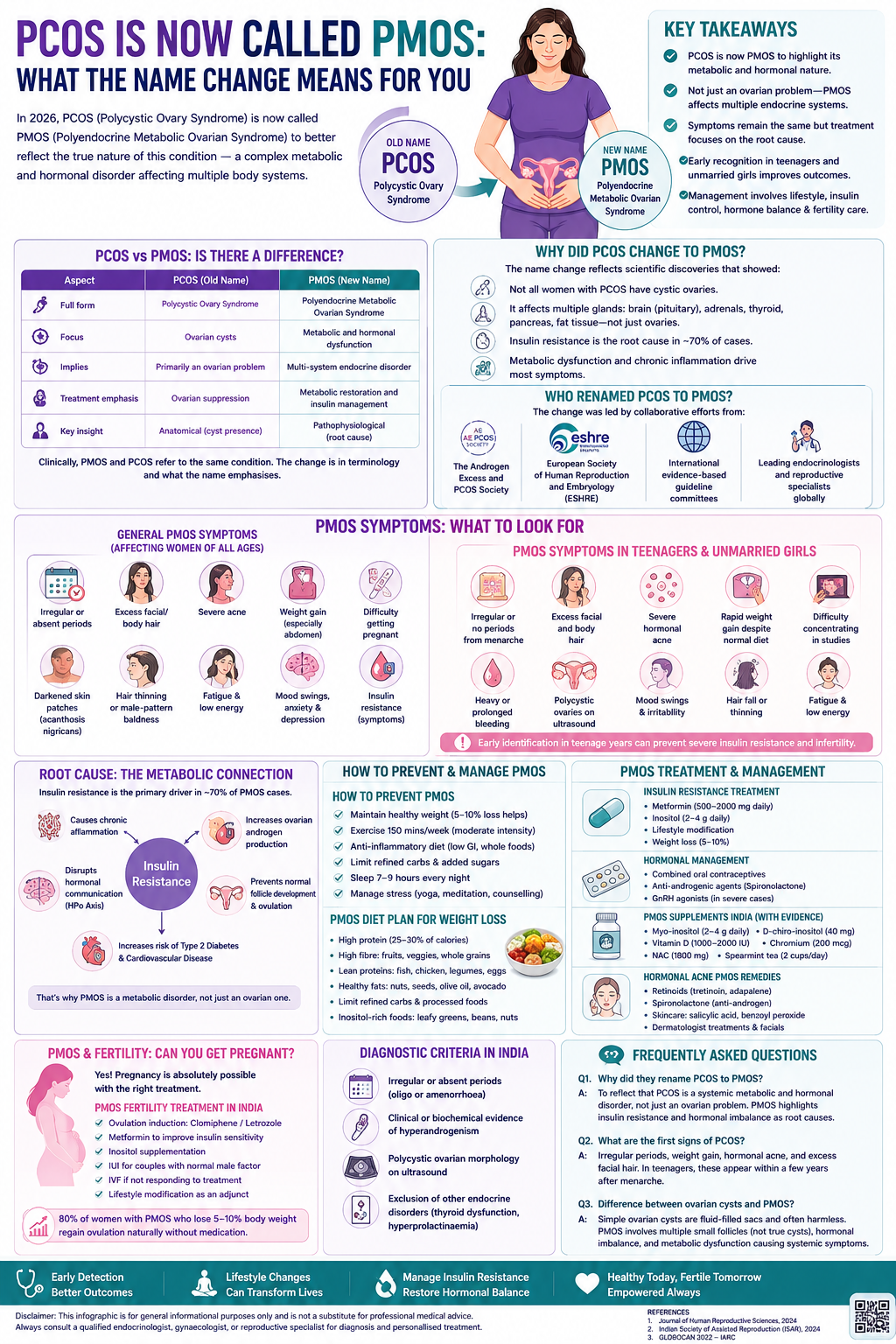
In 2026, the medical community has increasingly adopted a new name for one of the most common hormonal disorders affecting women: PCOS is now called PMOS, or Polyendocrine Metabolic Ovarian Syndrome. This shift in terminology reflects a deeper understanding of the condition's true nature, that it is far more than just an ovarian problem, but a complex metabolic and hormonal disorder affecting multiple body systems. If you have been diagnosed with PCOS or suspect you may have it, understanding the meaning behind this name change and what it means for your treatment is crucial.
This comprehensive guide explains the PCOS name change in 2026, why PCOS was renamed PMOS, and how this affects your health management and fertility prospects.
Key Takeaways
|
Why Did PCOS Change to PMOS? Understanding the Rationale
The reasons behind the PCOS name change:
The original name "Polycystic Ovary Syndrome" was based on the presence of multiple cysts visible on the ovaries.
However, decades of research revealed that:
Not all women with PCOS/PMOS have cystic ovaries.
The condition involves dysfunction in the brain (pituitary gland), adrenal glands, thyroid, pancreas, and fat tissue, not just the ovaries.
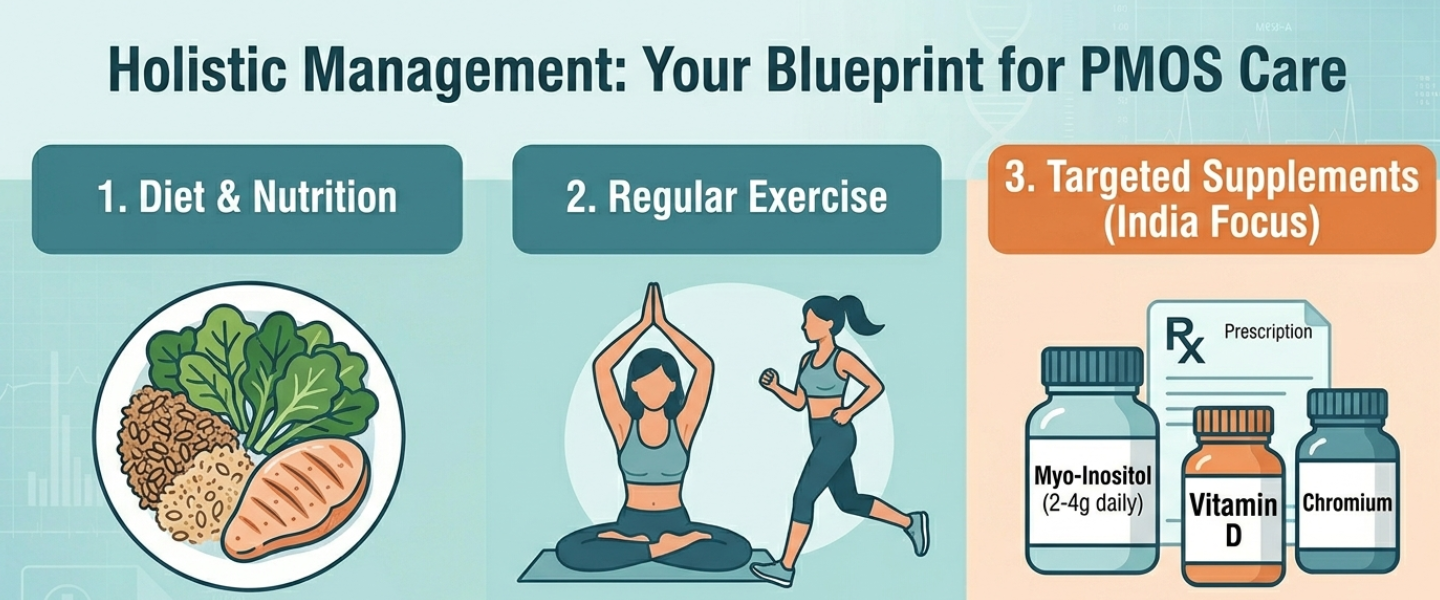
Insulin resistance is the root cause in 70 percent of cases.
Metabolic dysfunction and chronic inflammation drive most symptoms.
According to the Androgen Excess and PCOS Society, the name change from PCOS to PMOS reflects the scientific consensus that the condition is fundamentally a disorder of metabolic and endocrine dysfunction, with ovarian manifestations being secondary effects.
Who renamed PCOS to PMOS?
According to medical literature from 2025–2026, the push for renaming came from collaborative efforts by:
The Androgen Excess and PCOS Society.
European Society of Human Reproduction and Embryology (ESHRE).
International evidence-based guideline committees.
Leading endocrinologists and reproductive specialists globally.
PCOS vs PMOS: Is There a Difference?
Is PMOS the same as PCOS?
Clinically, yes, PMOS and PCOS refer to the same condition. The difference is purely in terminology and what the name emphasises.
Aspect | PCOS (Old Name) | PMOS (New Name) |
Full form | Polycystic Ovary Syndrome | Polyendocrine Metabolic Ovarian Syndrome |
Focus | Ovarian cysts | Metabolic and hormonal dysfunction |
Implies | Primarily an ovarian problem | Multi-system endocrine disorder |
Treatment emphasis | Ovarian suppression | Metabolic restoration and insulin management |
Key insight | Anatomical (cyst presence) | Pathophysiological (root cause) |
The shift is about understanding that while ovarian cysts may be visible, they are symptoms of underlying hormonal and metabolic imbalances.
PMOS Symptoms: What to Look For
According to Dr Radhika Rao, Reproductive Endocrinologist, Fortis Healthcare, notes, "In fertility treatment, the PMOS nomenclature helps us counsel patients better. It's not about the cysts; it's about restoring metabolic health and hormone balance.
General PMOS symptoms affecting women of all ages:
Irregular or absent menstrual periods.
Difficulty becoming pregnant (anovulation, lack of ovulation).
Excess facial and body hair growth (hirsutism).
Severe acne, often on the face, chest, and back.
Male-pattern baldness or significant hair thinning (androgenetic alopecia).
Darkened skin patches, especially on the neck and underarms (acanthosis nigricans).
Weight gain, particularly around the abdomen.
Difficulty losing weight despite diet and exercise.
Fatigue and low energy.
Sleep disturbances and sleep apnea.
Mood swings, anxiety and depression.
Insulin resistance symptoms: extreme hunger, sugar cravings, brain fog.
PCOS symptoms in an unmarried girl and signs of PMOS in teenagers:
Early recognition of PMOS in young women is essential for preventing long-term complications.
Irregular or no periods from menarche (first menstruation).
Heavy, prolonged menstrual bleeding when periods do occur.
Excessive facial and body hair appearing in puberty.
Severe hormonal acne not responding to standard treatments.
Rapid weight gain despite normal eating habits.
Difficulty concentrating in school or work.
Mood swings and irritability during high-stress periods.
Polycystic ovaries visible on ultrasound during routine imaging.
According to the Indian Journal of Endocrinology and Metabolism, PMOS symptoms in teenagers often go undiagnosed because irregular periods are considered "normal" during adolescence. Early identification and lifestyle intervention during teenage years can prevent progression to severe insulin resistance and infertility.
Root Cause: Why Did PCOS Name Change? The Metabolic Connection
The discovery that changed everything:
Research over the past 15 years has revealed that insulin resistance is the primary driver of PMOS in 70 percent of cases. Elevated insulin levels trigger the ovaries to produce excess androgens (male hormones), which suppress ovulation and cause PCOS/PMOS symptoms.
Causes chronic inflammation throughout the body.
Disrupts the hypothalamic-pituitary-ovarian axis (hormonal communication).
Increases ovarian androgen production.
Prevents normal follicle development and ovulation.
Increases the risk of type 2 diabetes and cardiovascular disease.
This understanding explains why the name changed: PMOS is fundamentally a metabolic disorder, not primarily an ovarian one.
How to Prevent PCOS and Manage PMOS
How to prevent PCOS:
While you cannot completely prevent PMOS if you have a genetic predisposition, you can significantly delay onset and reduce severity through:
Maintaining a healthy weight (even a 5–10 percent weight loss improves insulin sensitivity).
Regular exercise (150 minutes weekly of moderate-intensity activity).
Anti-inflammatory diet (Mediterranean or low-glycaemic index foods).
Limiting refined carbohydrates and added sugars.
Adequate sleep (7–9 hours nightly).
Stress management techniques (yoga, meditation, counselling).
PMOS diet plan for weight loss:
High protein intake (25–30% of calories) to stabilise blood sugar.
High-fibre foods (fruits, vegetables, whole grains) to improve insulin sensitivity.
Lean proteins: fish, chicken, legumes, eggs.
Healthy fats: olive oil, nuts, seeds, avocado.
Limit refined carbohydrates and processed foods.
Inositol-rich foods: leafy greens, beans, nuts (inositol improves ovulation in PMOS).
PMOS Treatment and Management
Insulin resistance PMOS treatment:
Metformin (500–2000 mg daily) to improve insulin sensitivity.
Inositol supplementation (2–4 grams daily), highly effective in Indian women.
Lifestyle modification (diet and exercise).
Weight loss (target 5–10 percent).
Hormonal management:
Combined oral contraceptive pills (to regulate periods and reduce androgens).
Anti-androgenic agents (spironolactone) for hirsutism and acne.
Gonadotropin-releasing hormone (GnRH) agonists in severe cases.
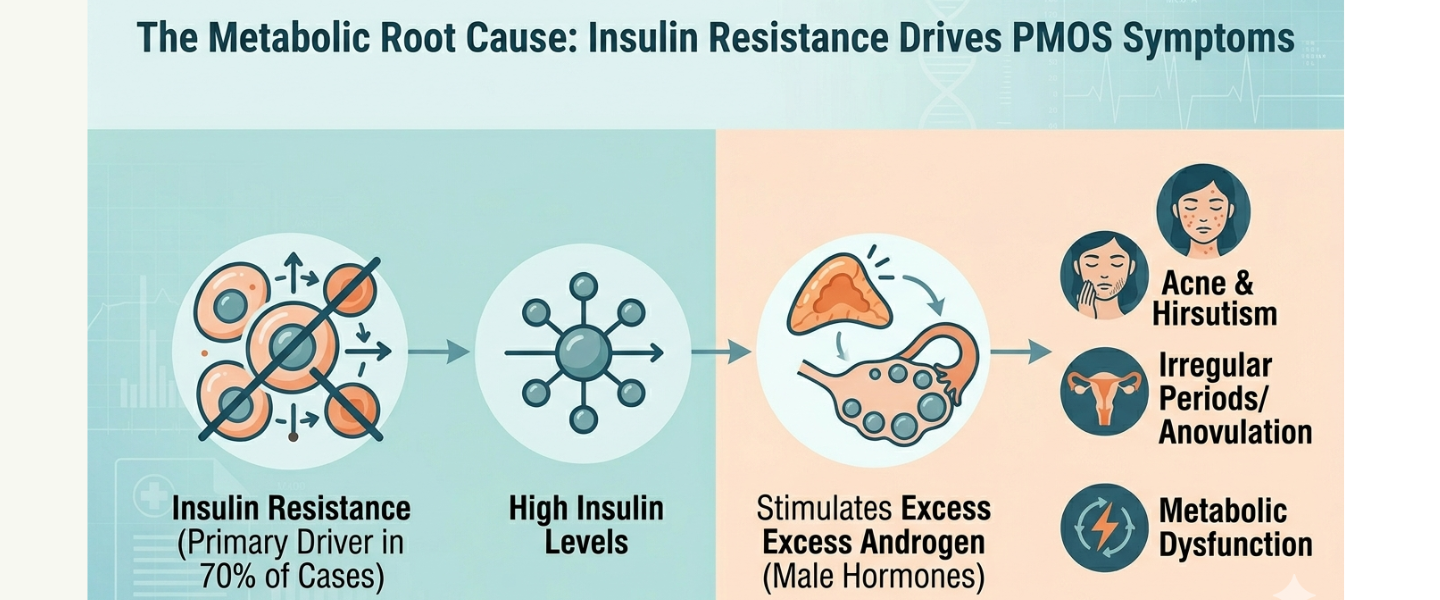
PMOS supplements India:
Myo-inositol: 2–4 grams daily (improves ovulation and metabolic markers).
D-chiro-inositol: 40 mg daily (often combined with myo-inositol).
Vitamin D: 1000–2000 IU daily (deficiency common in Indian women).
Chromium picolinate: 200 mcg daily (improves glucose metabolism).
N-acetylcysteine (NAC): 1800 mg daily (improves ovulation rates).
Spearmint tea: 2 cups daily (reduces hirsutism).
Hormonal acne PMOS remedies:
Dermatologist-prescribed retinoids (tretinoin, adapalene).
Oral antibiotics for severe acne.
Spironolactone (anti-androgen, reduces sebum production).
Chemical peels and professional facials.
Skincare routine with salicylic acid and benzoyl peroxide.
PMOS and Fertility: Can You Get Pregnant?
Can I get pregnant with PMOS?
Yes. While PMOS causes anovulation (lack of ovulation) and irregular periods, pregnancy is absolutely possible with appropriate treatment.
PMOS fertility treatment in India:
Ovulation induction with clomiphene citrate or letrozole (first-line).
Metformin to improve insulin sensitivity and restore ovulation.
Inositol supplementation to enhance fertility outcomes.
Intrauterine insemination (IUI) for couples with normal male factor.
In-vitro fertilisation (IVF) for those not responding to ovulation induction.
Lifestyle modification as an adjunct to all fertility treatments.
Studies show that 80 percent of women with PMOS who lose 5–10 percent of body weight regain ovulation naturally without medication.
Diagnostic criteria in India:
Irregular or absent periods (oligo or amenorrhoea).
Clinical or biochemical evidence of hyperandrogenism (elevated testosterone).
Polycystic ovarian morphology on ultrasound.
Exclusion of other endocrine disorders (thyroid dysfunction, hyperprolactinaemia).
FAQs
Q1. Why did they rename PCOS to PMOS?
The name was changed to better reflect that PCOS is a systemic metabolic and hormonal disorder, not just an ovarian problem. The new name "Polyendocrine Metabolic Ovarian Syndrome" emphasises insulin resistance and hormonal imbalance as the root causes.
Q2. What are the first signs of PCOS?
The first signs include irregular or absent periods, weight gain despite a normal diet, severe hormonal acne, and excessive facial hair growth. In teenagers, these symptoms often appear within the first few years after menarche.
Q3. Difference between ovarian cysts and PMOS?
Simple ovarian cysts are fluid-filled sacs that may appear on ultrasound but cause no symptoms and often resolve on their own. PMOS involves multiple small follicles (not true cysts), hormonal imbalance, and metabolic dysfunction, causing irregular periods, infertility, and other systemic symptoms.
Final Thoughts
The renaming of PCOS to PMOS represents a critical shift in how we understand and treat one of the most common hormonal disorders affecting women globally and in India specifically. By recognising PMOS as fundamentally a metabolic disorder driven by insulin resistance, we move beyond simply suppressing ovarian symptoms to actually restoring health.
Whether you are dealing with irregular periods, infertility, hormonal acne, or weight gain related to PMOS, the good news is that comprehensive treatment addressing insulin resistance, lifestyle optimisation, and targeted supplementation can transform your health outcomes.
Early diagnosis, especially in teenagers and unmarried girls, combined with proactive management, offers the best chance for preventing complications and achieving your fertility and health goals.
Read Also
GLP-1 for Heart Health, PCOS, Fatty Liver, and Metabolic Syndrome
Menopause & Hormonal Health: A Practical Guide for Indian Women
References
Journal of Human Reproductive Sciences. Inositol and supplement efficacy in PCOS/PMOS women in India [Internet]. India: JHRS; 2024 [cited 2026 May 27] https://journals.lww.com/jhrs/pages/default.aspx.
Indian Society of Assisted Reproduction. Fertility treatment protocols for PMOS [Internet]. India: ISAR; 2024 [cited 2026 May 27] https://www.isar.org.in/
GLOBOCAN 2022. Cancer and reproductive health epidemiology, India estimates [Internet]. Lyon: IARC; 2022 [cited 2026 May 27] https://gco.iarc.who.int/en
Disclaimer: This article is for general informational purposes only and is not a substitute for professional medical advice. Always consult a qualified endocrinologist, gynaecologist, or reproductive specialist for diagnosis and personalised treatment of PMOS/PCOS. Early diagnosis and comprehensive management offer the best outcomes for fertility and long-term health














Comments