

GLP-1 for Heart Health, PCOS, Fatty Liver, and Metabolic Syndrome: What the Evidence Shows





Last updated on 22 Jan 2026
Key Takeaways
|
A few years ago, most people knew GLP-1 medicines mainly as “diabetes or weight-loss injections.” Now the conversation has changed. Doctors and researchers increasingly discuss GLP-1 medicines for broader health goals, including heart protection, hormone balance, fatty liver improvement, and better metabolic control.
But here’s the important part: not every claim online is backed by strong research. Some benefits are well proven. Some look promising but still need more data. This blog explains what the evidence shows in simple language, especially around PCOS, fatty liver, metabolic syndrome, and heart health.
What Does GLP-1 Actually Do in the Body?
GLP-1 (glucagon-like peptide-1) is released from your body after eating. Its function is to regulate blood glucose & appetite. Medications that mimic this natural hormone act on multiple pathways, which is why they have a positive effect on many different metabolic disorders.
In the simplest terms, GLP-1 medications improve metabolic health in these 4 ways;
They decrease the amount of sugar in the blood.
They decrease hunger and craving for foods.
They increase the effectiveness of the body's response to insulin.
They take longer to digest, so the body feels full longer.
As you can see, while GLP-1 is effective for weight loss, it will not cure any chronic illness, but it can help reduce risk factors for long-term complications.

GLP-1 Heart Benefits: Where the Evidence Is Strongest
All of these additional benefits, including the protection of the heart against major complications from high-risk patients using GLP-1 medications is most supported by the largest clinical trials.
Clinical studies demonstrate that GLP-1 medications decrease the likelihood of:
Myocardial Infarction (Heart Attack)
Stroke
Cardiovascular Death (in certain populations)
That is why doctors discuss GLP-1 heart benefits, GLP-1 cardio benefits, and GLP-1 cardiovascular outcomes more confidently compared to other conditions.
GLP-1 also has many positive benefits on heart health through:
Promotion of blood glucose stability
Support for weight loss
Decrease in markers of inflammation
Improvement in blood pressure and cholesterol levels in certain patients
By improving cardiometabolic health, these medications play an important role in reducing a patient’s long-term risk for cardiovascular disease.
GLP-1 PCOS: Why People Are Talking About It
PCOS is not merely a "menstrual disorder," but it is often paired with other illnesses like obesity, infertility, excessive hair growth, acne, and metabolic abnormalities such as insulin resistance, which many women will develop through no fault of their own.
As such, there has been a lot of interest in what GLP-1 therapies can do for women with PCOS due to their ability to address two major contributors of PCOS: insulin resistance and weight management.
Some advantages of GLP-1 therapies include:
Diminishing insulin resistance
Facilitating weight loss in women with PCOS
Supporting ovulatory activity in select patients (by virtue of weight loss)
Enhancing metabolic parameters associated with PCOS
Because of these types of results, there has been much recent discussion regarding terms such as "GLP-1 therapy PCOS advantages" and "GLP-1 endocrine benefits."
It should be noted that GLP-1 therapies will not be the first drug treatment in every case of PCOS. Most physicians will consider this type of treatment for women who are overweight or have prediabetes, or for those who demonstrate ”clearly-defined patterns of insulin resistance.
As per the PubMed 2023 study, semaglutide treatment led to significant weight reduction in obese women with PCOS, and many participants also saw improvement in menstrual patterns over time.

Insulin Resistance Therapy: Why It Matters in All These Conditions
Many people treat PCOS, fatty liver, and metabolic syndrome as separate problems. But insulin resistance often links them together like a common root cause.
Insulin resistance means your body struggles to use insulin properly. Your pancreas produces more insulin to manage sugar levels. Over time, this leads to weight gain, fatty liver changes, hormonal imbalances, and increased cardiovascular risk.
So when you see insulin resistance therapy in metabolic discussions, it means the treatment targets the deeper metabolic pattern, not only symptoms. GLP-1 medicines support insulin sensitivity and reduce post-meal sugar spikes, which helps many metabolic conditions.
GLP-1 Fatty Liver: What Research Suggests
Fatty liver disease happens when extra fat builds up in the liver. Many people with fatty liver do not drink alcohol, which is why doctors call it NAFLD (non-alcoholic fatty liver disease). More recently, experts have adopted new terms such as MASLD, but NAFLD remains widely used in India.
Many studies now explore GLP-1 fatty liver improvement because GLP-1 medicines help with weight loss, insulin resistance, and inflammation, all of which influence fatty liver.
Evidence suggests GLP-1 medicines may:
Reduce liver fat content
Improve liver inflammation markers
Support hepatic steatosis improvement in many patients
This is why doctors discuss GLP-1 for NAFLD or NASH in research circles. NASH is a more serious form of fatty liver where inflammation damages the liver.
However, doctors still treat lifestyle change as the foundation for fatty liver care. GLP-1 medicines may support the process, especially when weight and insulin resistance drive the condition strongly.
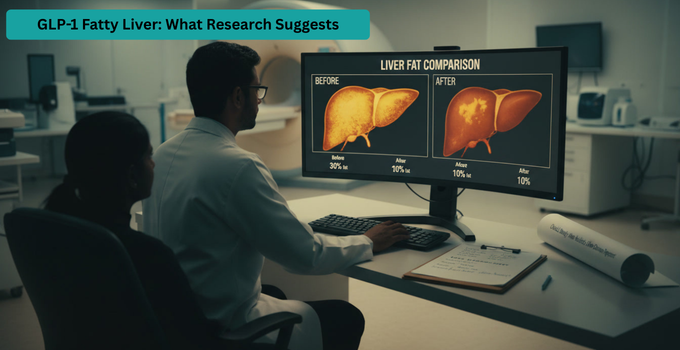
A randomised clinical trial available on PubMed Central (PMC) found that semaglutide reduced liver fat measured on MRI in patients with NAFLD, supporting hepatic steatosis improvement in many cases.
GLP-1 Liver Function: What Changes and What Doesn’t
People frequently presume that if they have a healthy fatty liver, then their liver function tests will be "normal." This is sometimes true, however, not for all patients. The health of your liver is influenced by several different factors.
GLP-1 medications can help you:
Lower your ALT/AST levels (for some patients)
Relieve the stress on your liver from excess fat
Control your blood sugar better, thereby benefiting the liver
Yes, many people with fatty livers will experience improved liver function with GLP-1s compared to those without them. However, doctors will continue to monitor your overall risk of liver disease by checking your liver enzyme levels. It can take a while for the liver to improve, but not days.
GLP-1 Metabolic Syndrome: Why This Matters in India
A cluster of problems that often occur together is called metabolic syndrome:
Abdominal Horny fat
Blood glucose concentration
Uncontrolled hypertension
High triglycerides
Lipid reduction
The increase in heart disease and diabetes risk increases dramatically when the above mentioned conditions are present simultaneously. Thus, the value of GLP-1 therapies becomes clear, as they act on multiple components of metabolic syndrome.
The evidence supports through research that Metabolic Syndrome patients treated with GLP-1 therapies have:
1. Weight loss
2. More effectively respond to insulin
3. Lower
Sugar levels and improve their blood lipid levels (for some patients). Therefore, when patients inquire about GLP-1 and their cardiometabolic health, the discussion should include metabolic syndrome as the primary reason the issue is significant.
GLP-1 Cardiovascular Outcomes: What Doctors Trust Most
The cardiovascular outcomes related to GLP-1s presented here have the strongest level of evidence supporting their existence.
Large studies focusing on cardiovascular outcomes indicate that the use of GLP-1 medications is associated with a reduction in cardiovascular events amongst those at the highest risk.
For this reason, health care providers are talking about GLP-1s in terms of:
GLP-1s & Cardiovascular Outcomes
GLP-1s and Cardiovascular Benefit
GLP-1's Heart/Heart Benefit
That being said, not all patients will receive the same amount of benefit. Your medical provider will evaluate your level of risk, both in terms of diabetes and heart disease history, in addition to other factors related to risk for metabolic syndrome, before determining if and when the use of GLP-1s would be appropriate for you.

FAQs
1. How does GLP-1 improve metabolic health?
How GLP-1 improves metabolic health comes down to multiple effects: it reduces appetite, improves insulin sensitivity, stabilises blood sugar, and supports weight loss. These changes improve overall cardiometabolic health in many patients.
2. What are GLP-1 cardiovascular outcomes?
GLP-1 cardiovascular outcomes refer to results seen in large studies that track serious heart events like heart attack, stroke, and cardiovascular death. Several trials show that some GLP-1 medicines reduce these risks in high-risk patients.
3. Can GLP-1 help with PCOS?
Yes, doctors increasingly discuss GLP-1 PCOS support because GLP-1 medicines improve insulin resistance and help with weight reduction. Many women see improvements in metabolic markers, which may support hormonal balance over time.
4. What are the GLP-1 therapy PCOS benefits?
GLP-1 therapy for PCOS often benefits include improved insulin sensitivity, reduced cravings, weight loss, and improved metabolic control. Some women may also notice more regular cycles, mainly because insulin resistance improves.
5. Can GLP-1 improve fatty liver?
Research suggests that GLP-1 can improve fatty liver, mainly by reducing liver fat and improving metabolic control. Doctors also study GLP-1 in NAFLD or NASH because these conditions are strongly linkedto insulin resistance.
6. Does GLP-1 improve liver function tests?
In many cases, yes. GLP-1 liver function may improve when liver fat reduces and inflammation markers come down. However, results vary, and doctors still monitor liver enzymes regularly.
Final Takeaway
“The Evidence Supports More Than Weight Loss, But Context Matters”
GLP-1 medicines support more than weight loss by improving insulin resistance and overall cardiometabolic health. Evidence strongly supports GLP-1 heart benefits and better GLP-1 cardiovascular outcomes in high-risk patients. Research also suggests GLP-1 PCOS and GLP-1 therapy PCOS benefits through improved metabolic control. Studies show GLP-1 improves fatty liver and possibly hepatic steatosis, with better GLP-1 liver function in many cases. GLP-1 metabolic syndrome benefits come from addressing multiple risk factors together.
Read Also
References
1. Lincoff AM, Brown-Frandsen K, Colhoun HM, Deanfield J, Emerson SS, Esbjerg S, et al. Semaglutide and cardiovascular outcomes in obesity without diabetes.
N Engl J Med. 2023;389:2221-2232.
2. Marso SP, Daniels GH, Brown-Frandsen K, Kristensen P, Mann JFE, Nauck MA, et al.
Semaglutide and cardiovascular outcomes in patients with type 2 diabetes.
N Engl J Med. 2016;375(19):1834-1844.
3. De Hollanda BAA, Pinheiro MM, Aquino EM, et al. The efficacy and safety of GLP-1 agonists in PCOS women living with obesity: a systematic review and meta-analysis.
J Diabetes Complications. 2024 Oct;38(10):108834.
Disclaimer: The content in this blog is for general informational purposes only and is not a substitute for professional medical advice, diagnosis, or treatment. Always consult your doctor or a registered dietitian before making any changes to your diet, especially if you have a medical condition or are taking prescribed medication. While the information is based on trusted sources, individual needs and results may vary. MrMed does not promote or endorse any specific food or treatment mentioned unless explicitly stated.
















Comments