Quick Summary
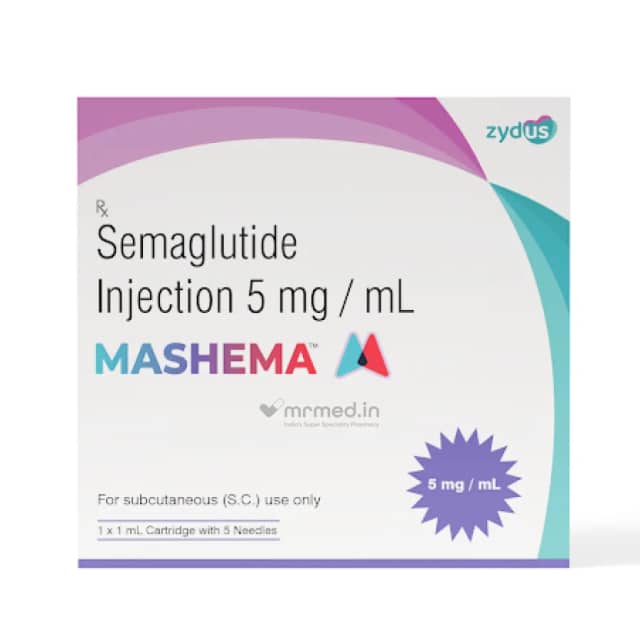
Mashema 15mg Cartridge 3ml


Last updated on 28 Sep 2026 | 05:11 AM (IST)
₹7512
MRP: ₹8749
(You Save ₹1237)
1 CARTRIDGE(s)
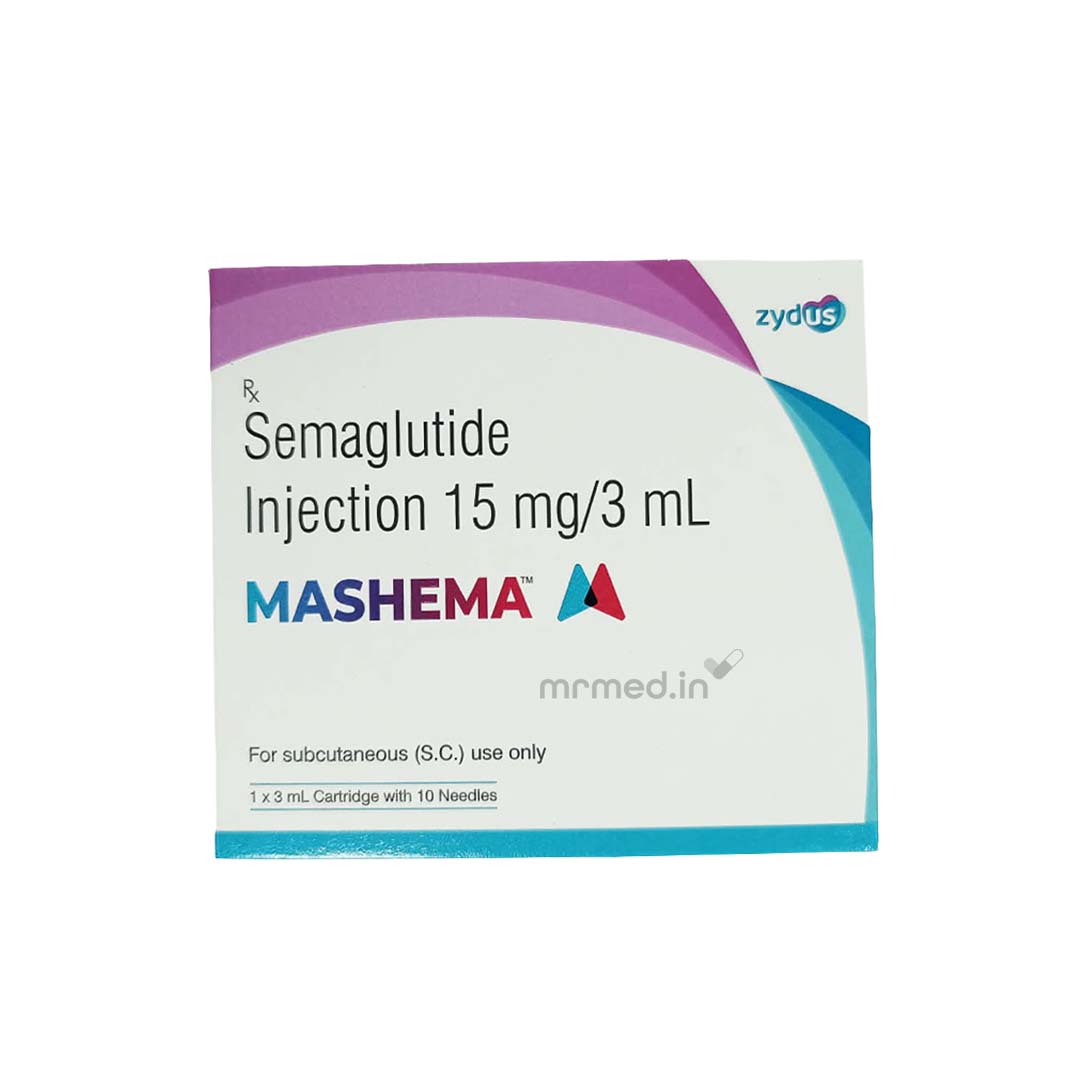

Mashema 15mg Cartridge 3ml

Salt Composition
SEMAGLUTIDEMarketer
ZYDUS CADILA
Prepaid Only. Non-Returnable.

14% OFF
₹7512
MRP: ₹8,749.00
Inclusive of all taxes
14% Off


Salt Composition
SEMAGLUTIDEMarketer
ZYDUS CADILA
Prepaid Only. Non-Returnable.

Dispatch: Today
Care delivered without the wait. Your order is prioritized for rapid dispatch to ensure it reaches your doorstep on time.
Substitutes
Semanext 15mg Cartridge 3ml
LUPIN LTD
₹ 1878.00/injection
75% cheaper
Semaglyn 15mg Cartridge 3ml
ZYDUS CADILA
₹ 7512.00/injection
0% cheaper
Alterme 15mg Cartridge 3ml
ZYDUS CADILA
₹ 7512.00/injection
0% cheaper
Sembolic 15mg Cartridge 3ml
TORRENT PHARMAC...
₹ 7512.00/injection
0% cheaper
Better Service Satisfied Customers
Introduction
Mashema 15mg Cartridge 3ml contains Semaglutide as its active ingredient. It is a prescription medicine supplied as a prefilled cartridge containing 15 mg of Semaglutide in 3 mL, designed for use with a reusable pen. Zydus markets this Semaglutide formulation for type 2 diabetes mellitus and obesity-related weight management.
The 15 mg in the cartridge refers to the total amount of Semaglutide in the cartridge, not the amount to be injected as a single weekly dose. The prescribed dose is selected using the compatible reusable pen.
Uses
Mashema 15mg Cartridge 3ml is used:
To improve blood sugar control in adults with type 2 diabetes mellitus, along with diet and exercise.
For chronic weight management in eligible adults with obesity or overweight with weight-related health conditions, along with a reduced-calorie diet and increased physical activity.
How Mashema 15mg Cartridge 3ml Works
Mashema 15mg Cartridge 3ml contains Semaglutide, a GLP-1 receptor agonist. It acts like a natural hormone involved in blood sugar and appetite regulation.
It helps the body release insulin when blood sugar is elevated and reduces glucagon release. It also slows stomach emptying and increases feelings of fullness, which can help reduce food intake and support weight management.
Interaction of Mashema 15mg Cartridge 3ml with Other Medicines
Tell your doctor about all prescription medicines, over-the-counter medicines, vitamins and herbal supplements you take.
Insulin and sulfonylureas: Using Semaglutide with insulin or sulfonylureas can increase the risk of low blood sugar. Your doctor may adjust the dose of these medicines.
Oral medicines: Semaglutide slows stomach emptying and may affect the absorption of some medicines taken by mouth.
Other Semaglutide-containing medicines or GLP-1 receptor agonists: Do not use Mashema with another Semaglutide-containing medicine or another GLP-1 receptor agonist unless specifically advised by your doctor.
Storage Conditions
Store Mashema 15mg Cartridge 3ml according to the storage instructions provided with the product.
Keep the cartridge refrigerated at 2°C to 8°C before use unless the product instructions state otherwise.
Do not freeze.
Protect it from excessive heat and light.
Keep it out of the sight and reach of children.
How to Use
Use Mashema 15mg Cartridge 3ml exactly as prescribed by your doctor.
It is administered once weekly by subcutaneous injection using the compatible reusable pen. The injection is generally given into the abdomen, thigh or upper arm. Do not inject it into a vein or muscle.
The dose is usually started low and increased gradually to reduce gastrointestinal side effects. Do not change the dose or injection schedule on your own.
Use a new needle for each injection and do not share the pen or needles with another person.
Safety Advice

Pregnancy
Mashema should not be used for weight management during pregnancy. If you are planning a pregnancy, Semaglutide should generally be discontinued at least 2 months beforehand because it remains in the body for a prolonged period.

Breast Feeding
Semaglutide should not be used while breastfeeding because its safety for the breastfed baby has not been established.

Lungs
Semaglutide delays stomach emptying and has been associated with an increased risk of aspiration during general anaesthesia or deep sedation. Tell your doctor before any planned surgery or procedure.
Liver
Tell your doctor if you have liver disease or other liver problems before using Mashema.

Alcohol
Discuss alcohol use with your doctor, particularly if you also take medicines that lower blood sugar.

Driving
Mashema does not usually directly affect driving ability. However, dizziness or low blood sugar, particularly when used with insulin or sulfonylureas, may affect alertness.
Side Effects
Common side effects:
Nausea
Vomiting
Diarrhoea
Constipation
Abdominal pain
Headache
Indigestion
Dizziness
Abdominal discomfort or bloating
These effects are more common when the dose is increased and may improve as the body adjusts to treatment.
Serious side effects:
Severe or persistent abdominal pain, which may indicate pancreatitis
Severe allergic reactions
Severe or persistent vomiting or diarrhoea causing dehydration
Gallbladder problems
Low blood sugar when used with insulin or sulfonylureas
Changes in vision, particularly in people with diabetic retinopathy
Symptoms of thyroid tumours such as a neck lump, persistent hoarseness or difficulty swallowing
Seek medical attention if you develop severe or persistent symptoms. Semaglutide is contraindicated in people with a personal or family history of medullary thyroid carcinoma or Multiple Endocrine Neoplasia syndrome type 2.
Expert Tips
Use Mashema once weekly exactly as prescribed.
Do not increase the dose without your doctor's advice.
Follow the instructions supplied with the reusable pen and cartridge.
Use a new needle for every injection.
Do not share the pen or needles with another person.
Eat smaller meals if nausea or early fullness occurs.
Drink enough fluids if vomiting or diarrhoea occurs.
Tell your doctor about any planned surgery or procedure requiring anaesthesia or deep sedation.
Inform your doctor if you have a history of pancreatitis, gallbladder disease, diabetic retinopathy or severe gastrointestinal problems.
FAQs
Q1.
What is Mashema 15mg Cartridge 3ml used for?
Mashema is used for type 2 diabetes mellitus and chronic weight management in eligible adults, along with appropriate diet and physical activity.
Q2.
Is Mashema 15mg Cartridge 3ml a 15mg weekly injection?
No. The 15 mg refers to the total amount of Semaglutide in the 3 mL cartridge. The weekly dose is selected according to your prescribed treatment plan using the reusable pen.
Q3.
How often should I use Mashema 15mg Cartridge 3ml?
Mashema is generally administered once weekly. Use it on the day prescribed by your doctor.
Q4.
Can Mashema 15mg Cartridge 3ml be used with another Semaglutide medicine?
No. Do not combine Mashema with another Semaglutide-containing medicine or another GLP-1 receptor agonist unless your doctor specifically advises you to do so.
Q5.
Can I use Mashema during pregnancy?
Mashema should not be used for weight management during pregnancy. Speak with your doctor if you are pregnant or planning a pregnancy.
Fact Box
Molecule name: | Semaglutide |
Therapeutic class: | Antidiabetic agent / Anti-obesity medicine |
Pharmacological class: | GLP-1 receptor agonist |
Indications: | Type 2 diabetes mellitus, chronic weight management |
References
Disclaimer
MrMed’s primary intention is to ensure that its consumers get information that is reviewed by experts, accurate and trustworthy. The information and contents of this website are for informational purposes only. They are not intended to be a substitute for professional medical advice, diagnosis, or treatment. Please seek the advice of your doctor and discuss all your queries related to any disease or medicine. Do not disregard professional medical advice or delay in seeking it because of something you have read on MrMed. Our mission is to support, not replace, the doctor-patient relationship.
Did you find this information helpful?
Author Details

Written By
Vishishta
M.Sc Microbiology

Reviewed By
Dr. Tejashwin Adiga
MBBS
Last updated : 28 Sep 2026 | 05:11 AM (IST)

Want to know more?
Read Our Editorial Policy