

Your Body Has Been Sending Signals, Here's What Early Diabetes Looks Like





Last updated on 22 Apr 2026
You may experience fatigue and thirst, and you will experience minor bodily changes, which you will choose to overlook. Most people do. But these early signs are often your body trying to tell you something important. Diabetes does not always start suddenly. The condition develops gradually, and its initial symptoms become difficult to detect without proper knowledge of what to observe.
Key Takeaways
• Early diabetes symptoms are often mild and easy to ignore. |

People need to learn about diabetes because the body often shows its first symptoms before doctors can diagnose it. People tend to disregard these warning signs because they believe these problems will resolve themselves after a short period. Recognising these initial signs enables doctors to deliver medical treatment at the right time while preventing future health problems.
This article explains how diabetes begins, what changes occur inside the body, and why paying attention to these early signs can make a significant difference in long-term health outcomes.
What Are the Early Signs of Diabetes?d
According to the International Diabetes Federation, India has over 101 million people living with diabetes, making it one of the highest globally.
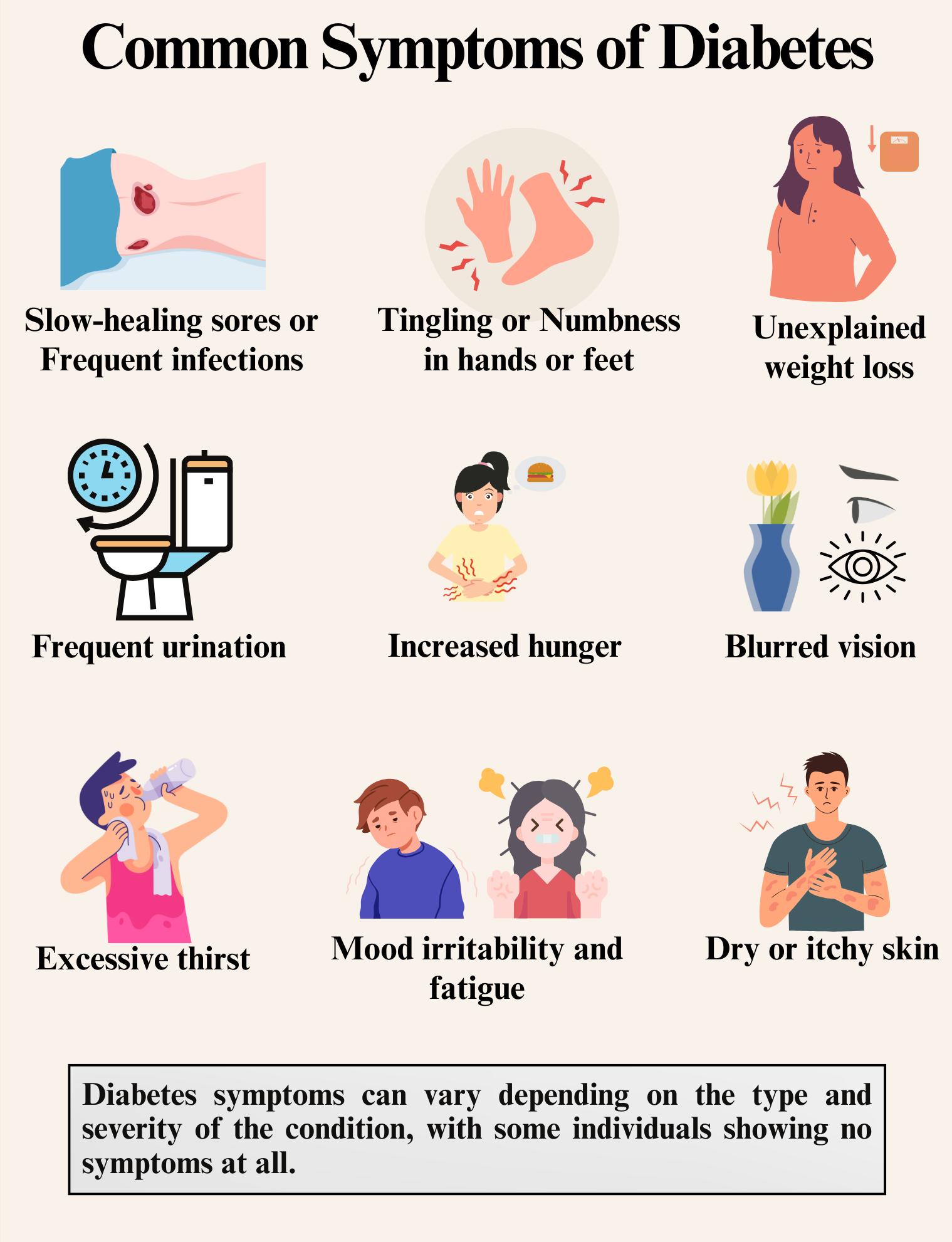
The first symptoms of diabetes are usually harmless by themselves, but as the disease progresses will become stronger and/or more frequent. Common signs and symptoms of diabetes mellitus include:
• Urinating more than usual,
• Excessive thirst,
• Persistent fatigue,
• Blurred Vision,
• Slow-healing wounds.
If you experience these symptoms for more than 3 weeks, your body needs help controlling your sugar levels.
What Are 10 Warning Signs of Diabetes?
Indian clinical guidance (ICMR and national NCD programmes) emphasises that early symptoms should never be ignored, especially in people above 30 years or those with risk factors like obesity or family history.
Here are 10 warning signs of diabetes that should not be ignored:
Increased hunger even after eating
You may feel hungry soon after meals because your body is not able to use sugar properly for energy.
Sudden weight loss
Unexplained weight loss can happen when the body starts breaking down fat and muscle for energy.
Tingling or numbness in hands and feet
High sugar levels can affect nerves over time, leading to a pins-and-needles sensation or numbness.
Dry skin
Dehydration and poor circulation can make your skin feel dry, rough, or itchy.
Frequent infections
High blood sugar weakens your immune system, making you more prone to infections, especially skin or urinary infections.
Mood changes
Fluctuating sugar levels can affect your mood, causing irritability, anxiety, or low energy.
Headaches
Sudden changes in blood sugar levels can trigger frequent or unexplained headaches.
Difficulty concentrating
When the brain does not get enough steady energy, it becomes harder to focus or think clearly.
Dark patches on the neck or underarms
These thick, darkened areas of skin are often linked to insulin resistance and are an early visible sign.
Feeling weak without a clear reason
Lack of proper energy use in the body can leave you feeling tired and physically weak even without heavy activity.
Type 2 diabetes develops its symptoms through a gradual process that begins with the first signs of the condition.
Type 1 Diabetes Symptoms: Fast and Noticeable

According to Dr Mohit Sharma, a senior physician based in New Delhi, India, “Most early signs of diabetes are so ordinary that patients ignore them. What feels like tiredness or dehydration may actually be the body signalling poor blood sugar control.”
Signs and symptoms associated with Type 1 diabetes often develop suddenly and can lead to serious health issues within a short period of time.
Some common signs and symptoms of Type 1 diabetes are:
• Excessive thirst,
• Frequent urination,
• Quick weight loss,
• Extreme fatigue,
• Blurred vision.
Type 1 diabetes generally occurs most frequently in children and young adults and requires immediate medical attention.
Type 2 Diabetes Symptoms: Slow and Silent
Symptoms of type 2 diabetes take time to develop and can go unnoticed for years!
Some of these symptoms may include:
• Fatigue,
• Increased thirst and urination,
• Slow healing of wounds,
• Tingling or numbness in hands or feet.
For many people, the diagnosis does not come until after blood tests are conducted on them for other reasons.
Diabetes Symptoms in Men
Diabetes symptoms in men may include:
• Reduced muscle strength,
• Low energy levels,
• Sexual health issues.
These symptoms are often ignored or linked to stress or ageing.
Symptoms of Diabetes in Females
Symptoms of diabetes in females can include:
• Frequent urinary infections,
• Yeast infections,
• Dry or itchy skin,
• Fatigue.
Hormonal changes can sometimes make these symptoms more noticeable.
Why Do These Symptoms Happen?
When the body cannot use sugar properly, it remains in the blood rather than entering cells.
This leads to:
• Lack of energy,
• Dehydration,
• Damage to nerves and blood vessels.
That is why even simple symptoms like tiredness should not be ignored.
Why Diabetes Is Common in Indians
Indians have a higher risk of diabetes even if they look slim. This is often described as the “thin-fat Indian” pattern, in which the body carries more fat and less muscle than in Western populations.
This abdominal fat affects how the body uses insulin, making it harder to control blood sugar levels. As a result, diabetes can develop earlier and at lower weights. Dr Anoop Misra of Fortis C-DOC has widely explained this pattern in Indian patients.
Indians have a higher risk of diabetes even if they look slim.
Reasons include:
• More fat around the abdomen.
• Lower muscle mass.
• Family history.
• Lifestyle factors like less physical activity.
This means you can have diabetes symptoms even without being overweight.
When Should You Get Tested?
You should consider testing if:
• You are above 30 years old.
• You have a family history of diabetes.
• You notice early signs.
• You feel constantly tired or thirsty.
Simple blood tests can help detect the condition early.
What Happens If You Ignore Early Signs?
Ignoring early symptoms can lead to serious problems like:
• Nerve damage.
• Eye problems.
• Kidney issues.
• Heart disease.
Early action makes a big difference in preventing complications.

How Can You Manage Early Diabetes?
Simple lifestyle changes can help:
• Eat balanced meals.
• Stay active daily.
• Maintain a healthy weight.
• Monitor your blood sugar.
These steps help control sugar levels and improve overall health.
Frequently Asked Questions
1. What are the early signs of diabetes?
Early signs include frequent urination, excessive thirst, tiredness, blurred vision, and slow-healing wounds.
2. How do I know if I have diabetes symptoms?
If symptoms like fatigue, thirst, and frequent urination persist for weeks, you should get a blood test.
3. Can diabetes start without symptoms?
Yes. Type 2 diabetes often develops silently and may not show clear symptoms in the early stages.
4. Are diabetes symptoms different in men and women?
Yes. Men may experience low energy and muscle weakness, while women may have infections and skin-related issues.
5. When should I see a doctor for diabetes symptoms?
You should see a doctor if symptoms persist for more than a few weeks or if you have risk factors, such as a family history.
Final Thoughts
Early signs of diabetes are often mild but important. Your body usually gives warnings before things get serious. Paying attention to these signals and getting tested on time can help you take control early. Small lifestyle changes and regular monitoring can make a big difference in managing your health.
Read Also
How Diabetes Medications Support Blood Sugar Control Beyond Diet
Type 1, Type 2, and Other Diabetes Types: What Makes Them Different
References
National Institute of Diabetes and Digestive and Kidney Diseases (NIDDK). Symptoms & causes of diabetes. Bethesda: NIH; 2023. Available from: https://www.niddk.nih.gov/health-information/diabetes/overview/symptoms-causes
American Diabetes Association. Classification and diagnosis of diabetes: Standards of medical care in diabetes—2024. Diabetes Care. 2024;47(Suppl 1):S20–S40. Available from: https://diabetesjournals.org/care/article/47/Supplement_1/S20/153957
International Diabetes Federation. IDF Diabetes Atlas 10th edition [Internet]. Available from: https://diabetesatlas.org/atlas/tenth-edition/
Disclaimer:
The content in this article is for general informational purposes only and is not a substitute for professional medical advice, diagnosis, or treatment. Early signs of diabetes can vary from person to person and may overlap with other health conditions. Always consult a qualified healthcare professional for proper evaluation, diagnosis, and management. While the information is based on reliable sources, individual symptoms and outcomes may vary. MrMed does not promote or endorse any specific treatment unless explicitly stated.



















Comments