

Diet, Lifestyle and Practical Tips for Getting the Best Results With GLP-1 Medications





Last updated on 31 Jan 2026
Medicines containing GLP-1 suppress hunger, promote weight loss, and improve blood sugar control. They are most effective when part of a healthful diet and simple lifestyle choices.
Key Takeaways:
|
Nausea and early satiety are typical of GLP-1 treatment. Basic routines such as slow eating, hydration, regular meal times and gentle movement help treatment to feel less overwhelming. Day by day, these small choices add up to long-term progress and overall health.
Starting GLP-1 medication often feels like a fresh chapter. Appetite changes, cravings shift, and the body begins responding differently to food and habits. Many people quickly realise that the medicine works best when paired with the right daily choices.
This blog explores practical diet and GLP-1 lifestyle tips that help maximise GLP-1 results, reduce side effects, and support long-term health. From food choices to simple routines, here is what actually makes a difference.
Let’s dive in.
What Is the Best Diet for GLP-1 Users and Why Does It Matter?
By following a diet rich in the best foods, a person taking GLP-1 medications can improve many aspects of their healthcare, such as comfort, energy levels, and treatment outcomes.
The foods you include in your meals should include lean protein, fibre-rich vegetables, healthy fats, and whole grains. These types of foods will help you maintain an appetite; however, they won't create an upset stomach after eating them.
Foods you should eat include:
Grilled chicken, fish, eggs, and tofu
Vegetables such as spinach, carrots, and broccoli
Whole grains like oats and brown rice
Healthy fats from nuts and olive oil
TIP: Eating consistently balanced meals helps keep digestion simpler and leads to better overall results.
A published PMC article 2025 meta-analysis of 33 studies found that combining GLP-1 receptor agonist therapy with lifestyle modifications (diet and physical activity) resulted in greater weight loss and improved cardiometabolic markers compared with controls.
What To Eat on GLP-1 During Early Treatment?
The most pronounced changes in nausea and appetite occur early in treatment. Eating lighter, easier-to-digest foods will help acclimate the body to the treatment.
Foods to eat during the first few weeks of GLP-1 treatment typically consist of soft proteins, high-water-content foods, and smaller meals throughout the day.
Examples of GLP-1-friendly meals when starting may include:
Eggs or yoghurt
Soups with vegetables and lean protein
Bananas, oatmeal and toast
Protein shake smoothies
TIP: Eating lighter meals early on will make you more comfortable and help you avoid missing important nutrients.
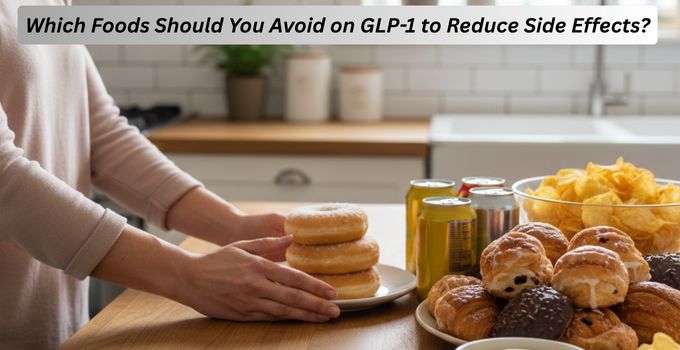
Which Foods Should You Avoid on GLP-1 to Reduce Side Effects?
Some foods are more likely to trigger nausea, bloating, or stomach upset. Foods to avoid on GLP-1 typically include greasy, heavily processed, or sugary items.
Why we love it
Avoiding triggers makes treatment easier to stick with long-term.
Food Type | Why It Can Cause Discomfort |
Fried foods | Slow digestion and nausea |
Sugary snacks | Blood sugar swings |
Heavy creamy sauces | Stomach fullness |
Fizzy drinks | Bloating and reflux |
Ultra-processed meals | Poor digestion |
Takeaway: Keeping meals simple and lighter supports smoother digestion.
As per the JAMA published article the World Health Organisation’s latest guidelines 2025 explicitly recommend that GLP-1 therapies be paired with intensive behavioural therapy, including diet and exercise goals, to maximise weight loss and metabolic improvements
What Does a Simple GLP-1 Nutrition Plan Look Like in Real Life?
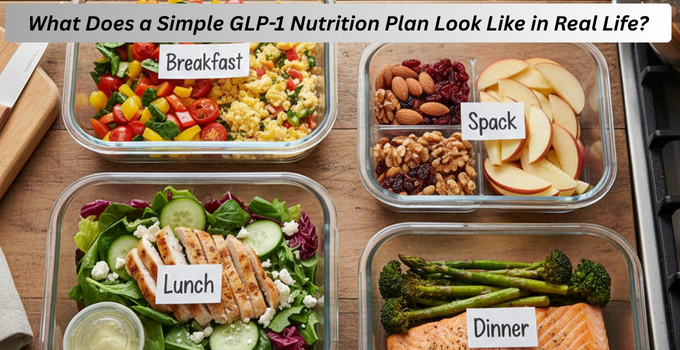
Depending on how complex a GLP-1 nutrition plan may be, it still revolves around three simple principles: portions, balanced nutrient intake, and consistent eating times.
A successful GLP-1 will generally centre on whole foods and limit processed foods.
For example:
Breakfast: Eggs with veggies
Lunch: Grilled chicken salad with olive oil for dressing
Snack: Fruit and nuts (GLP-1 approved snacks)
Dinner: Fish, vegetables, whole grains
The simpler the routine, the easier it will be to maintain your health through healthy eating habits.
How Can Hydration and Nausea Management Improve Your Experience?
Hydration is a critical part of reducing side effects and enhancing digestion through using GLP-1 therapy. Eating less while on GLP-1 therapy means you are naturally getting less water without realising it.
To help prevent dizziness, constipation and nausea, hydration with water throughout the day is needed. If you are asking how to reduce Nausea with GLP-1 Therapy, eating slowly, drinking liquids, and not eating large meals will all really help.
Tips for Drinking Hydration:
Drink water prior to meals
Drink herbal teas like ginger, peppermint
Take small sips throughout the day
“Small Hydration Habits Provide Big Relief”
Staying hydrated reduces side effects and helps stabilise your energy.

What Exercise Tips Work Best While on GLP-1 Medication?
Exercise tips while on GLP-1 should focus on supporting fat loss through movement without taxing your body.
Engaging in light to moderate physical activity can help improve insulin sensitivity, mood, and weight-loss outcomes. Most individuals find gentle strength training, as well as walking, swimming, and cycling, to be ideal forms of exercise.
What Should You Know?
Movement provides larger results than fatigue.
Recommended Activities:
Walking for 30 minutes every day
Using light resistance
Stretching or doing yoga
Take short activity breaks throughout the day.
Participating in regular physical activity will help you achieve consistent improvement in your health and well-being.
How Do Lifestyle Modification and Healthy Habits Support Long-Term Success?
Lifestyle modification goes beyond food and exercise. Sleep, stress management, and daily routines strongly influence appetite hormones and energy levels.
Healthy habits for GLP-1 users often include regular bedtimes, mindful eating, and stress reduction through breathing, hobbies, or short walks.
Why we love it
Daily habits shape long-term outcomes. Simple improvements, such as better sleep and slower meals, enhance how the body responds to treatment.
Takeaway: Small lifestyle shifts multiply the benefits of medication over time.
Frequently Asked Questions
1. What is the best diet for GLP-1 users?
The best diet focuses on lean protein, fibre-rich vegetables, whole grains, and healthy fats. These foods support fullness, steady energy, and smoother digestion while helping the medication work more effectively.
2. What to eat during early GLP-1 treatment?
Early on, light and easy-to-digest foods work best. Options like soups, yoghurt, eggs, porridge, smoothies, and soft fruits help reduce nausea while still providing essential nutrients.
3. Which foods should be avoided on GLP-1 medications?
Fried foods, sugary snacks, fizzy drinks, heavy creamy meals, and highly processed foods can trigger nausea, bloating, and discomfort. Keeping meals simple usually improves tolerance.
4. How to reduce GLP-1 nausea naturally?
Eating slowly, choosing smaller meals, staying well hydrated, and sipping ginger or peppermint tea can help ease nausea. Avoid lying down immediately after eating and limit heavy foods.
5. Is exercise safe while taking GLP-1 medications?
Yes, light to moderate exercise is encouraged. Activities like walking, swimming, gentle strength training, and stretching support weight loss, improve energy, and enhance overall health.
What’s Worth Remembering?
GLP-1 medications offer powerful support for appetite control and weight management, but daily choices shape the outcome. The right diet, steady GLP-1 hydration tips, gentle movement, and simple routines make treatment smoother and more effective.
Progress does not come from perfection but from consistent, realistic habits that fit everyday life. If this guide helped, share it with others beginning their GLP-1 journey. For personalised guidance, always consult a qualified healthcare professional.
Read Also
How GLP-1 Medications Help Manage Type 2 Diabetes: Benefits, Safety & Real-World Results
How GLP-1 Medications Support Weight Loss and Long-Term Obesity Management
GLP-1 Medication Side Effects: What’s Normal, What’s Not, and How to Manage Them
Most common questions people search for or wonder about regarding GLP-1 medicines
References
Wilding JPH, Batterham RL, Calanna S, Davies M, Van Gaal LF, Lingvay I, et al. Once-Weekly Semaglutide in Adults with Overweight or Obesity. N Engl J Med. 2021;384(11):989-1002.
Jastreboff AM, Aronne LJ, Ahmad NN, Wharton S, Connery L, Alves B, et al. Tirzepatide Once Weekly for the Treatment of Obesity. N Engl J Med. 2022;387(3):205-216.
Garvey WT, Mechanick JI, Brett EI, Garvey WT, Mechanick JI, et al. Two-year effects of semaglutide in adults with overweight or obesity. Nat Med. 2022;28:2317-2327.
Bergmann NC, Halpern B, et al. Semaglutide for the treatment of overweight and obesity: A Review. Diabetes Obes Metab. 2022 Oct 18;25(1):18–35.
Disclaimer: The content in this blog is for general informational purposes only and is not a substitute for professional medical advice, diagnosis, or treatment. Always consult your doctor or a registered dietitian before making any changes to your diet, especially if you have a medical condition or are taking prescribed medication. While the information is based on trusted sources, individual needs and results may vary. MrMed does not promote or endorse any specific food or treatment mentioned unless explicitly stated.

.jpg&w=640&q=70&dpl=dpl_4whoxTpEisfWjq2UkEhDXS7s1JB3)













Comments